Guide · Verified 2026-07-13
How to Plan Your First Trip to China
The mistake almost everyone makes isn't picking the wrong cities — it's picking the wrong number of them. China rewards a slower route more than any country its size has any right to. Here's how to count your real days, assign each city a job, and land on a route you'll actually enjoy instead of one that just looks impressive on a map.
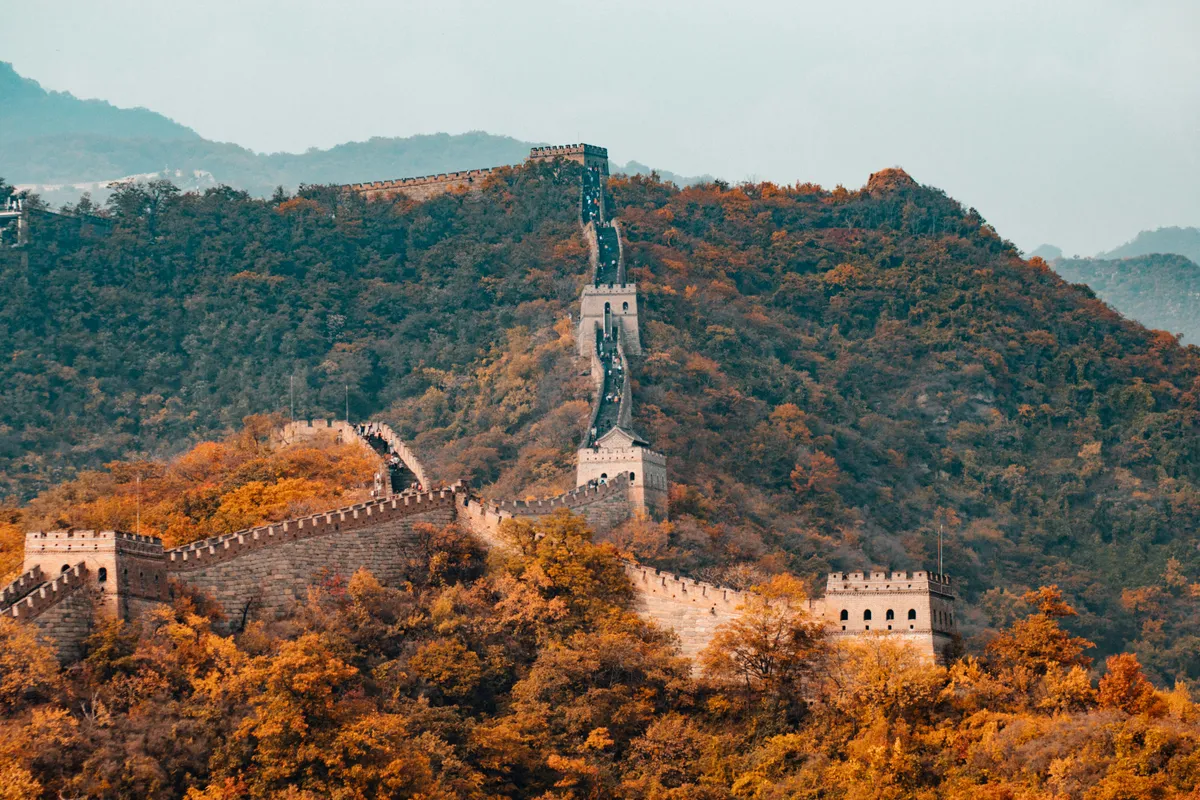
Count your real days, not your calendar days
A trip that looks like twelve days on a booking confirmation might hand you nine actual sightseeing days. Don't count a long-haul arrival day as a full day unless you land early and you're one of the rare people who sleeps well on planes. Watch the departure day the same way, especially if you're flying out of a different city than you flew into.
Then protect half a day for every intercity move, even a short high-speed rail hop. Packing, checkout, getting to the station, security, finding the platform, arriving, transferring to the new hotel — it all adds up to real time and real energy, even when the train itself takes ninety minutes. Rough sizing that holds up in practice: two bases for 7-8 days, two or three for 10-12 days, three or four for 14-15 days. Three weeks lets you add a slower region — it does not mean you should add three more cities.
If you're not sure whether you can enter visa-free or qualify for the 240-hour transit, settle that before you buy a single nonrefundable ticket. Check your passport eligibility — don't build a route from a Reddit comment or an outdated blog post.
Give each city a job, not a superlative
Stop asking which cities are "the best." Ask what job each one does in your route. A strong first-timer itinerary usually has one history anchor, one modern city, and — if the days allow — one food or scenery stop. The goal is contrast between stops, not a highlight reel.
- Beijing — the history anchor. Forbidden City, the Great Wall, hutongs, museums — give this one enough nights that a full Great Wall day doesn't eat your only Forbidden City morning.
- Shanghai — the modern contrast. Skyline, riverfront, neighborhoods, the easiest international flight access on the route — works well opening or closing the trip because the logistics are simple.
- Xi'an — compact history and food. Terracotta Warriors, the city wall, Muslim Quarter food streets — a clean two-night rhythm that doesn't demand a third.
- Chengdu — the slow-down stop. Pandas, teahouses, Sichuan food, a pace that's genuinely gentler than the other three.
- Guilin/Yangshuo — the scenery stop. Karst peaks and river cruises, at the cost of more careful transfer planning than the other options here.
If two cities on your list would do the same job, cut one. Beijing + Xi'an + Shanghai regularly beats Beijing + Xi'an + Shanghai + two extra stops that only made the list because they're famous.
If two cities on your list would do the same job, cut one.
Pick a transport rhythm, then stick to it
High-speed rail is the easiest way to string major cities together, and it beats flying for short and medium hops — city-center stations, predictable boarding, no real weather delays. Arrive early anyway; treat the printed departure time like a flight, not a subway schedule. Save flights for the long jumps where a train would burn most of a day. When you're ready to actually buy, our train booking guide covers the platforms, the 15-day sale window, and the station-day routine.
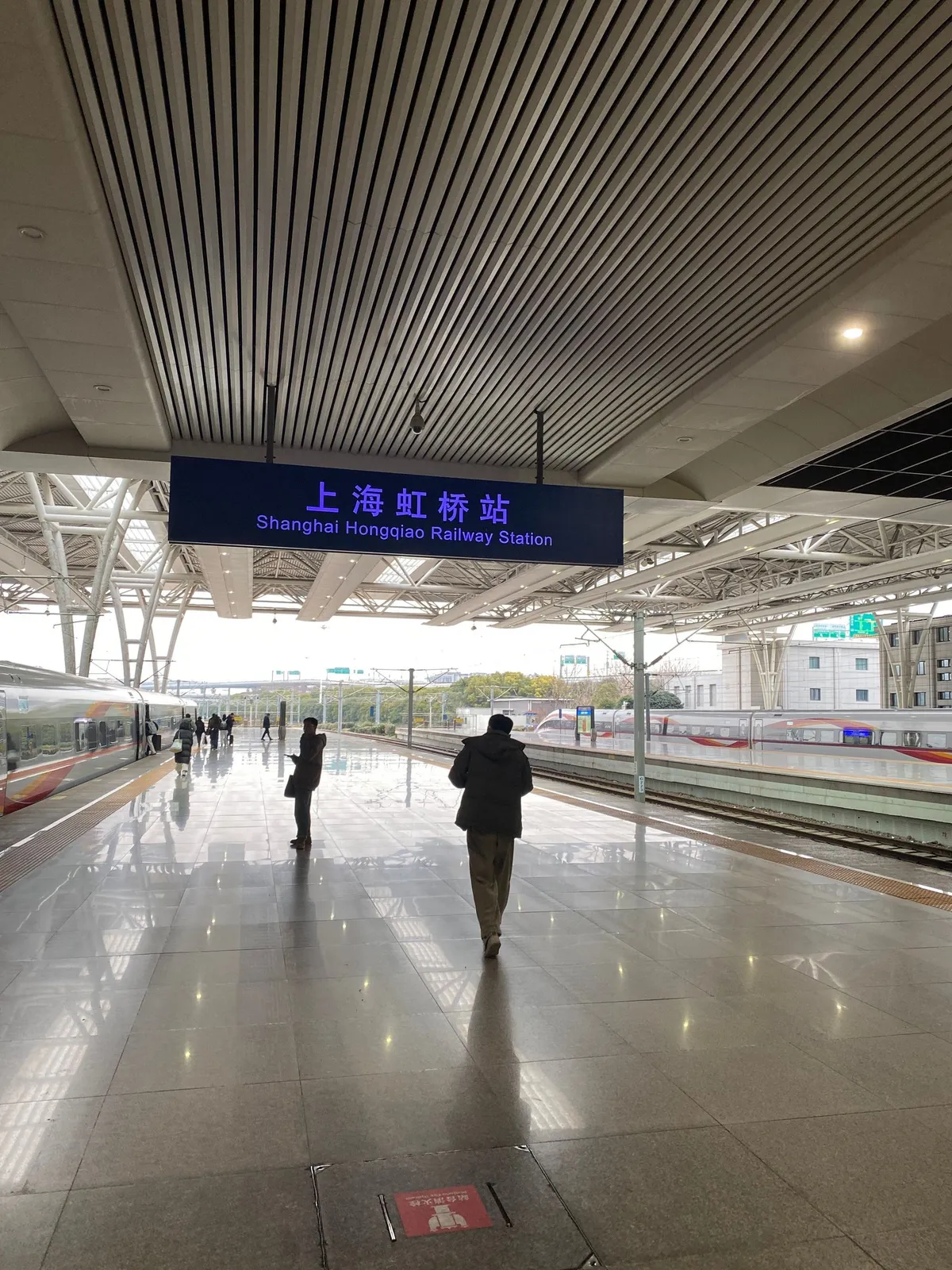
Avoid one-night stops on a first trip unless it's a deliberate transit break. Two nights buys you exactly one full day; three nights buys you two, and feels considerably calmer. Any city carrying a big day trip — the Great Wall from Beijing, the Terracotta Army from Xi'an — earns at least three nights. And build the route in one direction where you can: Beijing → Xi'an → Shanghai beats Beijing → Shanghai → Xi'an → Beijing every time you're not forced into it by fares.
Book in this order — not whatever feels most fun first
International flights and entry eligibility first — everything else depends on them. Landing in Beijing or Shanghai? Our airport arrival guide covers which terminal you'll actually be in and what the first hour looks like. Then lock your city order. Then hotels, chosen for proximity to transport and sights rather than the cheapest map pin; location beats a bigger room almost every time in a country this metro-dense. Then intercity transport — don't leave key train or flight segments for the last week if your dates touch a holiday or a weekend.
Check reservation rules for major attractions before you finalize daily plans, not after — an increasing number require a timed slot and passport details booked in advance. Build each day around one main anchor plus one flexible add-on: a palace or museum in the morning, a neighborhood walk in the afternoon, dinner without another cross-city transfer bolted on.
Apps last, but before you fly, not after you land: set up Alipay and WeChat Pay, save hotel addresses in Chinese, screenshot everything for offline use. Run through the pre-trip checklist while gaps are still easy to fix from your sofa. Traveling without a companion? The solo travel guide covers the route and hotel choices that reduce daily friction. Long layover on the way in? See whether it's worth leaving the airport.
Four routes that actually work
| Trip length | Route | Why it works |
|---|---|---|
| 7–8 days | Beijing + Shanghai | 4 nights Beijing, 3 nights Shanghai (or reverse it around your flights) |
| 10 days | Beijing + Xi'an + Shanghai | 4 nights Beijing, 2 nights Xi'an, 3 nights Shanghai, rest as arrival/departure buffer |
| 14–15 days | Beijing + Xi'an + Chengdu + Shanghai | Add pandas and Sichuan food without breaking the history arc |
| 14–15 days (scenery version) | Beijing + Xi'an + Guilin/Yangshuo + Shanghai | Trade Chengdu for karst scenery — needs more careful transfers |
| 3 weeks | Slow down, don't add more cities | Longer stays per base, one extra region (Yunnan) only if you enjoy the extra travel |
Once you've got a shape you like, build it out day by day — with realistic time budgets and the intercity transfers already calculated — in the Trip Planner. It's the fastest way to see whether "14 days, 4 cities" actually fits, or whether it's secretly 11 good days and 3 exhausted ones.
Want the Beijing-Xi'an-Chengdu-Shanghai route spelled out day by day, already done? See our 14-day itinerary guide. For the transfers themselves — real stations, current fares, train vs. flight — check the route finder.
Frequently asked questions
- How many days do I need for a first trip to China?
- Ten to fourteen days is the sweet spot if you're flying long-haul — enough for two or three cities, one or two day trips, and a buffer for jet lag. A one-week trip works fine too, but hold it to two bases and skip the detours.
- What's the best first-time China route?
- Beijing → Xi'an → Shanghai is the classic for a reason: imperial history, the Terracotta Army, and a modern finish with strong international flight connections, in a clean west-to-east line that doesn't backtrack.
- Should I take the train or fly between Chinese cities?
- High-speed rail wins for direct city pairs where the ride doesn't eat the whole day — city-center stations, no security theater, real punctuality. Flights make sense for the long jumps where rail would burn a full day. Compare door-to-door time, not the number printed on the ticket; a 2-hour flight easily becomes 5-6 hours after both airport transfers.
- How far ahead should I book hotels and attractions?
- Lock your city order first, then book hotels near transport and sightseeing zones — location beats a marginally bigger room every time. Check reservation rules for major sights (many now require a time slot and passport details) before you finalize daily plans, not after.
- Is China hard to plan as a first-time independent traveler?
- Not if you handle the practical basics before you land: payment apps, translation, hotel addresses saved in Chinese, and a route that doesn't ask you to change hotels every night. The part that actually derails people isn't the sightseeing — it's making too many decisions too late, jet-lagged, in an airport lounge.
Verified 2026-07-13. Reservation rules and booking windows shift — re-check anything booking-critical closer to your dates. Tell us if something here is out of date. Train platform photo: Kennyhaidang, CC BY-SA 4.0, via Wikimedia Commons.