Guide · Verified 2026-07-18
Your First Hour at Beijing or Shanghai Airport
Landing is the easy part. What trips people up is everything between the jet bridge and the taxi rank: which airport you're actually at, how long immigration takes, and whether the fast train is worth the transfer. Here's what really happens, city by city.
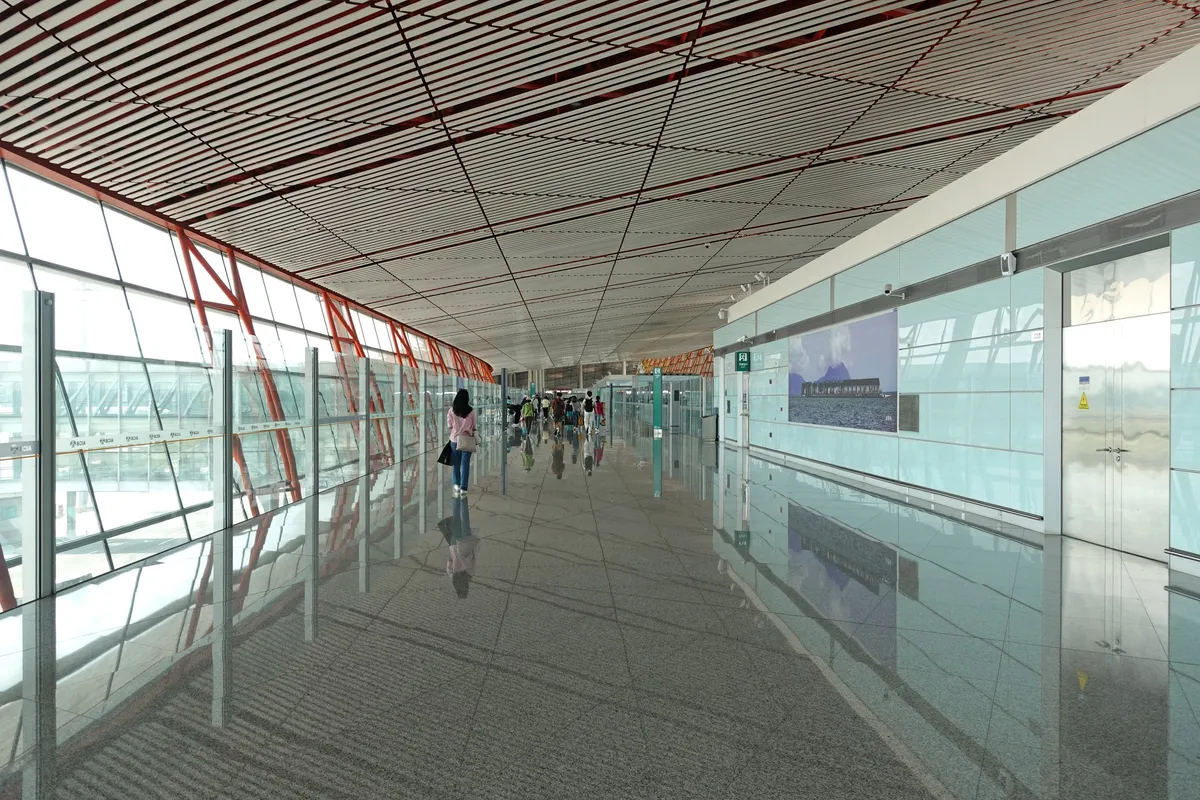
Which airport am I at?
Both Beijing and Shanghai run two airports each — check your boarding pass, because the wrong assumption adds an hour to your trip.
| Beijing | Who flies there | Notes |
|---|---|---|
| Capital (PEK) | ~70% of Beijing's international traffic; Air China's main hub and most Star Alliance carriers (United, Lufthansa, ANA) | Terminal 3 handles almost all international arrivals |
| Daxing (PKX) | Growing fast but still mostly SkyTeam/Oneworld and regional routes (Delta, China Southern, some China Eastern) | One giant single terminal, ~46km south of the city — further out than PEK |
| Shanghai | Who flies there | Notes |
|---|---|---|
| Pudong (PVG) | Shanghai's international hub — most long-haul flights to Europe, North America, and beyond land here | ~30km from downtown; Terminals 1 and 2 both handle international arrivals |
| Hongqiao (SHA) | Mostly domestic, plus some regional international routes (Hong Kong, Macao, Japan, Korea) | ~13km from downtown — much closer if your flight happens to use it |
Immigration and customs, step by step
The process is the same shape at all four airports. Fill out the arrival card on the plane if the crew hands one out — it saves time versus finding one in the terminal. After deplaning, most foreign arrivals aged 14 and up stop at an automated fingerprint-and-photo kiosk before reaching the immigration counter, where an officer checks your passport, arrival card, and stamps you in. Baggage claim is typically one level down, with screens showing which carousel your flight landed on. At customs, take the green channel if you have nothing to declare; the red channel is for anyone carrying over US$5,000 in cash or goods above the duty-free allowance.
Budget 30–60 minutes door to door under normal conditions — longer if several wide-body flights land in the same half hour, which happens often in the early evening at PEK T3 and PVG.
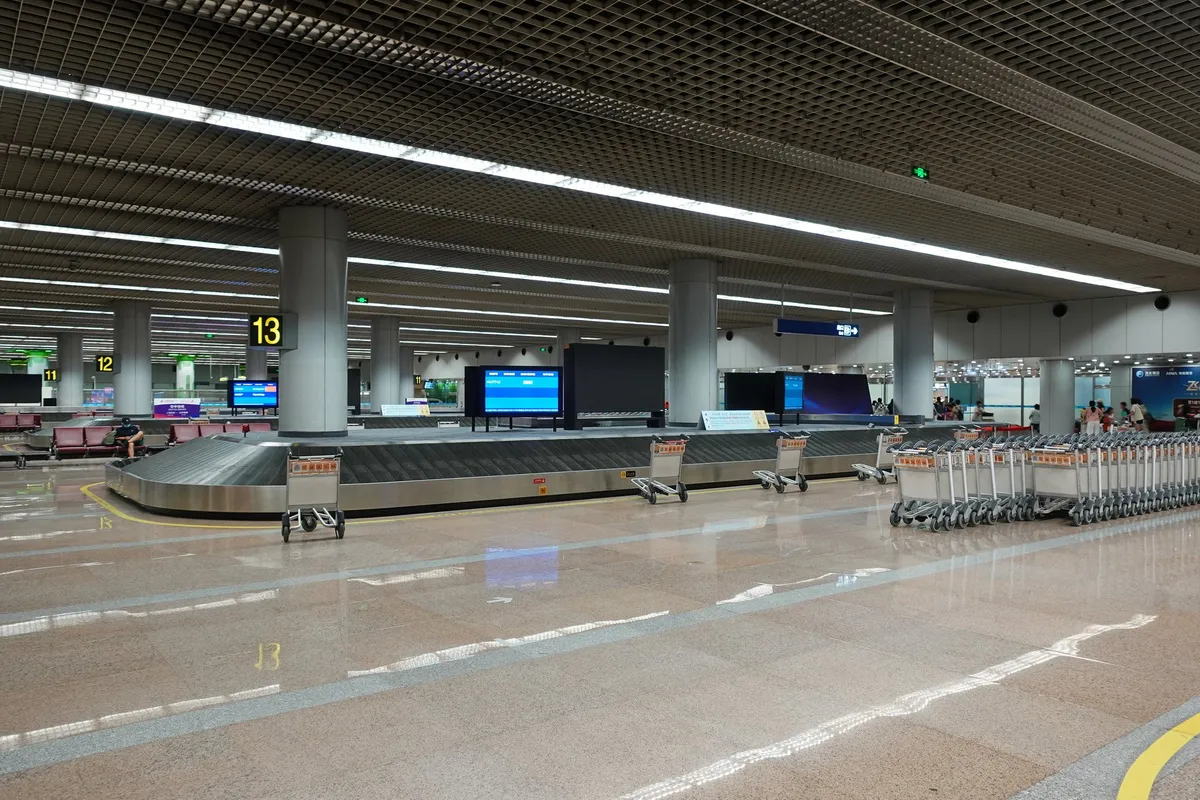
Getting connected
Every terminal's arrivals hall has a China Unicom or China Mobile counter past customs selling tourist SIM cards — typically ¥100–500 for a data plan, and you'll need your passport to register it, by law. Counters run 24 hours and take foreign cards. The faster option is an eSIM installed before you fly: you land already connected and skip the counter line entirely. Either way, get online before you try to order a DiDi or open a map — you'll want it working before you leave the terminal, not after.
Beijing: airport to city center
| Option | Cost | Time | Notes |
|---|---|---|---|
| Airport Express train | ¥25 | ~20–30 min to Dongzhimen / Sanyuanqiao | Cheapest fast option, but you'll still need a taxi or metro transfer from the station |
| Taxi / DiDi | ¥100–150 | 45–60 min (80+ in rush hour) | Easiest with luggage; DiDi's English app shows the fare before you commit |
| Airport shuttle bus | ¥15–30 | 60–90 min | Cheap but slow, with multiple stops — fine if you're not in a hurry |
Shanghai: airport to city center
From Hongqiao (SHA), skip all of this — it's close enough that a taxi or a short metro ride into downtown is straightforward regardless of the option you'd pick from Pudong. The table below is for Pudong (PVG), the airport most international arrivals actually land at.
| Option | Cost | Time | Notes |
|---|---|---|---|
| Metro Line 2 | ¥6–10 | ~1 hour to People's Square | Cheapest option; runs from both PVG terminals straight into downtown |
| Taxi / DiDi | ¥150–250 | 45 min+ (plus ~¥15 highway toll) | Worth it with luggage or a late arrival; fares roughly double PEK's due to distance |
| Maglev + metro transfer | ¥50 (maglev only) | 8 min maglev + a metro connection | A genuine novelty — 430km/h — but it ends at Longyang Road, not downtown, so budget the transfer time too |
Frequently asked questions
- Which Beijing airport will I land at — PEK or PKX?
- Check your airline, not the city: Capital Airport (PEK) still handles most international long-haul carriers, including Air China and Star Alliance partners. Daxing (PKX) is newer, further from downtown, and currently used more by SkyTeam and Oneworld carriers like Delta. Your boarding pass or itinerary will say which one — don't assume.
- Do I need cash the moment I land?
- Not urgently if Alipay or WeChat Pay is already set up on your phone before you fly — most airport transport, food, and shops take it. That said, carry a few hundred yuan as backup for the rare cash-only stall or a broken card reader; ATMs accepting foreign cards are in every arrivals hall.
- Is the Shanghai Maglev worth it if I'm just heading downtown?
- Mostly for the experience, not the shortcut. It's genuinely 430km/h and covers the airport-to-Longyang-Road stretch in about 8 minutes, but Longyang Road isn't downtown — you still transfer to Metro Line 2 or a taxi from there. If your main goal is speed to your hotel, a direct taxi or DiDi is usually simpler with luggage.
- What if my flight lands late at night?
- All the transport options above run into the evening, but frequency drops off and the Airport Express / metro may stop well before midnight — check the last-train time for your specific airport before you land. A late-night taxi or DiDi is the reliable fallback; both airports have staffed taxi ranks 24 hours.
- How long does immigration actually take?
- Most travelers clear fingerprinting, the immigration counter, and baggage claim in 30–60 minutes. It runs longer when several wide-body flights land at once — expect the high end of that range at PEK T3 or PVG during peak evening arrivals.
Verified 2026-07-18. Fares and transit times are realistic estimates, not timetables — always check current schedules on arrival. Tell us if something here doesn't match what you found on the ground. Photos: 颐园居, CC BY-SA 4.0, via Wikimedia Commons.