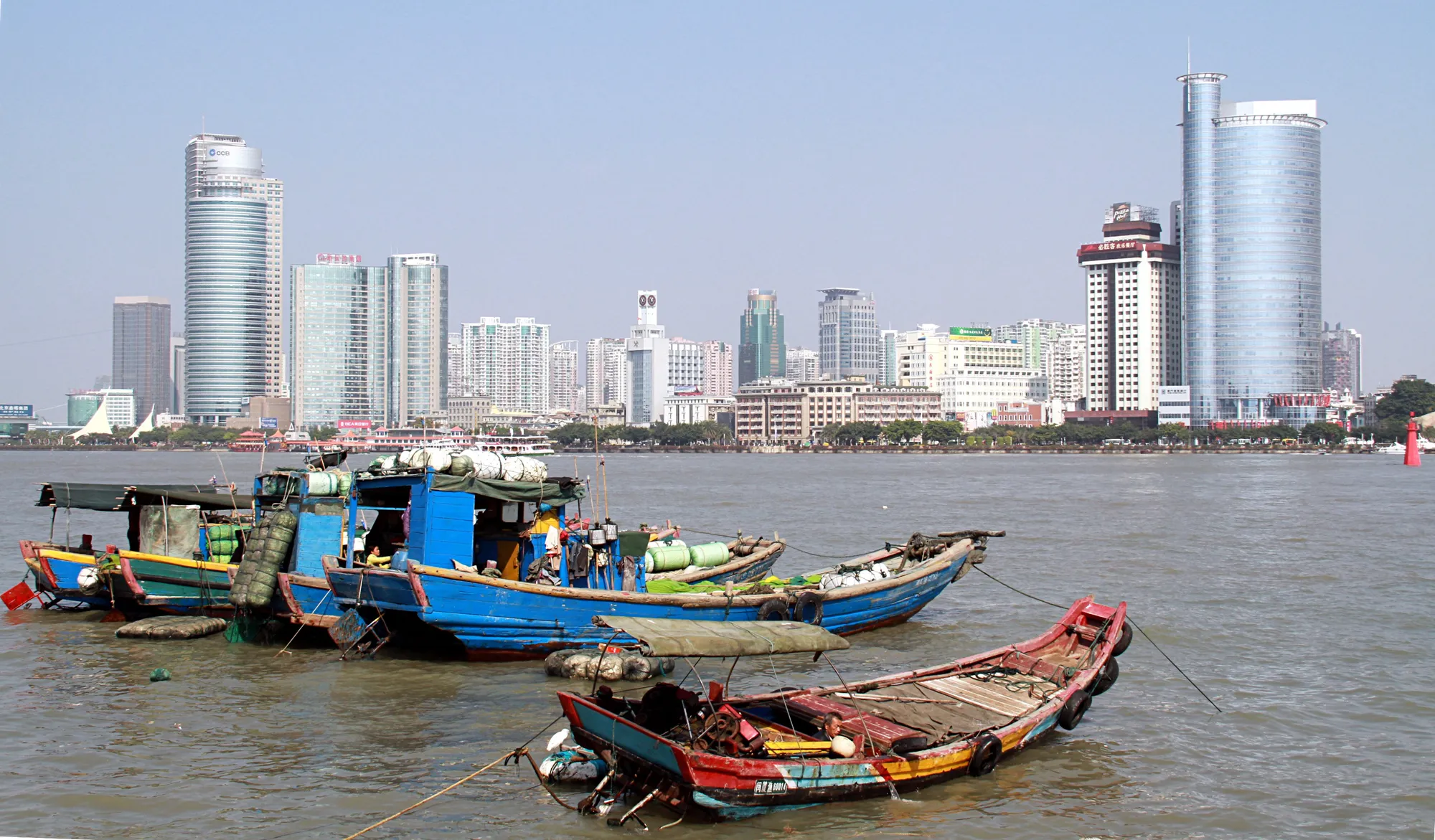
Fishing boats in the foreground with the Xiamen skyline across the water from Gulangyu Island

Destination guide · Verified 2026-07-22

Xiamen

A car-free colonial island, a red-roofed seaside university, and a subtropical, Minnan-flavored pace — the southern coastal counterpoint to everywhere else on this list.

Getting there
High-speed rail: ~5 hr from Guangzhou, ~6 hr from Shanghai, ~5.5 hr from Hangzhou; Xiamen Gaoqi Airport has direct flights from most major cities and several international hubs
Best seasons
March–June and September–November; summers are hot and humid with typhoon risk, winters are mild by Chinese standards
Days needed
2 days: one full day for Gulangyu Island, one for South Putuo, Xiamen University, and Zhongshan Road
Famous for
A car-free colonial island, a subtropical island-city pace, and Minnan (Southern Fujian) food and language distinct from the rest of the mainland
Base yourself
Siming district on the mainland side, near the Gulangyu ferry terminals — the island itself has hotels but limited late-night options

Xiamen Travel Guide: What to Know Before You Go

The short version: Xiamen is a subtropical island-city built around car-free Gulangyu Island's colonial architecture, with a distinct Minnan (Southern Fujian) food and language culture. Two days covers it — one full day for Gulangyu, one for South Putuo and Xiamen University — with typhoon risk to watch for in summer.

The essentials

What to see — and what to know before you go

Xiamen University needs a real-name booking days ahead; Gulangyu and the rest of the city are walk-up. Verified 2026-07-22.

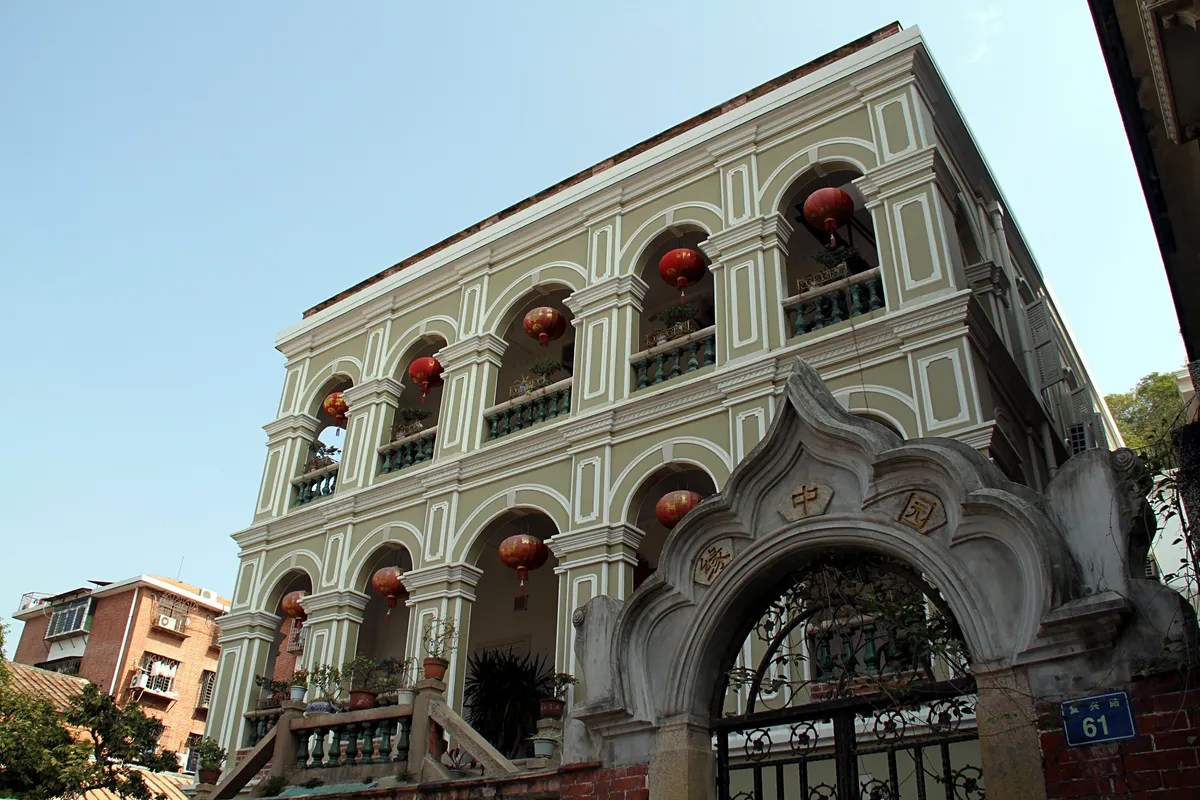
A grand two-story colonial villa with red lanterns and arched balconies on Gulangyu Island

Gulangyu Old Town 鼓浪屿

~4 hoursFree to the island; ¥100 landing fee bundled into most ferry tickets

A car-free UNESCO island of over 900 early-20th-century villas — European, overseas-Chinese, and Amoy Deco styles side by side — laid out along lanes too narrow for anything but bicycles and foot traffic. Genuinely walkable in a way few Chinese old towns still are.

TicketsBuy the ferry ticket at the terminal or online; no separate island entry booking.

Local tipSkip the crowded main lanes near the ferry pier and head into the residential side streets — that's where the island's atmosphere actually is.
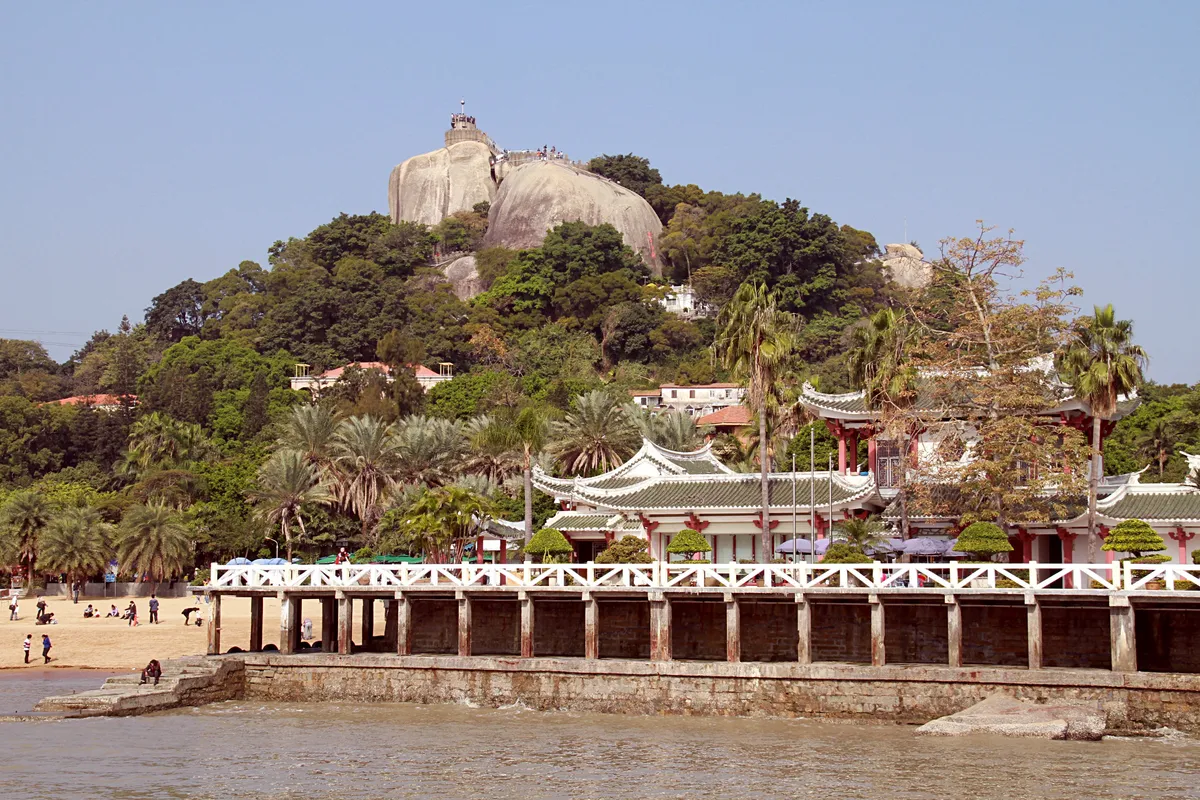
Sunlight Rock's granite summit rising above Gulangyu's palm trees and pavilions, seen from the waterfront

Sunlight Rock 日光岩

~1.5 hours¥40 (Sunlight Rock scenic area, separate from the island landing fee)

Gulangyu's highest point, a granite outcrop reached by a short climb (or an elevator for part of the way) with a 360-degree view over the island's red roofs, the strait, and Xiamen's skyline beyond. The single best orientation point on the island.

Local tipThe queue for the summit platform can be slow on weekends — the view partway up is nearly as good if you're short on time.

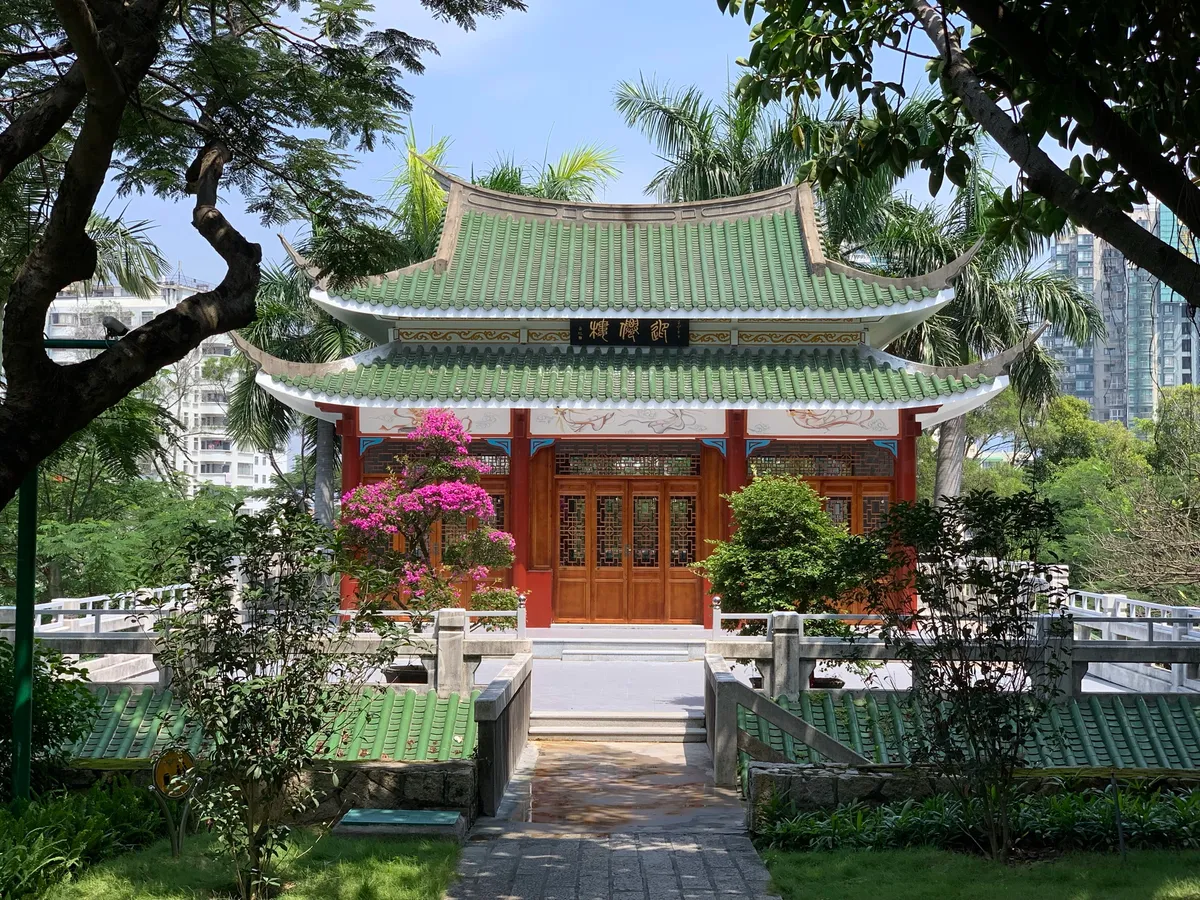
A green-roofed pavilion with red doors and hanging lanterns at South Putuo Temple, framed by palm trees

South Putuo Temple 南普陀寺

~1.5 hoursFree

An active Buddhist monastery built into a hillside beside Xiamen University, with incense smoke, chanting, and a vegetarian restaurant that draws its own crowd separate from the temple visitors. One of the few major temples in China that still feels like a working religious site rather than a museum.

Local tipCombine with a walk through the adjacent Xiamen University campus — the two sit back to back.

An aerial sunset view of Xiamen University's red-roofed campus buildings beside the sea

Xiamen University 厦门大学

~1.5 hoursFree; real-name registration required to enter

Widely called China's most beautiful campus — red-tiled Amoy Deco buildings, a lake, and a hillside setting over the strait. The Furong Tunnel connecting two parts of campus is covered end to end in student murals and has become a sight in its own right.

Booking — reserve aheadRegister online a few days ahead with your passport (the campus caps daily visitor numbers); check current booking channels before your date, as the system changes periodically.

Local tipBooking fills up days ahead in peak season — lock in your slot before you plan the rest of the day around it.

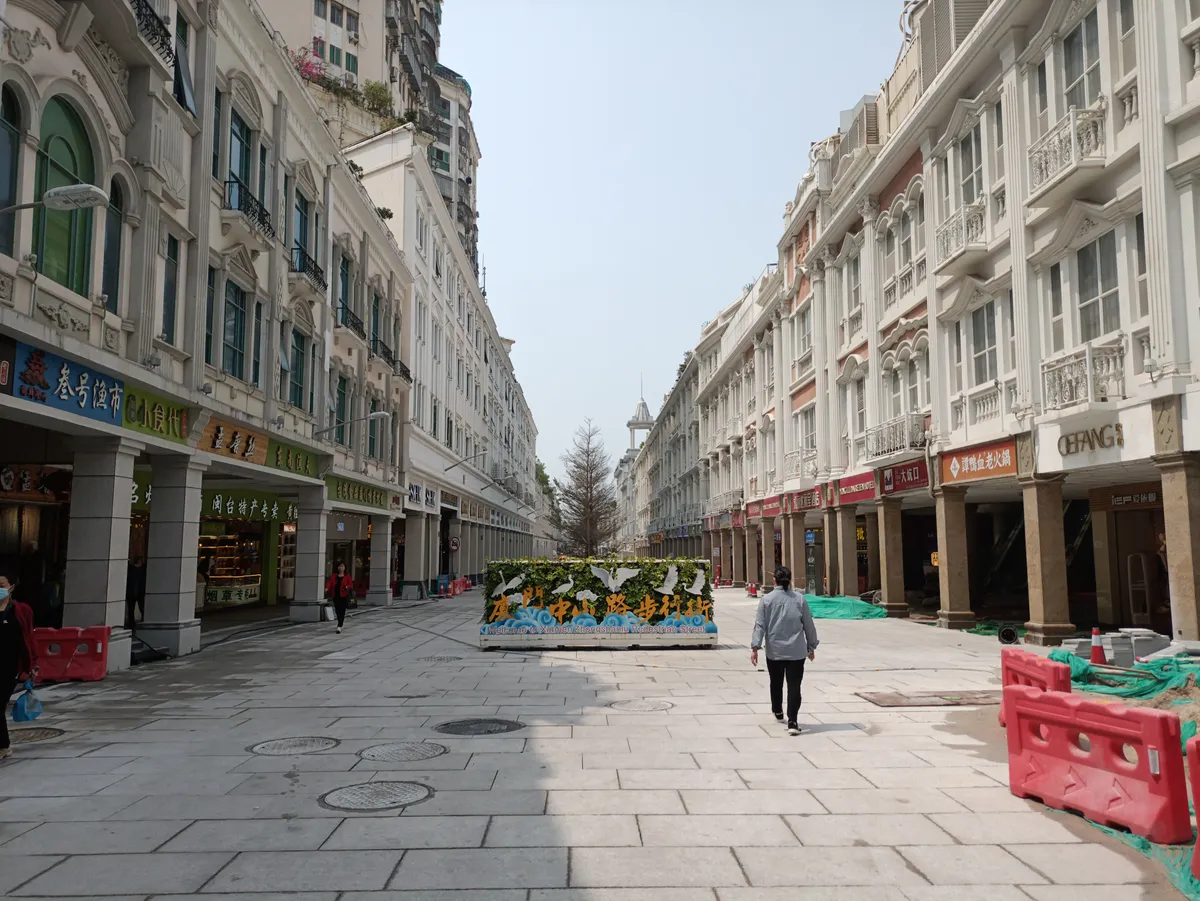
The arcaded colonial-era buildings of Zhongshan Road pedestrian street in Xiamen

Zhongshan Road 中山路

~1.5 hoursFree to walk

A pedestrian shopping street lined with arcaded 1920s-30s buildings — a covered walkway style ('qilou') shared with Guangzhou and parts of Southeast Asia, built for shade and rain. Busy, commercial, and a good contrast to Gulangyu's quiet lanes just across the water.

What to eat

Xiamen's must-eat list

Minnan food leans on peanuts, dried seafood, and a sweeter hand than much of mainland Chinese cooking. Deep dives live in our food guides; vegetarians, start here.

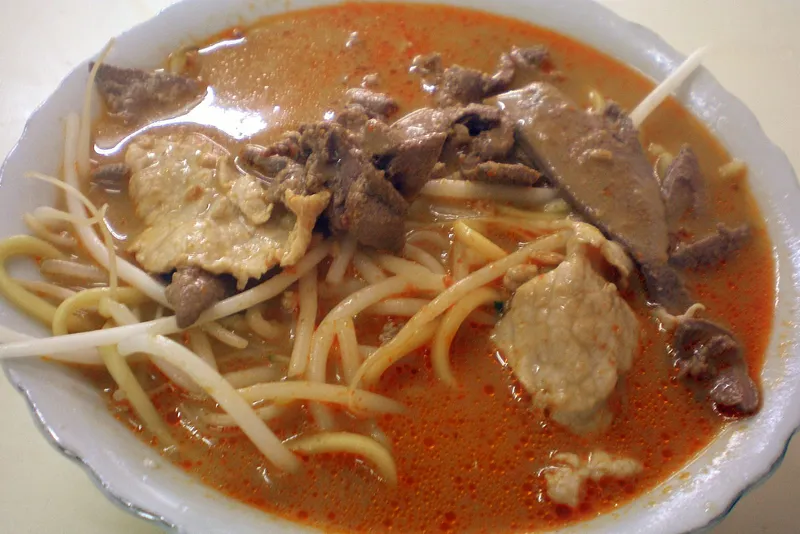
A bowl of Xiamen shacha noodles in reddish-orange peanut satay broth with beef and bean sprouts

Shacha Noodles 沙茶面

Thick wheat noodles in a broth built on shacha (沙茶) — a savory, faintly sweet peanut-and-dried-seafood sauce brought by returning overseas Chinese — topped with your choice of pork liver, shrimp, squid, or beef. Breakfast, lunch, or a 2am bowl after drinks.

WhereSmall noodle shops citywide; look for a pot of shacha sauce simmering by the counter

  • 🌾 contains gluten
  • 🌶️ mild
  • 🥜 contains nuts
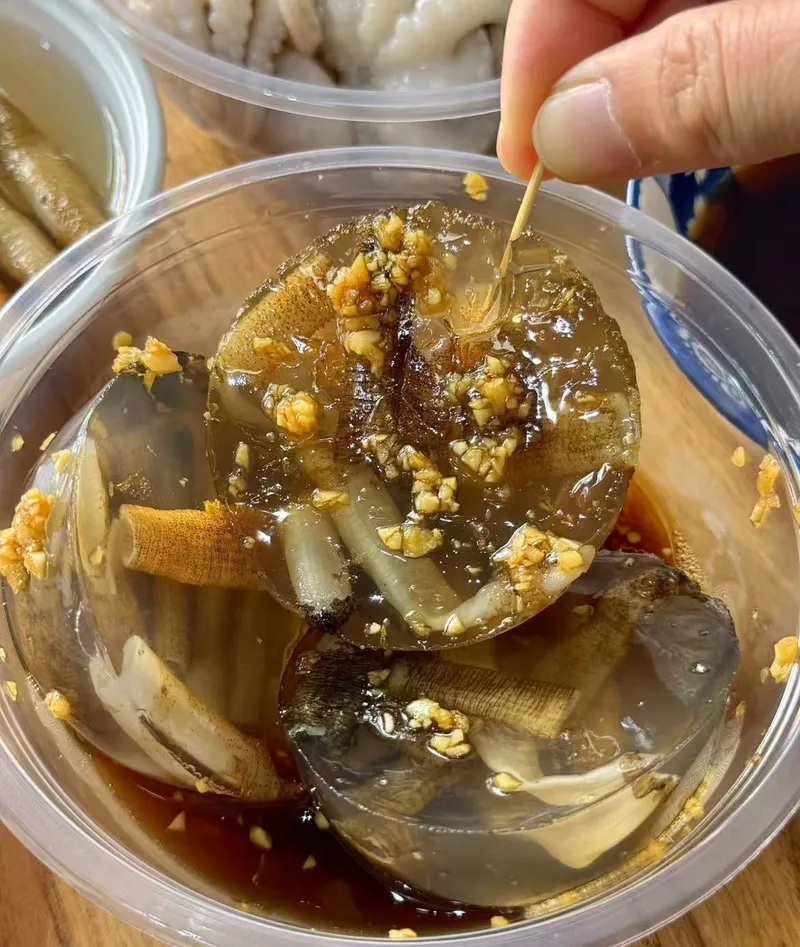
A dish of tusun jelly — sea worm jelly — topped with minced garlic and a soy dipping sauce

Tusun Jelly 土笋冻

Xiamen's most famous 'you have to try it once' dish: sipunculid sea worms boiled down until their natural collagen sets into a cold, wobbly jelly, then served with soy sauce, vinegar, garlic, and cilantro. It tastes far milder and more savory than it sounds — closer to a briny, gelatinous seafood terrine than anything unsettling — but the look alone makes it a genuine local rite of passage.

WhereNight market stalls and old-town snack shops citywide, usually sold by the small dish

    Mee Sua Soup 面线糊

    A Minnan breakfast institution thickened with sweet potato starch into a smooth, porridge-like gruel rather than a clear soup — hence the name 糊 ('paste'). Built on a pork-bone broth with paper-thin wheat noodles, then topped to order with pork liver, kidney, oysters, or shrimp, and always served alongside a fried dough stick for dipping. Old Xiamen's saying: 'North has pepper soup, south has mee sua soup.'

    WhereBreakfast stalls citywide — A-Ling (阿玲面线糊) is the best-known name

    • 🌾 contains gluten

    Beyond sightseeing

    Experiences you can book here

    Ready to plan the days?

    Xiamen rewards slowing down on Gulangyu — a full day there, then a second day for the university, temple, and old town. Book the university slot early; everything else can wait until you land.

    Placing this on the map: see where Xiamen sits relative to everywhere else on our interactive map of China, and check when it's busiest on the crowd calendar before you fix dates.

    Frequently asked questions

    Do I need to book Gulangyu Island in advance?
    You don't book the island itself, but ferry tickets can sell out on weekends and holidays — buy online a day ahead in peak season, or arrive at the terminal early. The ¥100-ish round trip typically bundles the island's landing fee.
    Is Gulangyu really car-free?
    Yes — no cars or bicycles are allowed on the island, only small electric patrol vehicles. Everything is on foot, which is a large part of why it stays so walkable and quiet compared to mainland old towns.
    How do I get into Xiamen University?
    Real-name registration is required, usually a few days ahead with your passport, and daily visitor numbers are capped — check the current booking channel before your date since the system has changed more than once. Don't leave it to the day of.
    Is Xiamen worth visiting if I've already done a coastal city like Qingdao?
    Yes — they're a real contrast. Qingdao is German colonial and beer-focused; Xiamen is subtropical, Minnan/overseas-Chinese in character, and built around a car-free island rather than a mainland old town.

    Facts verified 2026-07-22. Opening rules and prices change — re-check official channels for anything booking-critical. Photos: licensed travel photography. Photo credits: Gulangyu villa photo: Rolfmueller, CC BY-SA 3.0, via Wikimedia Commons · Sunlight Rock photo: Rolfmueller, CC BY-SA 3.0, via Wikimedia Commons · South Putuo Temple photo: Slyronit, CC BY-SA 4.0, via Wikimedia Commons · Xiamen University photo: Ratvirgin, CC BY-SA 3.0, via Wikimedia Commons · Zhongshan Road photo: HualinXMN, CC BY-SA 4.0, via Wikimedia Commons · Shacha noodles photo: Xmhaoyu, CC BY 3.0, via Wikimedia Commons · Tusun jelly photo: Caizzz, CC BY-SA 4.0, via Wikimedia Commons · Gulangyu Piano Museum photo: Xiquinho Silva, CC BY 2.0, via Wikimedia Commons.