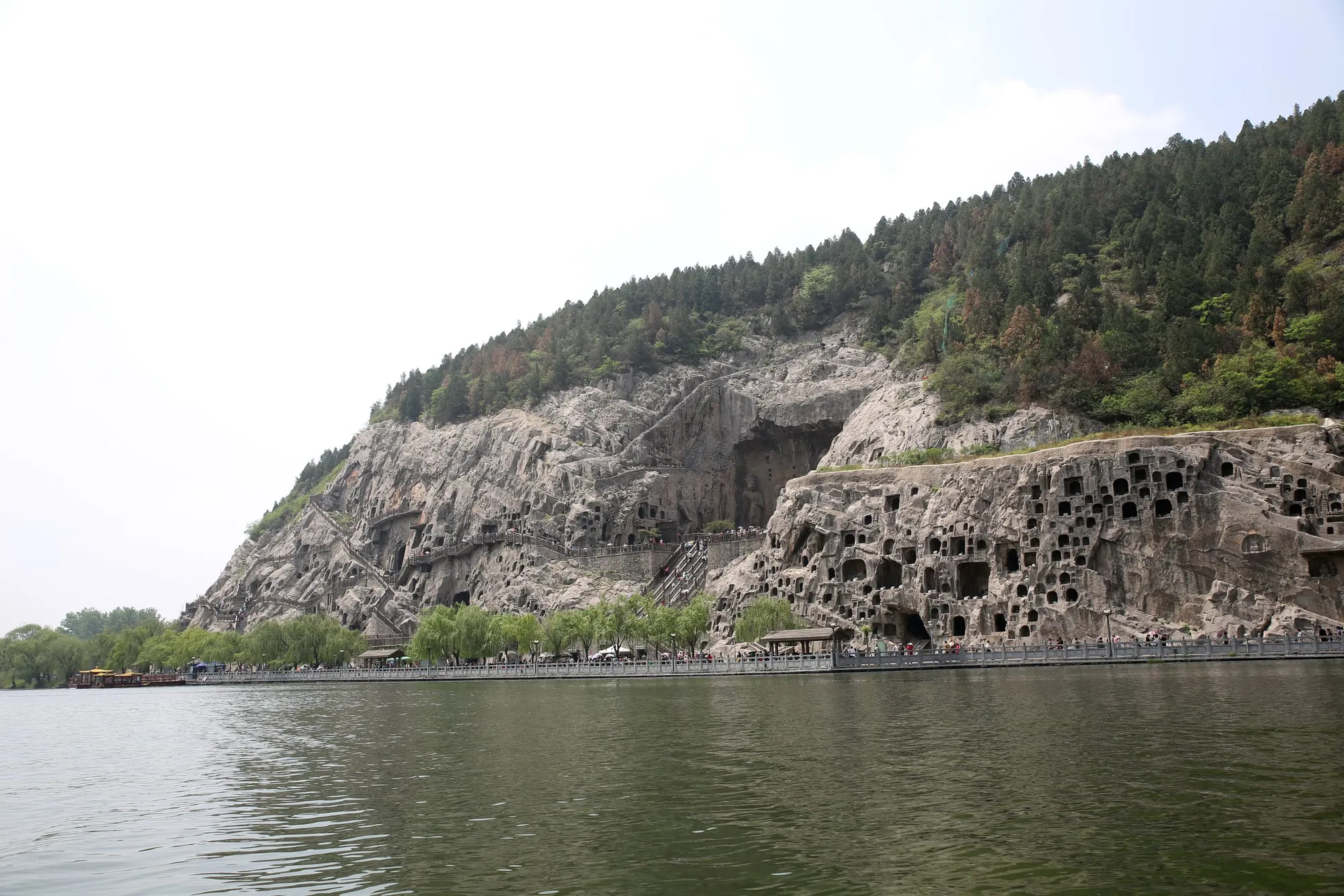
Buddhist grottoes carved into the limestone cliffs of Longmen Grottoes above the Yi River

Destination guide · Verified 2026-07-22

Luoyang

Over 2,300 Buddhist caves carved into a riverside cliff, the birthplace of Shaolin kung fu an hour away, and a city that's been growing peonies since the Tang dynasty — 90 minutes from Xi'an by high-speed rail.

Getting there
High-speed rail: ~1.5 hr from Xi'an, ~4 hr from Beijing; Luoyang Beijiao Airport has flights from major domestic hubs
Best seasons
April (peony season) or October–November — summers are hot and humid, winters cold and dry
Days needed
2 days: one for Longmen Grottoes and the old town, one for Shaolin Temple (a half-day-plus trip on its own)
Famous for
The Longmen Grottoes' carved cliffs, Shaolin kung fu an hour away, and the Tang-dynasty peony tradition each April
Base yourself
Near the old town (Lijing Gate area) — walking distance to Wangcheng Park and a short taxi to Longmen

Luoyang Travel Guide: What to Know Before You Go

The short version: Luoyang, 90 minutes from Xi'an by high-speed rail, is built around the Longmen Grottoes' 2,300-plus Buddhist caves carved into a riverside cliff, with Shaolin Temple an hour away. Two days covers both — one for Longmen and the old town, one for Shaolin — with peony season each April as a bonus.

The essentials

What to see — and what to know before you go

Nothing here needs advance booking — buy at the gate for all five sights. Verified 2026-07-22.

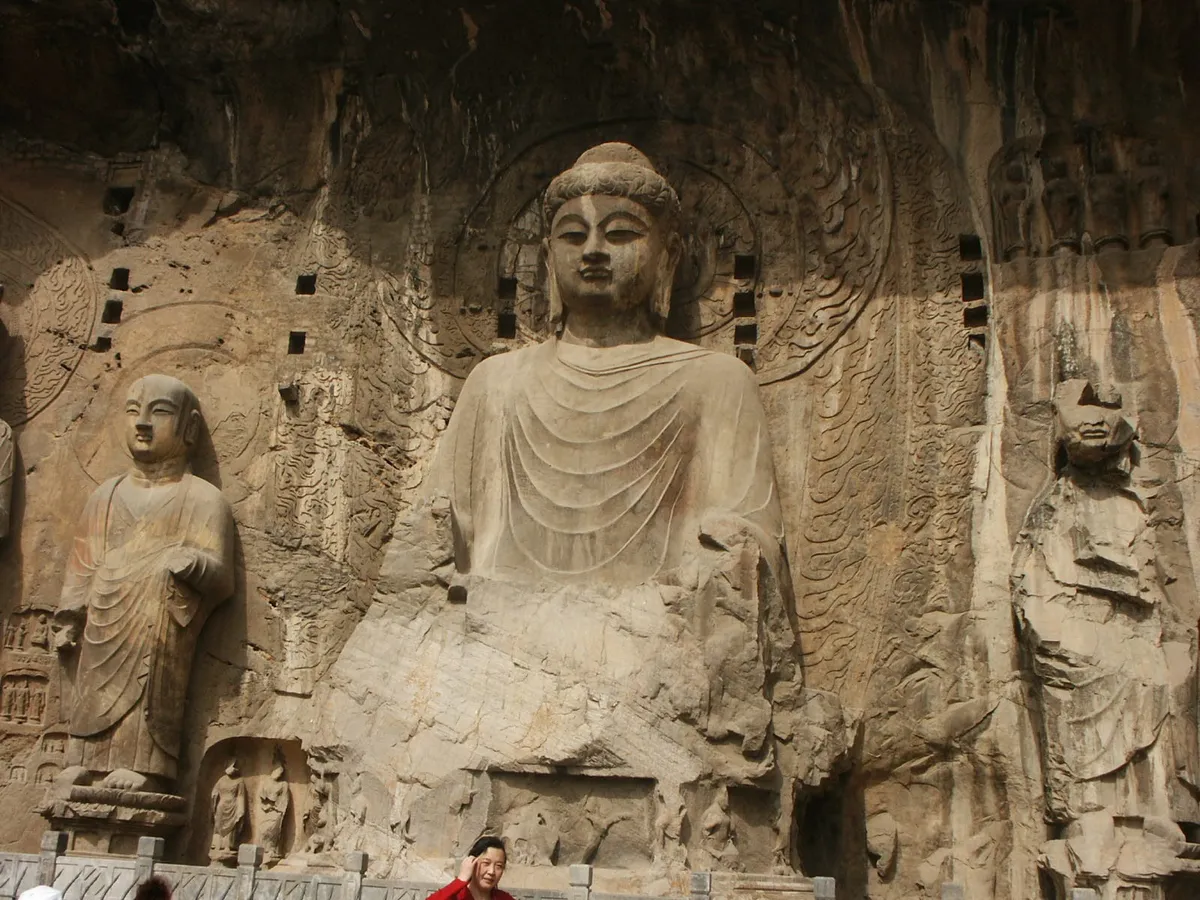
The 17-meter seated Vairocana Buddha at Fengxian Temple, Longmen Grottoes

Longmen Grottoes 龙门石窟

~3.5 hours¥100 (peak, mid-Mar–mid-Nov), ¥70 (low season)

Over 2,300 caves and niches carved into limestone cliffs along the Yi River between the Northern Wei and Tang dynasties, with roughly 110,000 Buddhist images. Fengxian Temple's 17-meter Vairocana Buddha — said to be modeled on Empress Wu Zetian — is the single most photographed carving in Luoyang, and a river-level boat ride gives the same view the wide cliff-face postcards use.

TicketsBuy at the gate or online; no advance real-name booking needed.

Local tipWalk the east bank first for the close-up cave views, then cross the river bridge to the west bank (or take the short boat) for the classic wide shot of the whole cliff face.
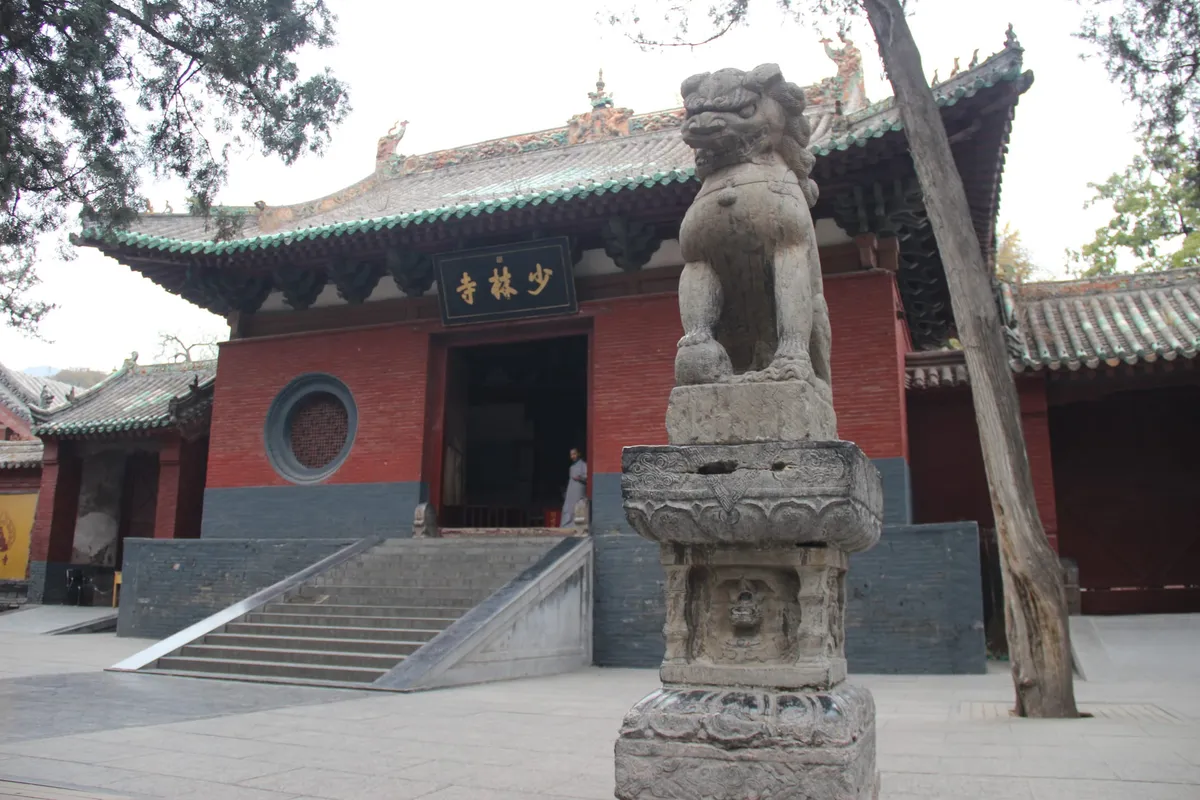
The main gate of Shaolin Temple with a stone lion guardian in front

Shaolin Temple 少林寺

~4 hours¥80 (temple); combined scenic-area tickets cost more

The birthplace of Shaolin kung fu and a working Buddhist monastery since the 5th century, about 75km east of Luoyang in Dengfeng (roughly 1.5 hours by car or bus — a genuine day trip, not a Luoyang in-city stop). Beyond the temple halls, the Pagoda Forest's 200-plus monk tombs and a live martial arts demonstration are the parts visitors remember.

TicketsBuy at the gate; martial arts shows run on a fixed daily schedule, check times on arrival.

Local tipThis is a half-day-plus commitment on top of Luoyang's own sights — budget a full day if you're doing Shaolin from Luoyang rather than treating it as its own base.

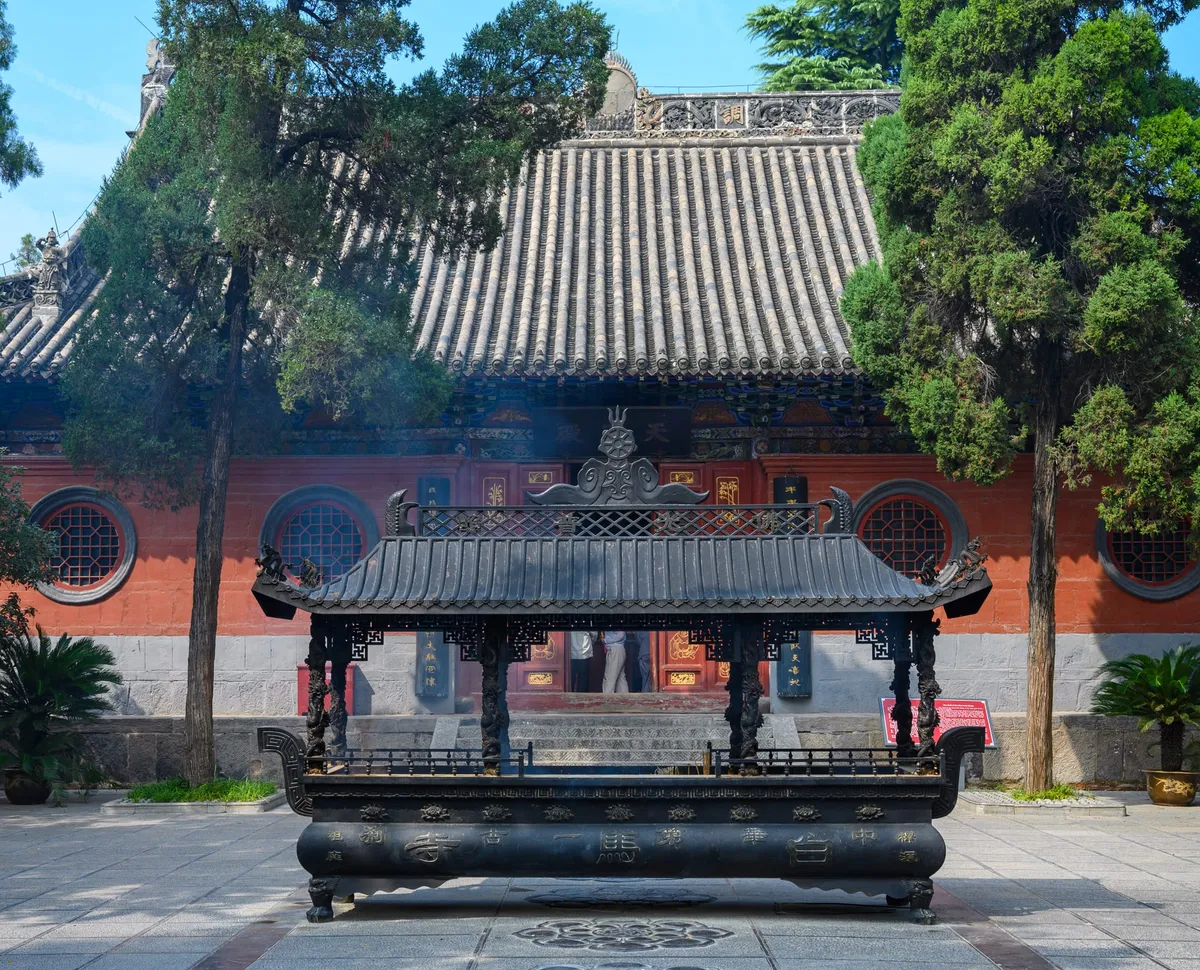
A temple courtyard with an incense pavilion in front of the main hall at White Horse Temple

White Horse Temple 白马寺

~1.5 hours¥35

Traditionally dated to 68 AD, this is credited as the first Buddhist temple built in China after the religion arrived from Central Asia — named for the white horses said to have carried the sutras from India. The original halls are modest; the newer Thai, Indian, and Myanmar-style temple additions on the same grounds make for an interesting contrast in a single visit.

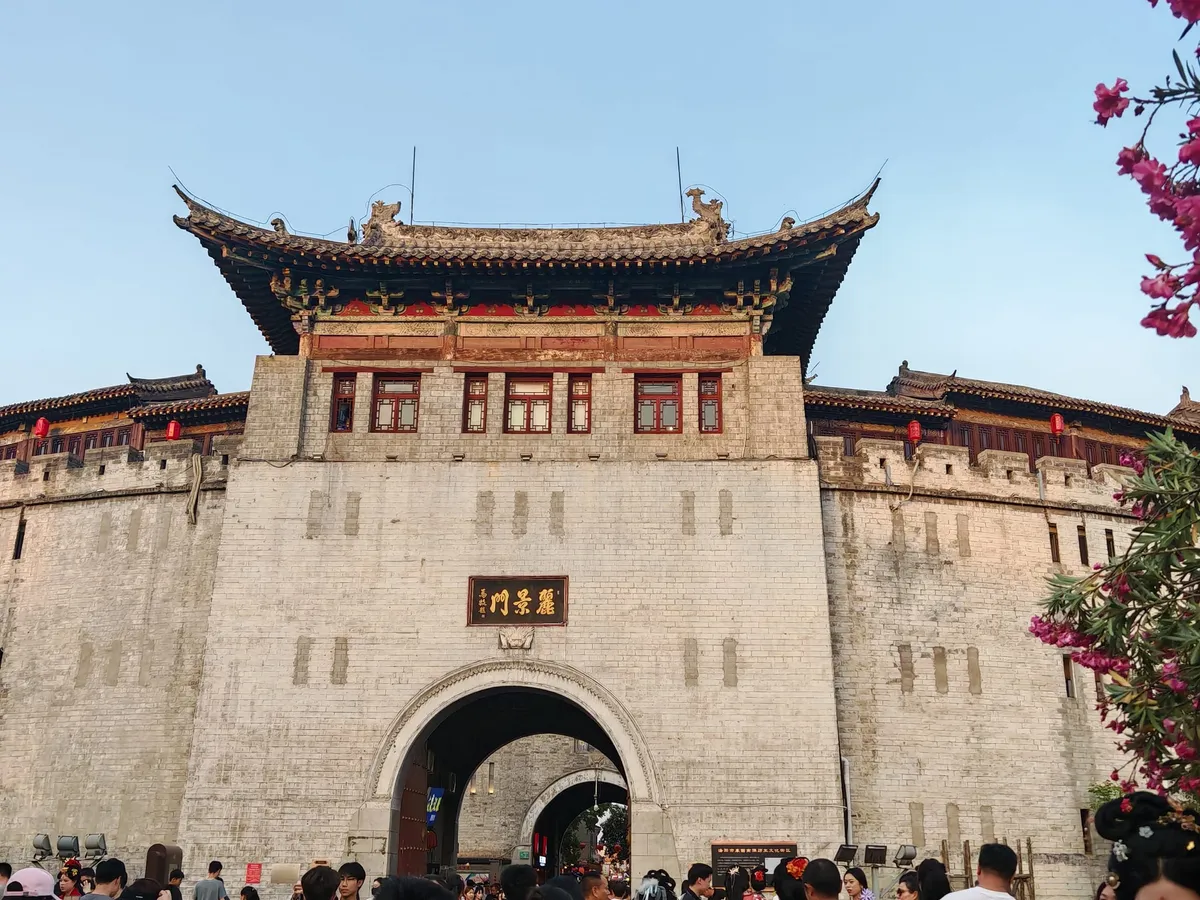
The white stone Lijing Gate archway marking the entrance to Luoyang's old town

Lijing Gate & Old Town 丽景门

~2 hoursFree to walk the gate and old town streets

A rebuilt Sui-Tang dynasty city gate marking the entrance to Luoyang's old town, now a pedestrian street of restored buildings, snack stalls, and Hanfu rental shops. It's not an ancient structure — the current gate dates to the 2010s — but it's the natural place to end a day of grottoes and temples with street food and people-watching.

Local tipGo at dusk: the gate is lit up after dark and the old town gets genuinely lively in the evening.

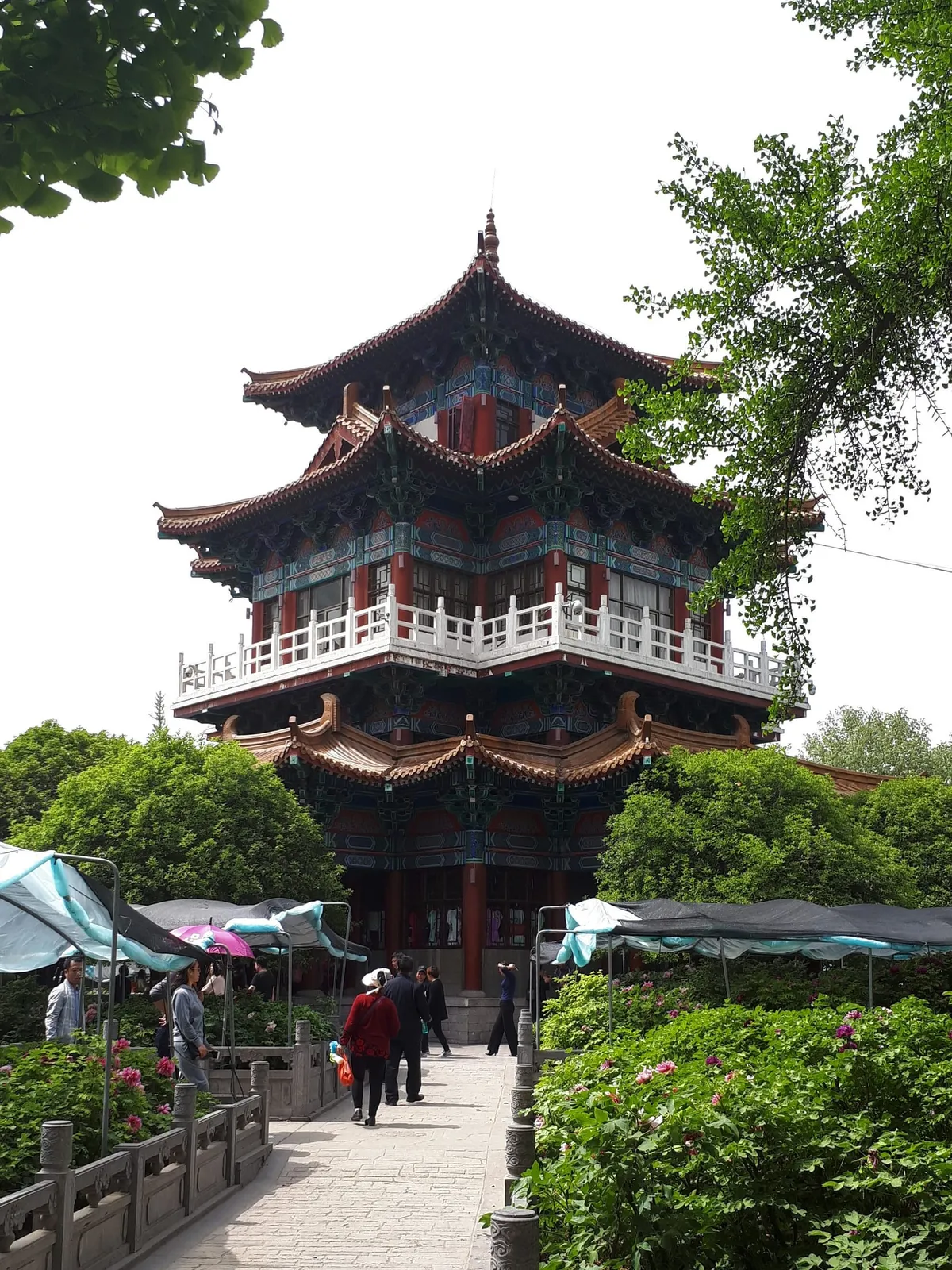
A traditional pavilion overlooking peony flower beds in Wangcheng Park, Luoyang

Wangcheng Park 王城公园

~2 hoursFree most of the year; ¥20–¥40 during the peony festival (a separate flower-viewing ticket)

Luoyang has been China's peony capital since the Tang dynasty, and this park built over the ruins of the ancient Zhou-dynasty royal city hosts the biggest bloom every April. Outside the roughly three-week peony window it's a normal city park — pleasant, not a must-see — so this is a seasonal entry, not a year-round highlight.

TicketsNo booking needed; the peony festival ticket is sold at the gate.

Local tipIf you're not visiting in April, skip this one and spend the time at Longmen or the old town instead.

What to eat

Luoyang's must-eat list

Luoyang's signature dish is a whole banquet, not a bowl — deep dives live in our food guides; vegetarians, start here. A proper water banquet is a group table booked ahead — restaurant reservations in China shows how to lock one in.

Luoyang Water Banquet 洛阳水席

A Tang-dynasty banquet tradition: 24 courses served one at a time, mostly soups and saucy dishes eaten with a spoon (hence 'water'), alternating cold, hot, sweet, and savory. Restaurants sell smaller set menus of 8–12 courses for two people rather than the full imperial-scale version.

WhereDedicated shuixi restaurants around the old town — look for '水席' on the sign

  • 🌾 contains gluten
  • 🌶️ mild

Luoyang Beef Soup 洛阳牛肉汤

A clear, peppery beef broth ladled over strips of beef and thin noodles or torn flatbread, eaten as breakfast across the city. Shops open early and often sell out by mid-morning — this is a dish locals eat before work, not a leisurely lunch.

WhereBreakfast shops throughout the old town and near Longmen Avenue, busiest before 9am

  • 🌾 contains gluten
  • 🌶️ mild
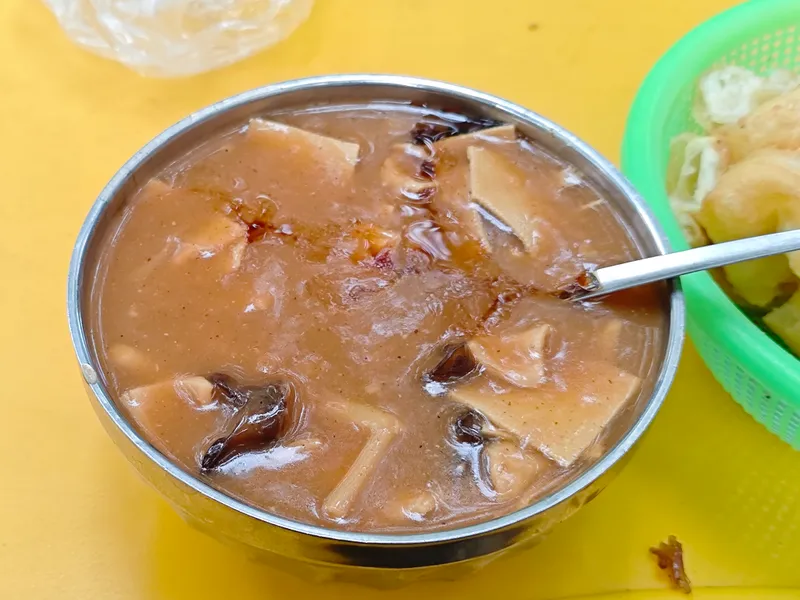
A metal bowl of thick, brown hu la tang pepper soup with tofu skin and mushroom, served beside fried dough sticks

Hu La Tang (Spicy Pepper Soup) 胡辣汤

A thick, peppery breakfast soup thickened with starch into a glossy gruel, loaded with tofu skin, wood ear, and shredded meat, and finished with a splash of chili oil and vinegar. It's eaten across Henan province, not just Luoyang, but locals here have it as often as they have congee — order it with a side of fried dough sticks (油条) for dipping.

WhereBreakfast stalls citywide, busiest (and best) before 9am

  • 🌾 contains gluten
  • 🌶️🌶️ medium

Beyond sightseeing

Experiences you can book here

Ready to plan the days?

Luoyang pairs naturally with Xi'an (a 1.5-hour high-speed rail hop) for a two-ancient-capitals circuit, or with Pingyao/Datong for a wider Central Plains heritage route. Budget a full day for Longmen and the old town, and a separate half-day-plus for Shaolin.

Placing this on the map: see where Luoyang sits relative to everywhere else on our interactive map of China, and check when it's busiest on the crowd calendar before you fix dates.

Frequently asked questions

Can I visit Shaolin Temple as a day trip from Luoyang?
Yes, but budget the full day — it's about 75km/1.5 hours each way, and between the temple halls, the Pagoda Forest, and a martial arts show, most visitors spend 3-4 hours on site. Leave early and you can still see part of Luoyang in the afternoon.
How crowded are the Longmen Grottoes?
Busy but manageable outside Golden Week and the April peony festival, when it gets genuinely packed. Arrive at opening time or in the last two hours before close for a calmer visit — the site is large enough to spread crowds out along the cliff.
Is Luoyang worth visiting outside peony season?
Yes — Longmen Grottoes, Shaolin Temple, and White Horse Temple are the real draws and don't depend on the flowers. Wangcheng Park itself is a skippable city park the other 11 months of the year; the grottoes and temples are the reason to come.
Is Luoyang or Xi'an the better base for this part of China?
They're complementary, not competing — Xi'an has the Terracotta Army and city wall, Luoyang has Longmen and Shaolin, and they're a 1.5-hour high-speed rail hop apart. Most itineraries do both rather than choosing one.

Facts verified 2026-07-22. Opening rules and prices change — re-check official channels for anything booking-critical. Photos: licensed travel photography. Photo credits: White Horse Temple photo: xiquinhosilva, CC BY 2.0, via Wikimedia Commons · Peony festival photo: Alex Ostrovski, CC BY-SA 4.0, via Wikimedia Commons · Hu la tang photo: Liuxingy, CC BY-SA 4.0, via Wikimedia Commons.