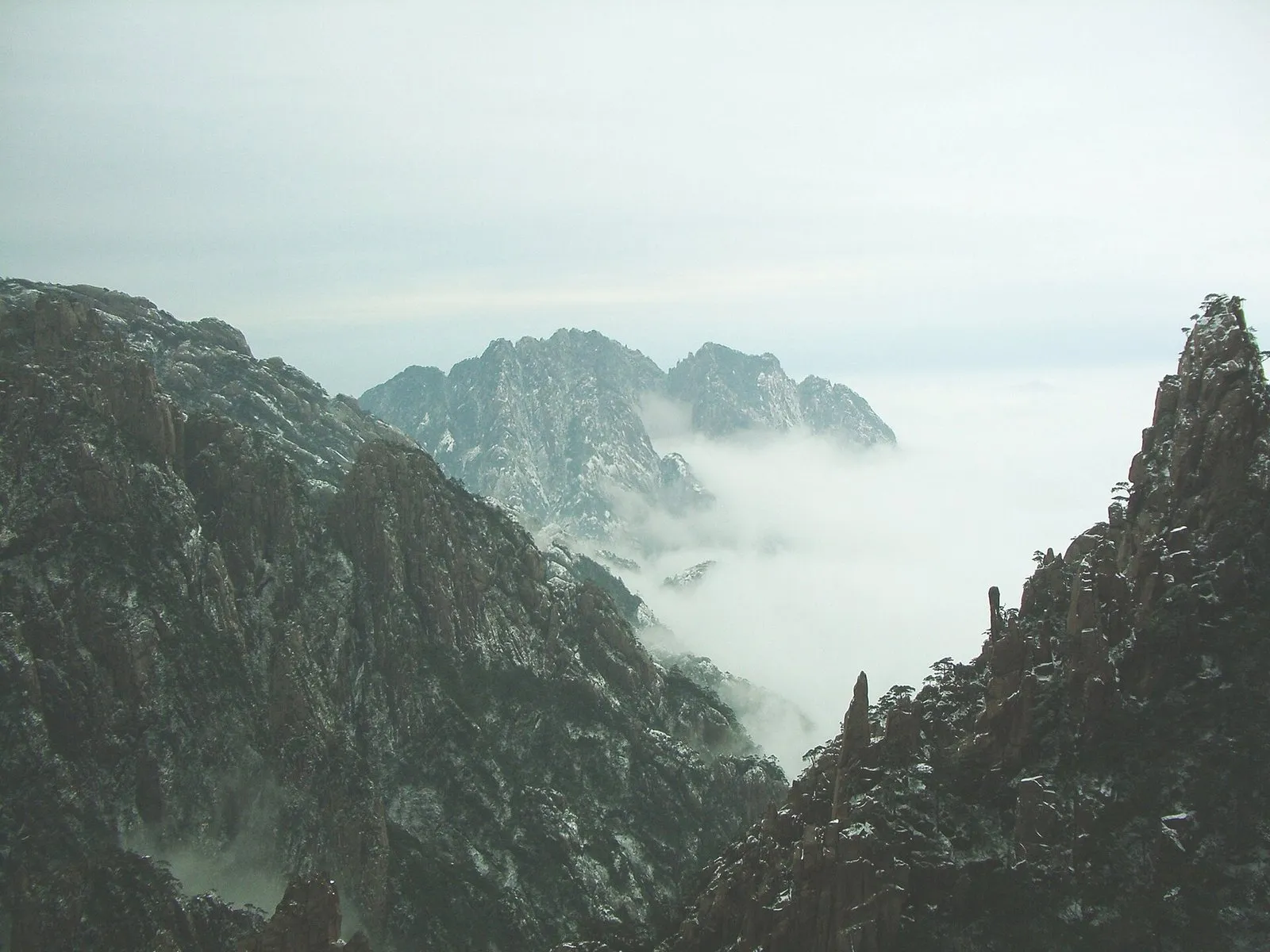
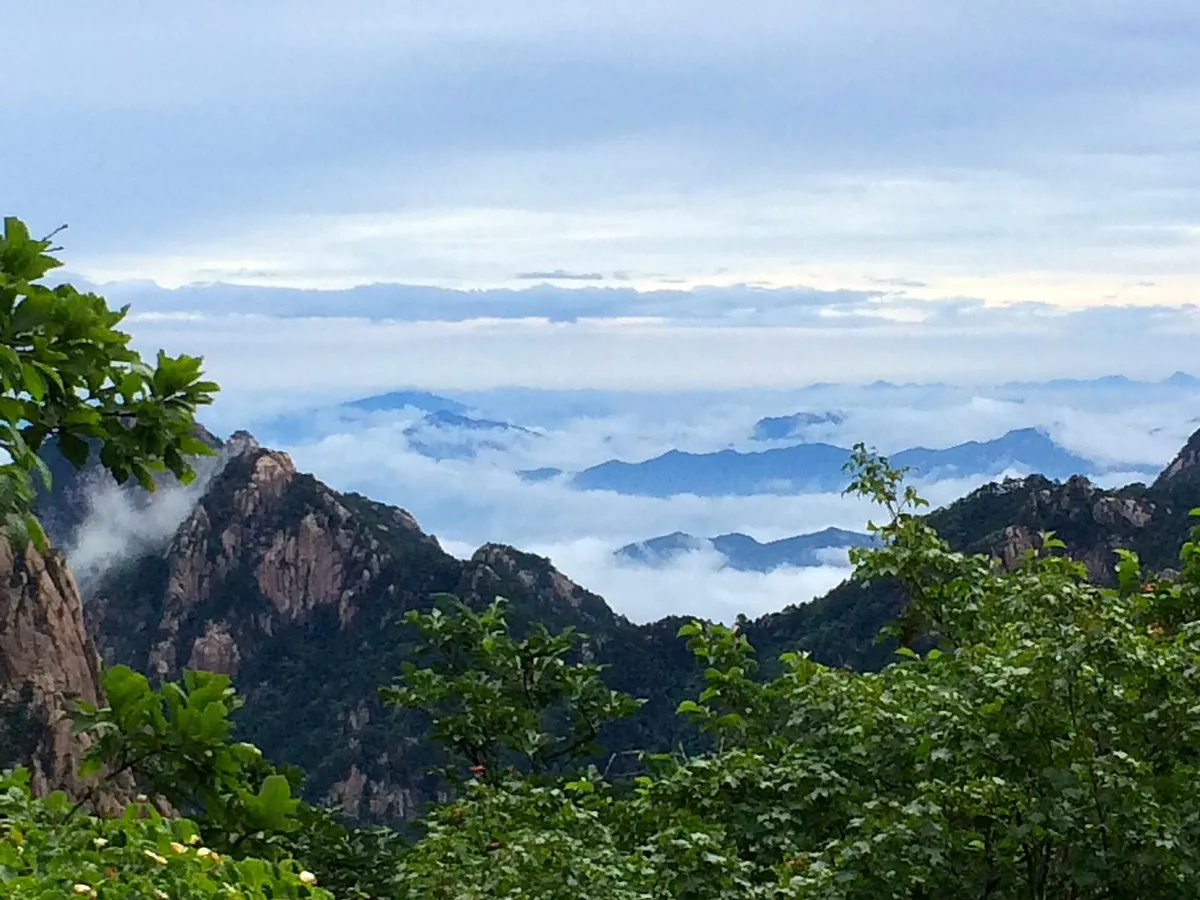
Snow-dusted granite peaks of Huangshan rising above a sea of clouds

Destination guide · Verified 2026-07-22

Huangshan

The mountain from a thousand ink paintings — granite spires, sunrise cloud seas, and two UNESCO villages of whitewashed merchant houses in the valleys below.

Getting there
High-speed rail to Huangshan North: ~1.5 hr from Hangzhou, ~3 hr from Shanghai; the airport has direct flights from major cities
Best seasons
April–November for the mountain; the days after a cold front bring the famous cloud seas. Winter is cold, snowy, and beautifully empty
Days needed
3 days: one full day (ideally with a summit night) for the mountain, one for Hongcun and Xidi, an evening for Tunxi Old Street
Famous for
The granite peaks and cloud seas of Chinese painting, plus two UNESCO-listed Hui merchant villages
Base yourself
Tunxi (Huangshan City) for transport and food; one night on the mountain itself for sunrise

Huangshan Travel Guide: What to Know Before You Go

The short version: Huangshan is the granite mountain from a thousand Chinese ink paintings — sunrise cloud seas above jagged peaks, with two UNESCO-listed Hui merchant villages (Hongcun and Xidi) in the valleys below. Three days covers the mountain (best with an overnight for sunrise), the villages, and Tunxi Old Street.

The essentials

What to see — and what to know before you go

The mountain itself needs a real-name advance booking in peak season; the villages and streets below are walk-up. Verified 2026-07-22.

Huangshan's granite peaks rising above a valley filled with clouds, framed by pine branches

Huangshan Scenic Area (Yellow Mountain) 黄山风景区

Full day¥190 peak season / ¥150 winter; cable cars ¥80–90 per leg

The mountain behind a thousand ink paintings: granite spires, gnarled pines growing out of sheer rock, and the cloud sea that swallows the valleys after rain. UNESCO-listed and genuinely worth the hype — this is the landscape China means when it says mountains.

Booking — 1 days ahead, passport neededReal-name entry — book tickets and cable-car slots ahead (official WeChat mini-program or Trip.com) for weekends, holidays, and the whole peak season; same-day tickets do sell out.

Local tipSleep one night on the summit — sunrise over the cloud sea is the whole point, and day-trippers miss it. Classic loop: Yungu cable car up, Yuping (Greeting Pine) down.
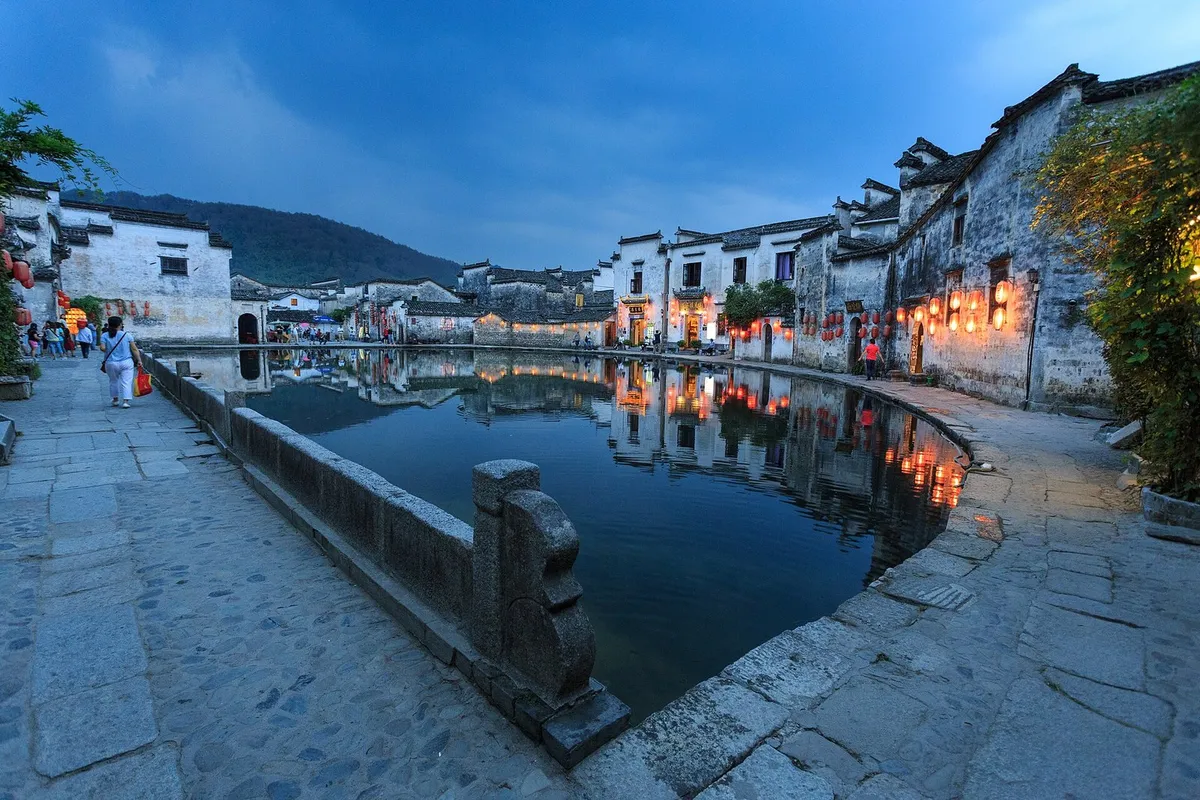
Hongcun's Moon Pond at blue hour, with lantern-lit Hui houses reflected in the water

Hongcun Village 宏村

~3 hours¥104

A Ming-dynasty village built around a crescent Moon Pond, where whitewashed Hui merchant houses double themselves in still water — the setting for Crouching Tiger, Hidden Dragon's most famous scenes, and at dusk one of the most photogenic places in China.

TicketsWalk-up tickets at the village entrance; keep the stub — it's checked when re-entering.

Local tipStay overnight in a village guesthouse. The tour buses drain away by 5pm and you get the lantern-lit pond, the morning mist, and the art students to yourself.

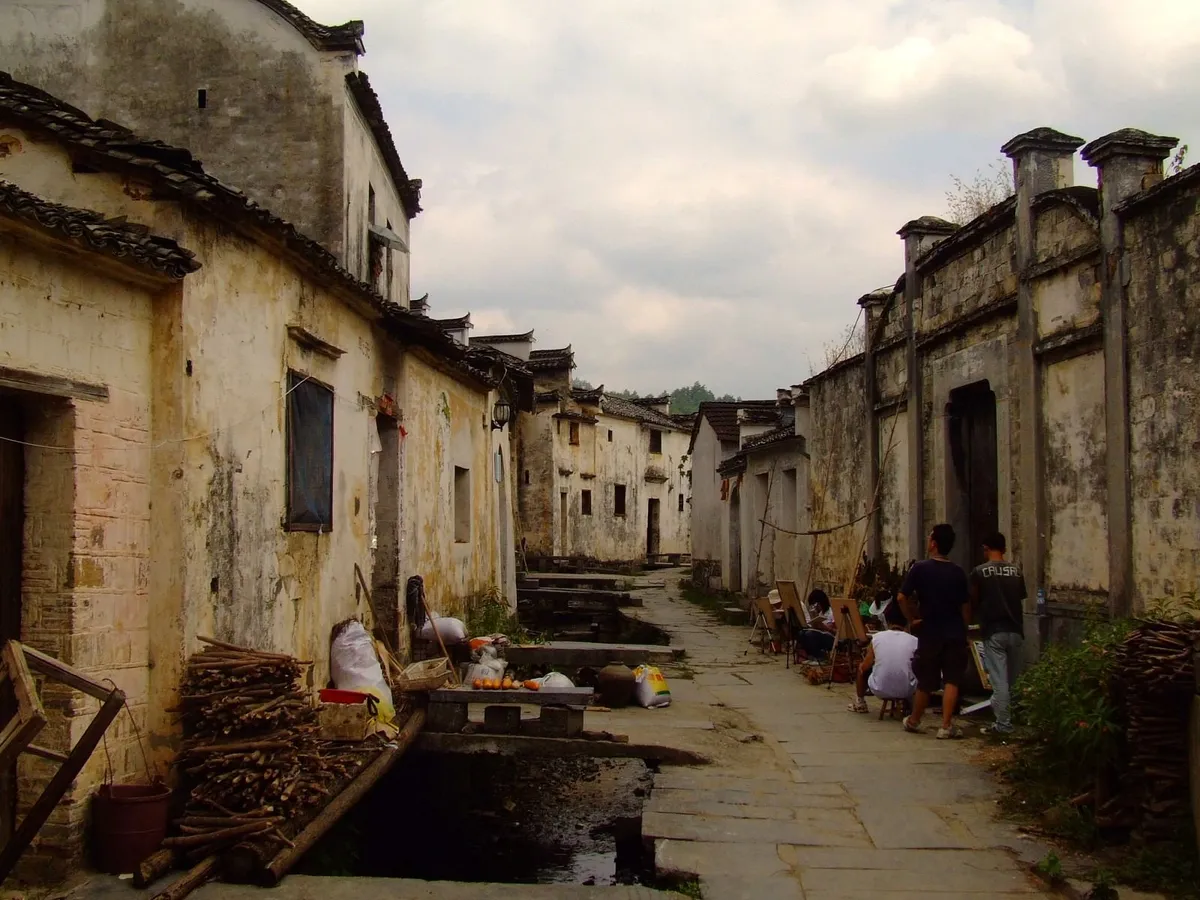
A stone lane between whitewashed Hui-style houses in Xidi village, with art students painting

Xidi Village 西递

~2.5 hours¥104

Hongcun's quieter UNESCO twin: over a hundred preserved Ming and Qing merchant houses along narrow stone lanes, entered through a rare surviving marble memorial archway. Fewer tour groups, same exquisite woodcarving — connoisseurs often like it better.

Local tipCome in the morning when art students set up their easels along the lanes — following them is an easy way to find the best angles.

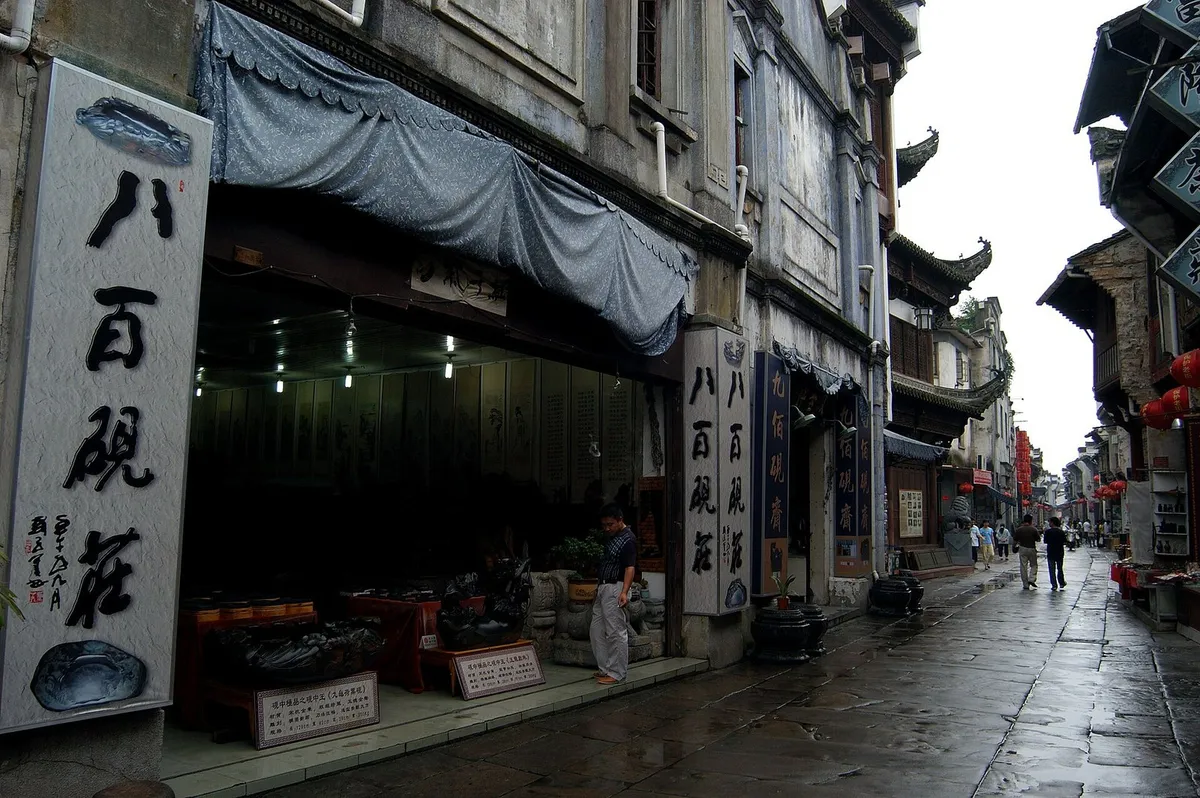
Rain-washed flagstones and traditional shopfronts along Tunxi Old Street

Tunxi Old Street 屯溪老街

~2 hoursFree

A Song-style flagstone street of tea shops, inkstone carvers, and Hui pastry bakeries in downtown Huangshan City — the natural evening stroll after a mountain day, ending at the riverside. This is also where you'll eat your best meals in the region.

Local tipBase yourself in Tunxi: the high-speed rail station, the buses to the mountain, and the villages all radiate from here.

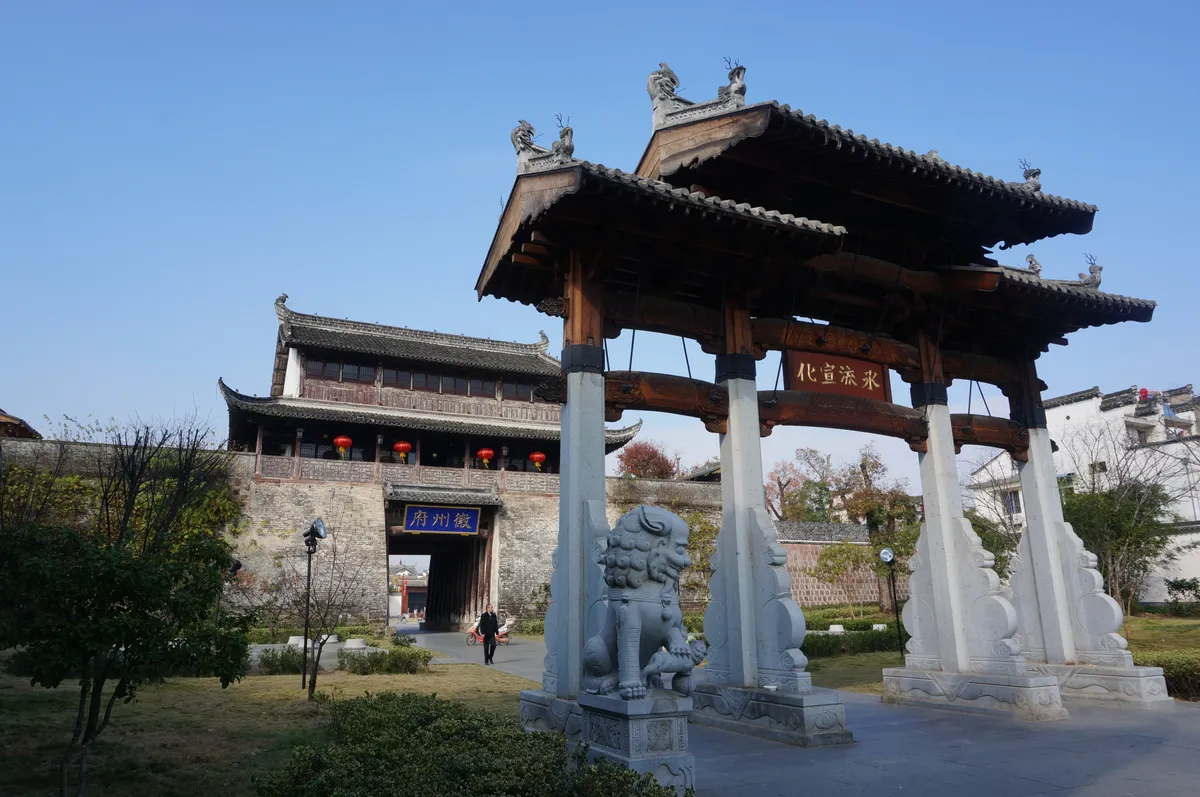
The Chengxuan Archway and stone lion guardians at the gate of Huizhou Ancient City's government office

Huizhou Ancient City 徽州古城

~3 hours¥100

The old capital of the Huizhou merchants, in Shexian county east of Tunxi — city gates, the extraordinary eight-pillar Xu Guo stone archway, and lanes that explain where all that village wealth came from. A natural half-day pairing with the trip in or out.

Local tipCombine it with Yuliang's ancient dam and boat pier, a 15-minute walk from the city gate — most visitors miss it.

What to eat

Huangshan's must-eat list

Hui cuisine is one of China's eight great traditions — built on fermentation, mountain ingredients, and patience. Deep dives live in our food guides; vegetarians, start here.

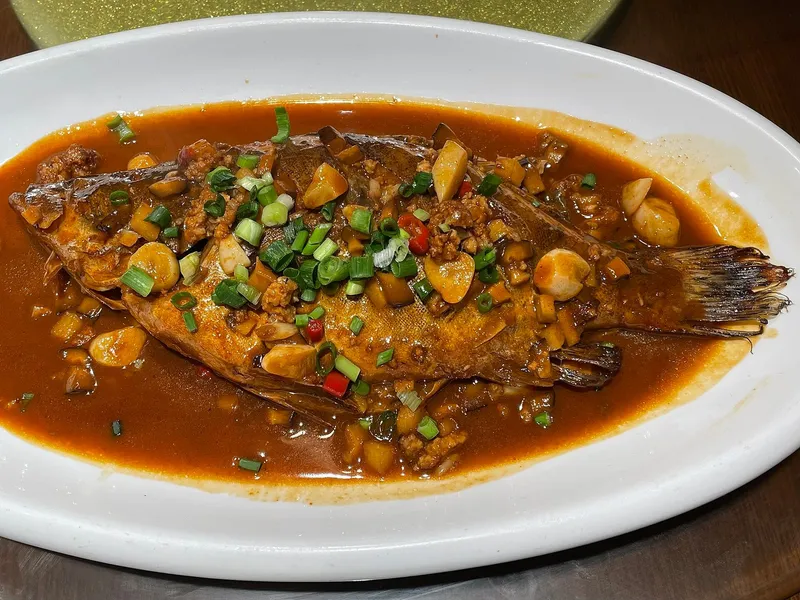
A whole braised stinky mandarin fish in dark sauce topped with scallions

Stinky Mandarin Fish 臭鳜鱼

Huizhou cuisine's signature dare: mandarin fish lightly fermented in brine for a week, then braised in soy with bamboo shoots. The smell says no, the taste — dense, garlicky, faintly cheese-like — says absolutely yes. Locals judge a Hui restaurant by this one dish.

WhereOld-school Hui restaurants around Tunxi Old Street; a proper one arrives whole, in a clay-dark sauce

  • 🌾 contains gluten
  • 🌶️ mild
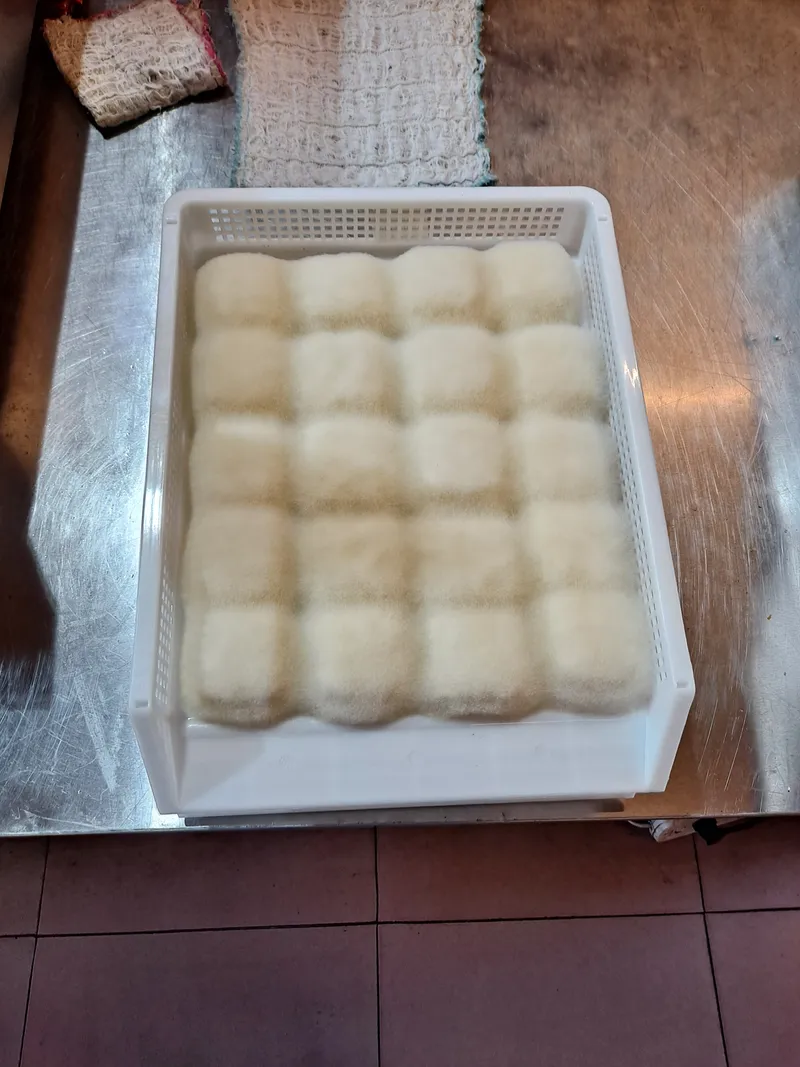
A tray of hairy tofu squares covered in their characteristic coat of fine white fermentation mold

Hairy Tofu 毛豆腐

Tofu fermented until it grows a coat of fine white down, then pan-fried crisp and eaten with chili sauce — Anhui's answer to blue cheese. Sounds alarming, tastes mild, savory, and custardy inside. Watch it made at street stalls.

WhereStreet griddles in Tunxi and the Hongcun/Xidi villages — point at the fuzzy squares

  • 🌱 vegetarian option
  • 🌶️🌶️ medium

Huangshan Shaobing 黄山烧饼

Palm-sized 'crab-shell' pastries baked against the oven wall until shatteringly flaky, filled with dried vegetable and a whisper of cured pork. The region's train-ride snack — bakeries sell them warm by the bag.

WhereBakery windows along Tunxi Old Street; buy where the tray is still steaming

  • 🌾 contains gluten

Beyond sightseeing

Experiences you can book here

Ready to plan the days?

Huangshan works best as three unhurried days: the mountain (with a summit night for sunrise), the villages, and an evening on Tunxi Old Street with a stinky mandarin fish you'll talk about for years. Check the seasons before locking dates — the mountain rewards timing.

Placing this on the map: see where Huangshan sits relative to everywhere else on our interactive map of China, and check when it's busiest on the crowd calendar before you fix dates.

Frequently asked questions

Is Huangshan the same as Huangshan City?
Confusingly, no. Huangshan City (locally Tunxi) is the transport hub in the valley; the Yellow Mountain scenic area is about an hour north by bus or car. Trains and flights arrive in the city — plan the mountain as a separate day (or overnight) from there.
Do I need to stay overnight on Huangshan?
You can day-trip it, but the overnight is what makes the trip: sunrise over the cloud sea happens before the first cable car arrives. Summit hotels are basic and cost more than their comfort justifies — you're paying for the alarm clock at 4:30am and the view that follows.
How hard is the hiking on Huangshan?
The cable cars remove the brutal ascents, but summit paths are still stone staircases — a full day means thousands of steps up and down. Reasonable fitness and grippy shoes are enough; porters carry luggage between summit hotels if needed.
Hongcun or Xidi — which village if I only have time for one?
Hongcun for the postcard: the Moon Pond reflections and South Lake bridge are the images you've seen. Xidi for the quieter wander among equally old houses. They're 20 minutes apart by taxi, so ambitious half-days can do both.

Facts verified 2026-07-22. Opening rules and prices change — re-check official channels for anything booking-critical. Photos: licensed travel photography; hero: The Pocket, CC BY 2.0, via Wikimedia Commons. Photo credits: Huangshan peaks photo: JesseW900, CC BY-SA 4.0, via Wikimedia Commons · Hongcun photo: Zhangzhugang, CC BY-SA 4.0, via Wikimedia Commons · Huizhou Ancient City photo: 猫猫的日记本, CC BY-SA 4.0, via Wikimedia Commons · Stinky mandarin fish photo: Zheng Zhou, CC BY-SA 4.0, via Wikimedia Commons · Hairy tofu photo: EditQ, CC BY-SA 4.0, via Wikimedia Commons · Maofeng tea photo: Qirille, CC BY-SA 4.0, via Wikimedia Commons.