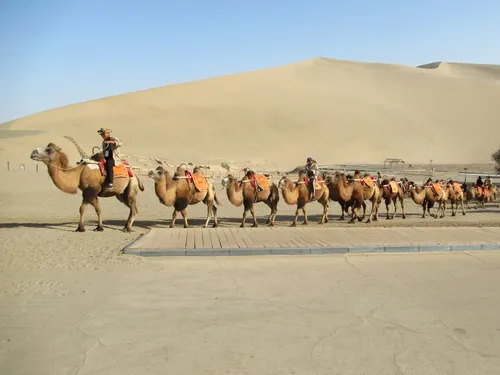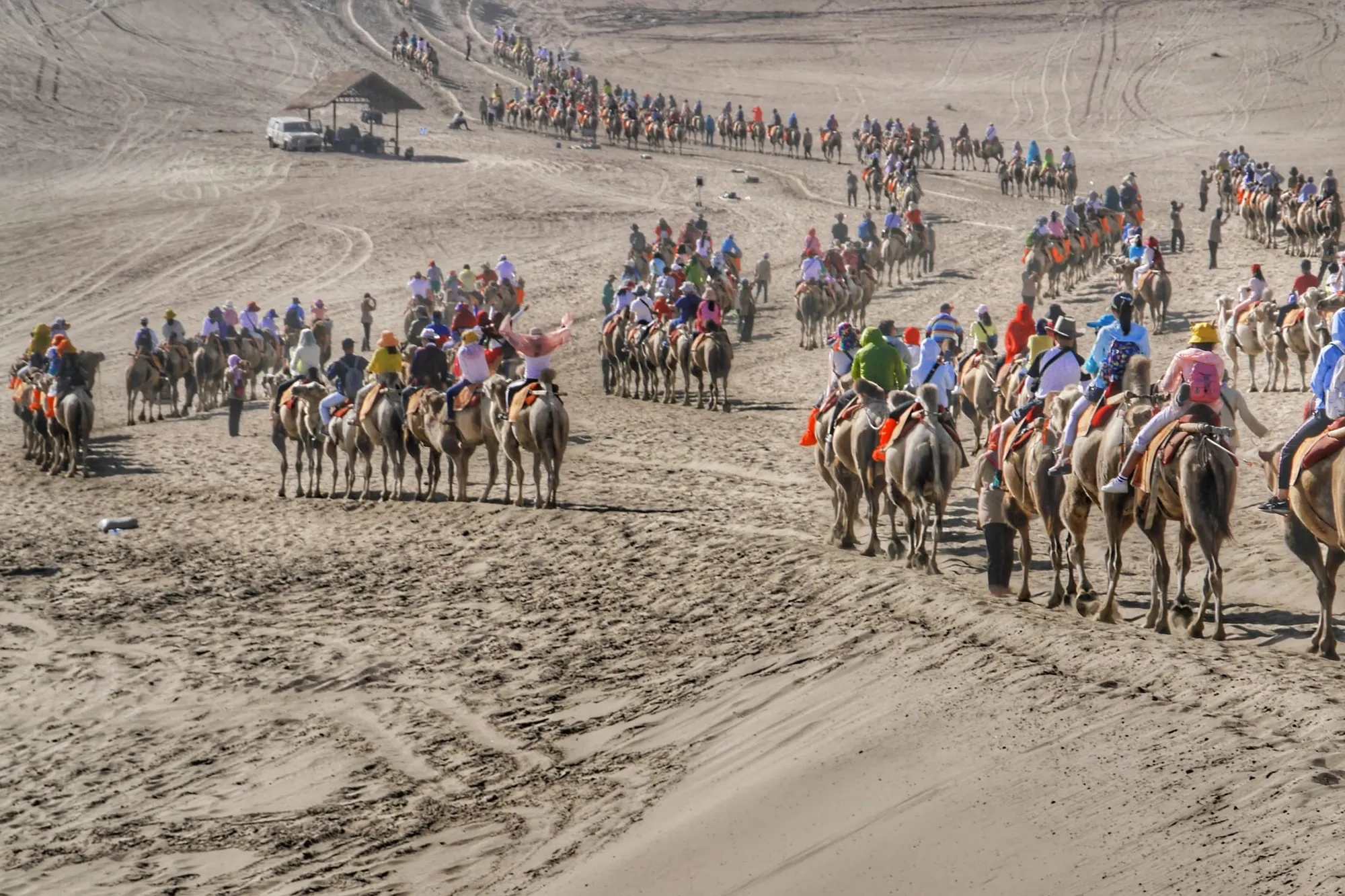
A camel caravan of tourists crossing the Mingsha sand dunes near Dunhuang

Destination guide · Verified 2026-07-22

Dunhuang

A thousand years of Buddhist murals carved into a desert cliff, a crescent-shaped spring that refuses to be buried by the dunes around it, and the gate where the Silk Road left China for good — about as far west as most itineraries go.

Getting there
Flight: ~2 hr from Xi'an (the classic onward leg), ~3 hr from Beijing; Dunhuang Mogao Airport is a short taxi from the old town — no high-speed rail reaches this far west
Best seasons
May–October — this is genuine desert, so winters are bitterly cold and summer midday sun is intense
Days needed
2 days: one for Mogao Caves, one for Mingsha Dunes, Crescent Lake, and the old town — add a third if Yumen Pass is on your list
Famous for
The largest collection of Buddhist cave art on Earth, singing sand dunes around an improbable desert oasis, and the westernmost gate of the old Silk Road
Base yourself
Dunhuang old town — everything except Mogao Caves and Yumen Pass is within walking or short-taxi distance

Dunhuang Travel Guide: What to Know Before You Go

The short version: Dunhuang sits at China's western edge on the old Silk Road, built around the Mogao Caves' Buddhist murals and the Mingsha Dunes' singing sand around Crescent Lake. Two days covers the essentials — no high-speed rail reaches this far west, so most visitors arrive by a roughly two-hour flight from Xi'an.

The essentials

What to see — and what to know before you go

Mogao Caves is the one advance booking that matters here — everything else can be bought at the gate. Verified 2026-07-22.

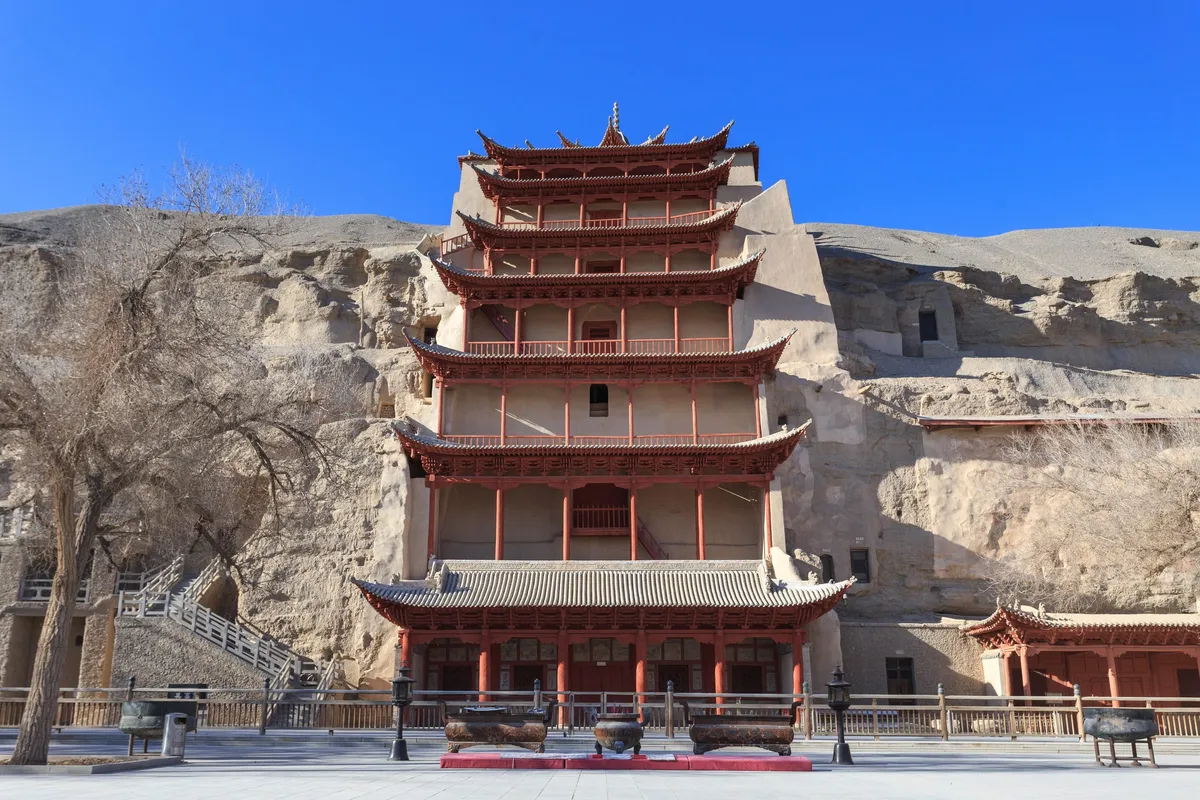
The multi-story red pagoda facade built over the giant Buddha cave at Mogao Caves

Mogao Caves 莫高窟

~4 hours¥238 (peak, includes films + 8 guided caves), ¥100 (low season, Dec–Mar)

A UNESCO World Heritage site of 492 surviving decorated caves carved into a cliff over a thousand years, holding the largest collection of Buddhist murals and manuscripts on Earth. Visits are guided and structured — two introductory films followed by a fixed route through 8 of the caves — rather than free wandering, which keeps the fragile paintings intact.

Booking — 1 days aheadBook online in advance — daily visitor numbers are capped and peak-season tickets sell out days ahead. Passport required to book and enter.

Local tipThe standard ticket only covers 8 caves; several more spectacular ones (including the giant Buddha caves) require an extra-cost specialist tour booked separately and in more limited numbers.
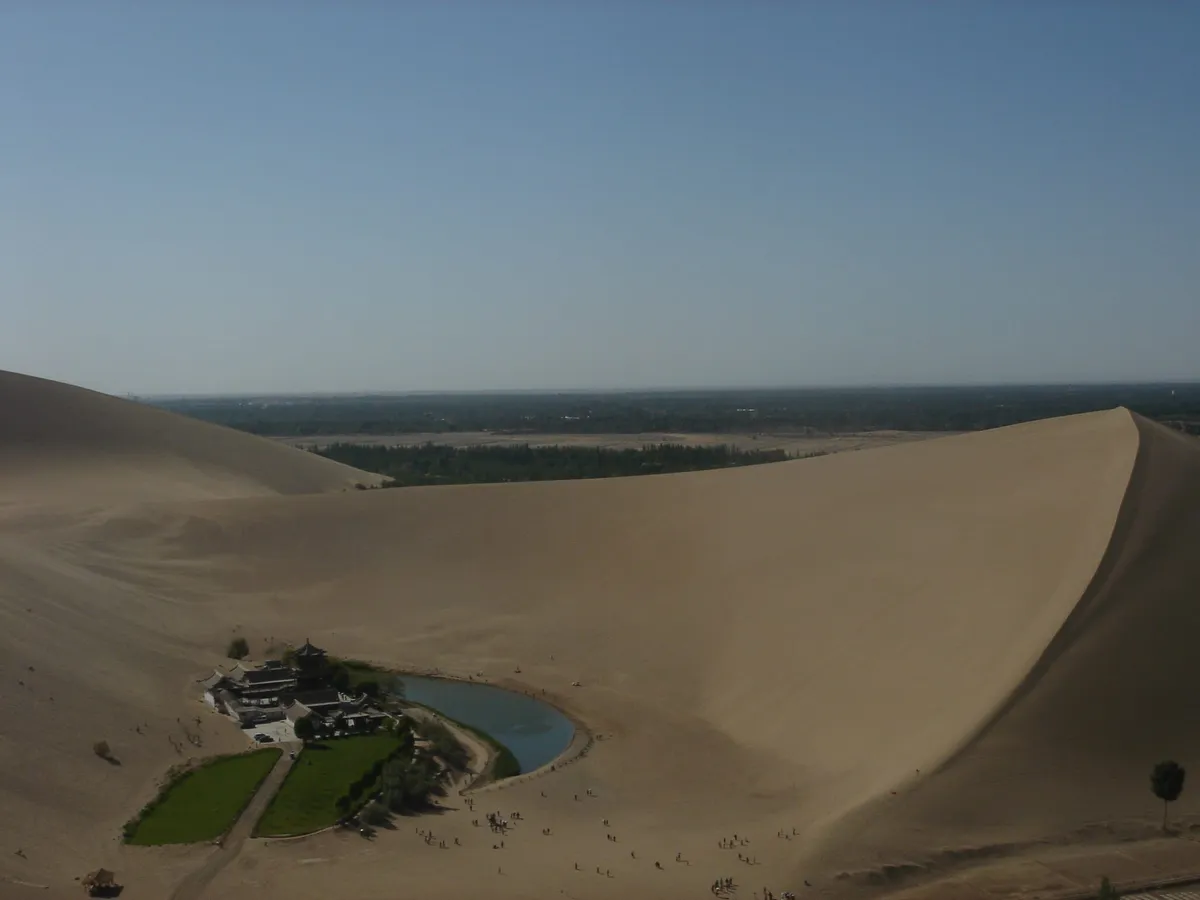
Aerial view of the crescent-shaped Crescent Lake oasis surrounded by the Mingsha sand dunes

Mingsha Dunes & Crescent Lake 鸣沙山月牙泉

~3 hours¥110 (park entry); camel rides and sandboarding are extra

A crescent-shaped spring oasis has sat in the hollow of these singing sand dunes for over 2,000 years, somehow never buried despite being surrounded by desert on all sides. Most visitors ride a camel up into the dunes for sunset, then walk (or sandboard) back down to the lake — it's touristy and can get crowded, but the desert-and-oasis view is genuinely unlike anywhere else on a typical China itinerary.

Local tipBring sand-proof shoe covers or old socks over your shoes — sold at the entrance — the sand gets everywhere otherwise.

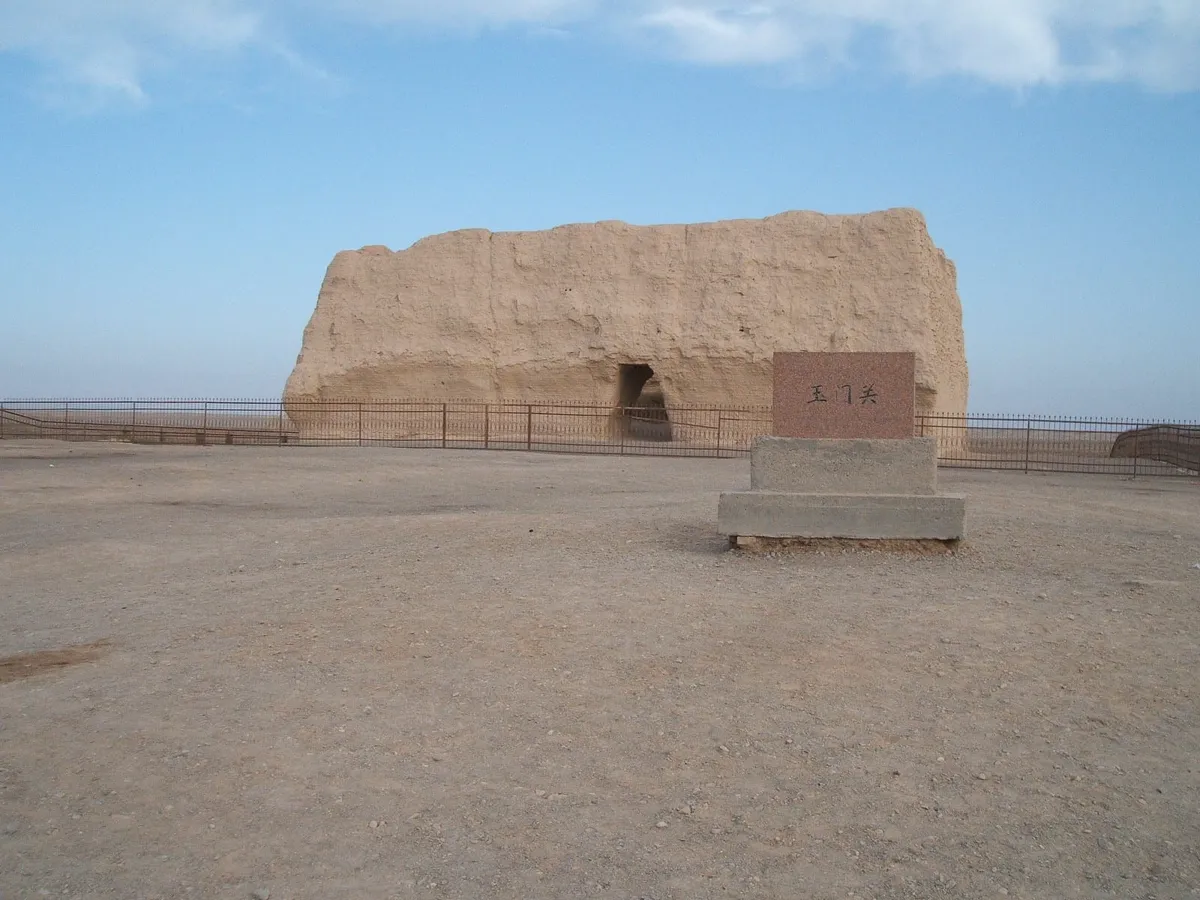
The lone rammed-earth watchtower of Yumen Pass standing in open desert

Yumen Pass 玉门关

~3 hoursUsually sold as part of a combined West-line ticket with other Han-dynasty sites

A crumbling rammed-earth fort from the Han dynasty, once the westernmost gate of China proper and the point where the Silk Road left imperial territory for good — the setting of Wang Zhihuan's famous Tang poem about willows that don't grow beyond the pass. What's left is a single weathered watchtower standing alone in open desert, which is precisely the point: it looks exactly as remote as the poems describe.

TicketsAbout 90km from Dunhuang city — arrange a car, driver, or tour, as there's no regular public transport out here.

Local tipThere isn't much infrastructure out here — bring water and sun protection, and confirm your return transport before you go.

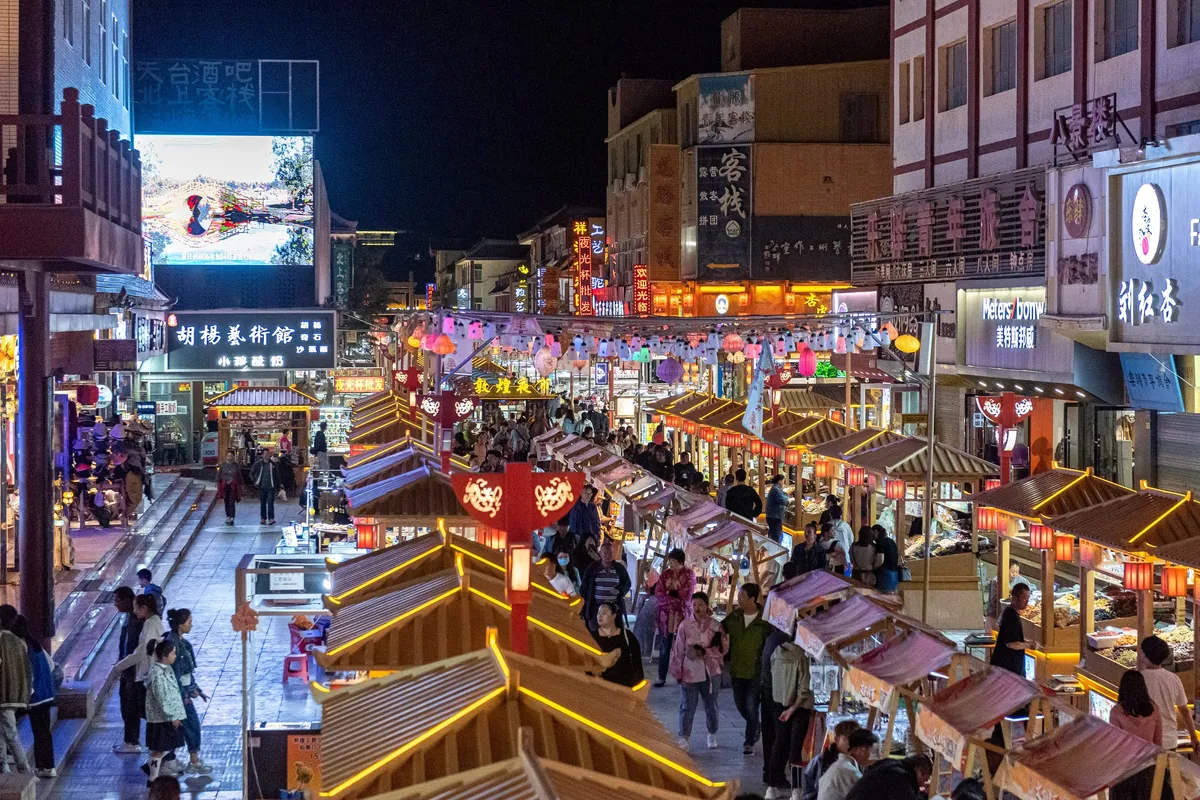
Lantern-lit stalls lining a pedestrian street at Dunhuang Night Market

Dunhuang Night Market 沙州夜市

~2 hoursFree to browse; pay per item

A lantern-lit street of stalls selling Silk Road souvenirs, jade, dried fruit, and food from donkey-meat noodles to grilled lamb skewers, a short walk from most old-town hotels. After a full day of desert sightseeing it's the easy, low-effort evening plan — no booking, no ticket, just food and browsing.

Local tipTry the apricot-skin drink (杏皮水) — a local specialty you won't easily find outside Gansu.

What to eat

Dunhuang's must-eat list

Gansu cooking on the old Silk Road runs on hand-pulled noodles and desert-climate specialties — deep dives live in our food guides; vegetarians, start here.

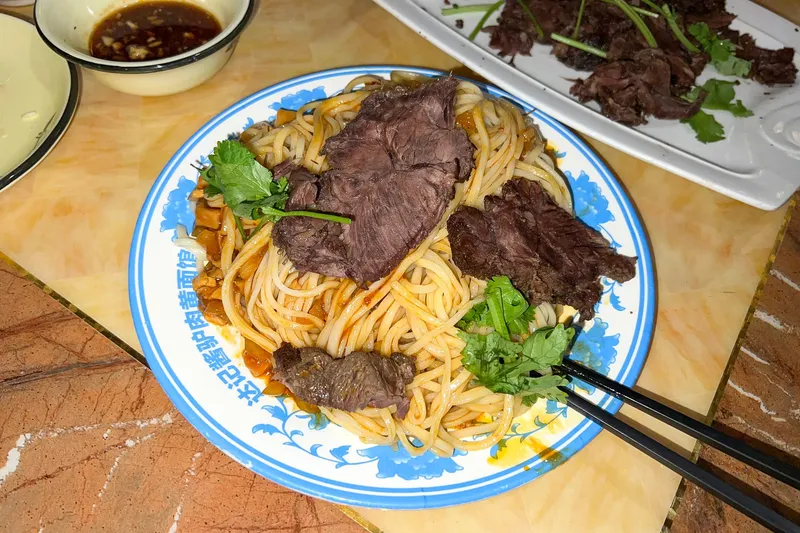
A plate of yellow hand-pulled noodles topped with sliced braised donkey meat and cilantro

Donkey Meat Yellow Noodles 驴肉黄面

Dunhuang's signature dish: hand-pulled, egg-yellow wheat noodles served alongside braised donkey meat, usually with a side of raw garlic. The saying 'dragon meat in heaven, donkey meat on earth' (天上龙肉,地上驴肉) gets quoted at every restaurant that serves it.

WhereOld town restaurants near the night market, most with an English picture menu

  • 🌾 contains gluten

Apricot Skin Drink 杏皮水

A cold, tangy-sweet drink brewed from dried apricot skins, sold everywhere from restaurant tables to night market stalls. It's the local answer to desert heat — genuinely refreshing rather than sugary-sweet — and hard to find much outside Gansu province.

WhereDunhuang Night Market and most old-town restaurants

  • 🌱 vegetarian option

Pao'er Youge (Bubble Fried Cake) 泡儿油糕

A Tang-dynasty court pastry that made its way from the imperial kitchen to Dunhuang's street stalls over a thousand years: lard-scalded dough deep-fried until the surface puffs into a mass of tiny pearl-like bubbles, wrapped around a sweet rose, sesame, or red-bean filling. Crisp and feathery outside, sweet and glutinous inside.

WhereOld-town snack stalls and bakeries near the night market

  • 🌱 vegetarian option
  • 🌾 contains gluten
  • 🥜 contains nuts
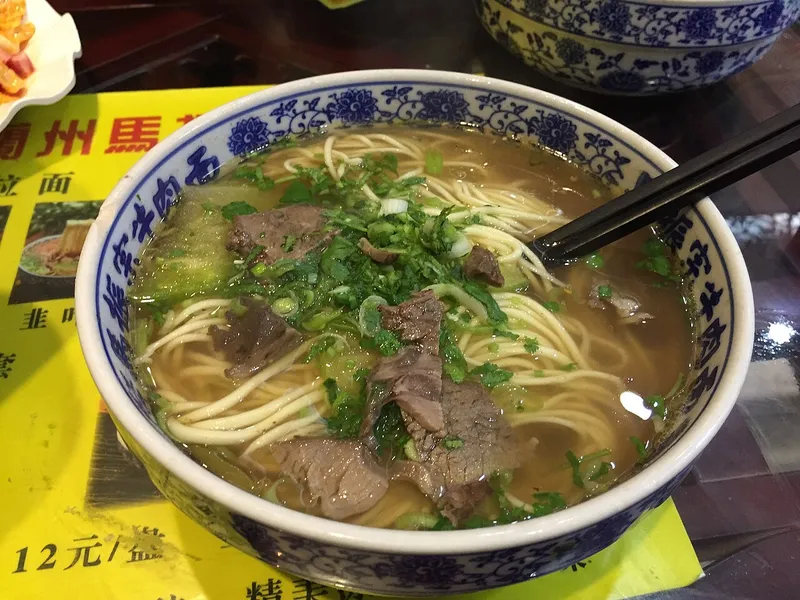
A bowl of Lanzhou beef noodles with sliced beef, cilantro, and scallion in clear broth

Lanzhou Beef Noodles 兰州牛肉面

Hand-pulled wheat noodles in a clear, peppery beef broth, topped with sliced beef, a slick of chili oil, and radish — invented in nearby Lanzhou, the provincial capital, and eaten across Gansu (and honestly, in some form, in every Chinese city). You can watch the dough get stretched and slapped into noodles right at the counter.

WhereAny shop with a queue and a cook visibly pulling noodles at the front window

  • 🌾 contains gluten
  • 🌶️ mild

Beyond sightseeing

Experiences you can book here

Ready to plan the days?

Dunhuang pairs naturally with Xi'an as the classic Silk Road route (a ~2-hour flight, and the westernmost stop most itineraries reach). Budget a full day for Mogao Caves alone, and a separate afternoon-into-sunset for Mingsha Dunes and Crescent Lake.

Placing this on the map: see where Dunhuang sits relative to everywhere else on our interactive map of China, and check when it's busiest on the crowd calendar before you fix dates.

Frequently asked questions

Do I need to book Mogao Caves tickets in advance?
Yes — daily visitor numbers are capped to protect the murals, and peak-season tickets (May–October) can sell out days ahead. Book online as soon as your dates are fixed, and bring your passport to both book and enter.
Is Yumen Pass worth the trip from Dunhuang?
Only if you have a genuine interest in Silk Road history or Chinese poetry — it's 90km each way through open desert to see a single weathered watchtower, with no other infrastructure out there. Most visitors are satisfied with Mogao Caves and Mingsha Dunes and skip it.
How hot does the desert get, and what should I pack?
Summer midday temperatures on the sand dunes routinely exceed 40°C (104°F), while desert nights and winters swing to the other extreme. Sun protection, a hat, and sand-proof shoe covers matter more here than almost anywhere else on a China itinerary.
Is Dunhuang connected by high-speed rail?
There's a regular rail line to Dunhuang, but journey times from major cities run well over 10 hours — flying is the practical choice for almost every itinerary. Xi'an to Dunhuang by air (~2 hours) is the standard Silk Road route.

Facts verified 2026-07-22. Opening rules and prices change — re-check official channels for anything booking-critical. Photos: licensed travel photography. Photo credits: Hero photo: travel oriented, CC BY-SA 2.0, via Wikimedia Commons · Mogao Caves photo: Zhangzhugang, CC BY-SA 4.0, via Wikimedia Commons · Crescent Lake photo: Roy kiki, CC BY-SA 3.0, via Wikimedia Commons · Yumen Pass photo: jun jin luo, CC BY 3.0, via Wikimedia Commons · Night market photo: N509FZ, CC BY-SA 4.0, via Wikimedia Commons · Donkey meat noodles photo: N509FZ, CC BY-SA 4.0, via Wikimedia Commons · Lanzhou beef noodles photo: N509FZ, CC BY-SA 4.0, via Wikimedia Commons · Camel caravan photo: David Stanley, CC BY 2.0, via Wikimedia Commons.