Food guide · Verified 2026-07-17
What to Eat in China: The Easy First Days
Don't start with a bucket list. Start with food that's common, visible, and impossible to misunderstand — then let the menu get more adventurous once you've figured out how ordering actually works here. This is the on-ramp, not the whole meal plan.
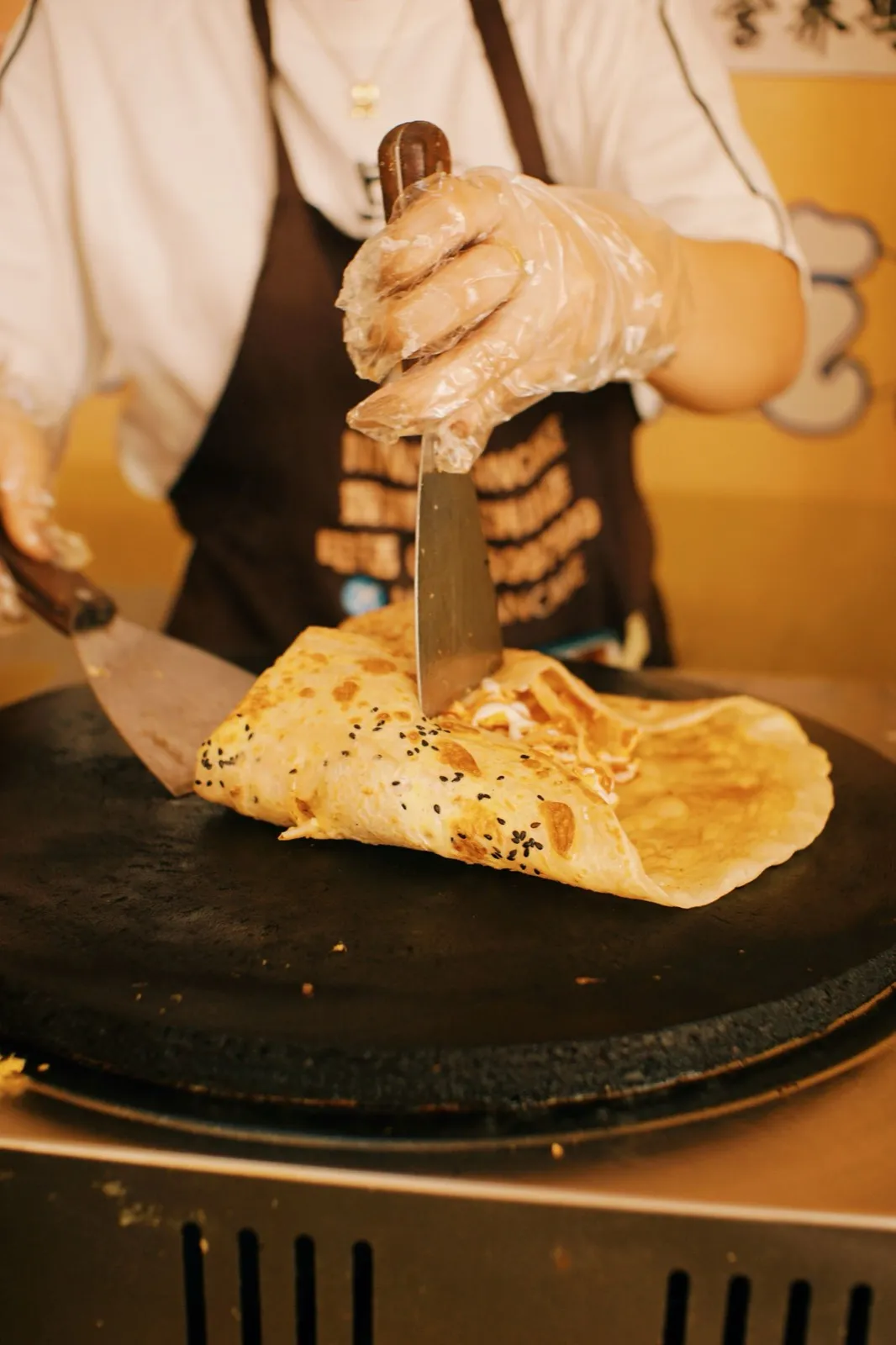
The easiest first meals
Your first meal after landing doesn't need to be the most famous dish in the country — it needs to be one you can order confidently while jet-lagged. That's a different list.
| Order | What it is | Why it's easy |
|---|---|---|
| Rice set meal | Rice + one protein + veg, sometimes soup — malls, stations, casual restaurants | Point at the photo, done |
| Noodle bowl | Beef, tomato-egg, sesame, wonton, hand-pulled | Pick the picture, say spicy or not |
| Dumplings (jiaozi) | Boiled, steamed, or pan-fried, ordered by filling | Menu photos make this foolproof |
| Food court | Every mall has one — everyone in your group orders separately | Zero negotiation needed |
| Jianbing | Savory breakfast crepe, cooked in front of you | Point, watch, eat — total transparency |
Look for photo menus, counter ordering, QR-code menus, or an open kitchen — all signal "you can order this without Chinese." Skip the famous place with a long queue and no pictures for now; save it for once you've got a rhythm going. Full ordering mechanics (including what to do when the QR menu wants a local phone number) are in our how-to-order guide.
Breakfast: the gentlest entry point
Chinese breakfast stalls usually specialize in two or three things, which makes them easier to order from than a full restaurant menu.Baozi (steamed buns filled with pork, vegetable, egg, or sweet bean paste) and jianbing are the two classics — both cooked to order, both visible from the first second. For something gentler, congee (rice porridge, plain or topped with egg, pickles, or pork) pairs well with youtiao, a fried dough stick you dip straight into it or your soy milk.
Noodles and dumplings: your bridge to everything else
Noodles are the safest route from "easy food" to "regional eating" — beef noodles, tomato-and-egg noodles, sesame noodles, wonton noodles, and hand-pulled noodles show up in some form in almost every city. Dumplings work the same way: jiaozi (crescent-shaped, boiled or pan-fried, ordered by filling) are foolproof, and xiaolongbao — soup dumplings — are worth the one warning they need: bite carefully or pierce the skin first, the broth inside is genuinely hot.
Hot pot, done as a beginner
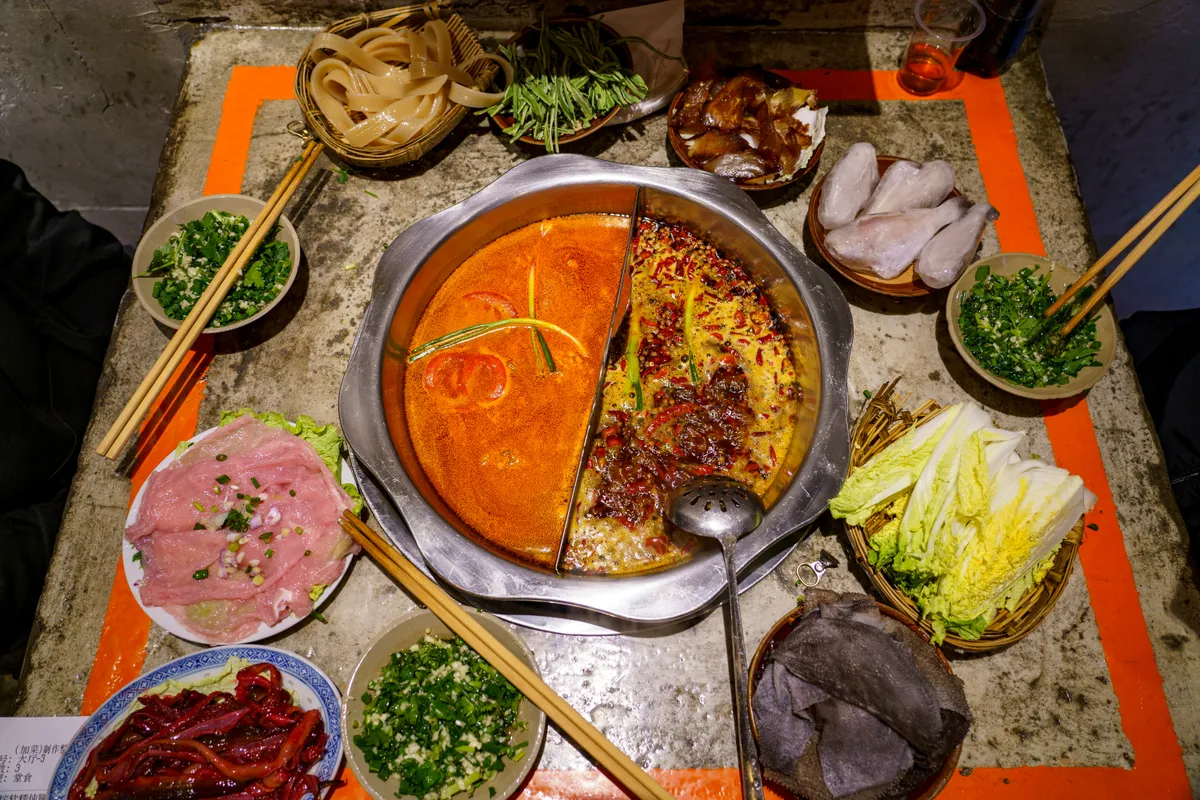
Hot pot is social and genuinely one of the best first-week experiences, if you order it right. Ask for a split pot — one mild broth, one spicy — especially in Sichuan or Chongqing, where "medium" still carries real heat. Start with familiar ingredients: sliced beef or lamb, tofu, mushrooms, cabbage, potato, fish balls. Cook meat all the way through, and don't be shy about asking staff for help — everyone at a hot pot table has, at some point, undercooked something by accident.
Regional food, once you're ready
This is where China gets genuinely exciting. Beijing means roast duck and zhajiangmian; Shanghai means xiaolongbao and scallion-oil noodles; Xi'an means biangbiang noodles and roujiamo; Chengdu and Chongqing mean spice, skewers, and mapo tofu — start mild there if you're not used to chili and Sichuan peppercorn together. Each city page on the site (start with Chengdu or browse the full food hub) has the specific dishes and where locals actually go for them.
Street food that's actually safe
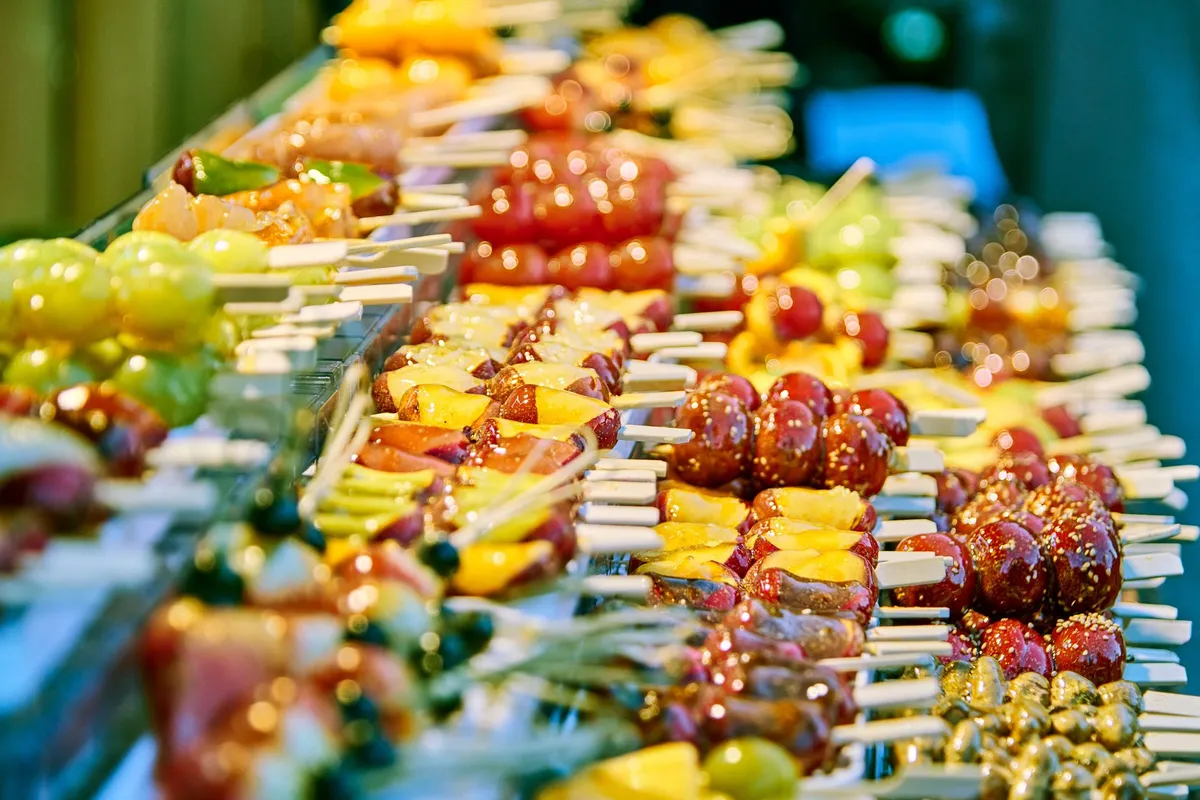
The safety signal isn't how the stall looks — it's whether the food is cooked hot, in front of you, with a line of locals moving through. Good starter snacks: grilled skewers, scallion pancakes, roasted sweet potatoes, tanghulu, fresh dumplings, and wonton stalls. If a stall seems built mainly for photos rather than feeding the neighborhood, eat dinner somewhere else.
If a stall seems built mainly for photos rather than feeding the neighborhood, eat dinner somewhere else.
- A famous restaurant with a long queue and no photo menu, as meal number one
- Full-strength Sichuan hot pot on day one if you've never handled real heat
- Raw seafood or room-temperature buffet items from a stall with slow turnover
- Anything from a stall that mostly seems set up for photos, not for eating
Allergies and dietary needs
Street food is the hardest setting for allergies — cross-contact is common and ingredient explanations are often limited. Lean on sit-down restaurants where staff can slow down and answer questions, and carry a translated allergy card rather than relying on conversation. If you're vegetarian, don't assume a vegetable dish is meat-free — stock and lard show up more than menus admit; our vegetarian guide covers the traps and the safe defaults.
Frequently asked questions
- What is the best first meal to eat in China?
- A noodle bowl, a rice set meal, or a plate of dumplings — all common, filling, and orderable by pointing at a photo. If you land late and jet-lagged, a mall food court beats hunting for a famous restaurant with no English menu.
- What Chinese food is easiest for first-time tourists?
- Baozi, jianbing, fried rice, tomato-and-egg noodles, wonton soup, dumplings, and a mild-broth hot pot split with a spicier one. All widely available, all recognizable from photos — the safe starting set before you branch into regional specialties.
- Is street food safe for first-time visitors?
- Yes, if you pick busy stalls cooking food hot in front of you — that's the actual safety signal, not the stall's appearance. Skip anything sitting lukewarm, unclear seafood, or a line with no turnover. Jianbing, baozi, skewers, and roasted sweet potatoes are the gentle entry points.
- How do I order food in China without speaking Chinese?
- Photos, pointing, and a translation app get you 90% of the way. Restaurants with picture menus, counter displays, or an open kitchen are the easiest first stops. If a QR-code menu demands a local phone number, ask staff for a paper menu instead — this happens often enough not to be a crisis.
- What should I avoid eating on my first day?
- Save the most adventurous version of anything for after you've calibrated — full-heat Sichuan hot pot, unfamiliar raw dishes, buffet items that have been sitting out. Day one is for hot, freshly cooked food you can point at, not for proving anything.
Verified 2026-07-17. Dish availability varies by region and season. Tell us if something here doesn't match what you found.