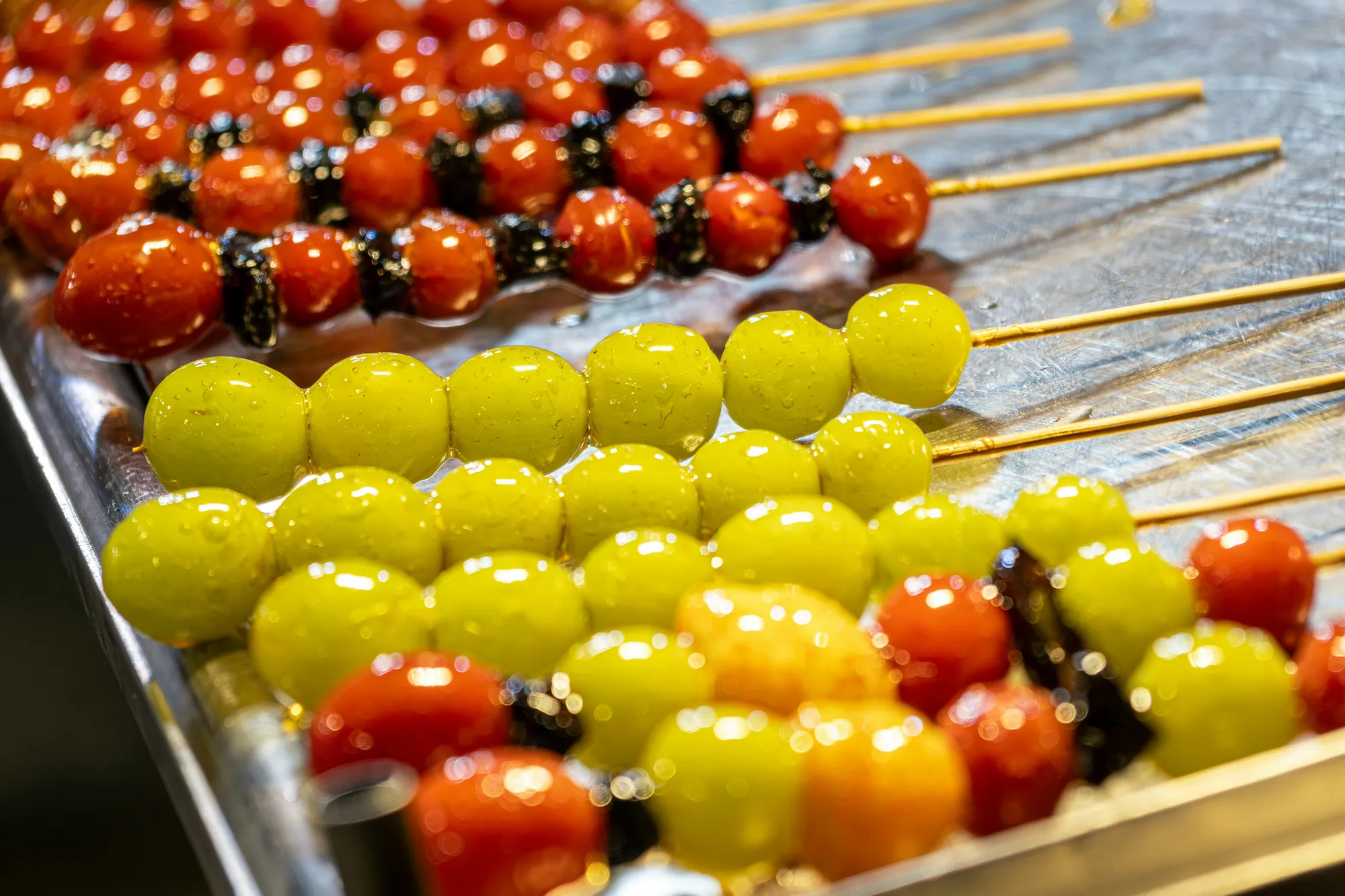
Tánghúlu (糖葫芦) is deceptively simple: fruit on a stick, dipped in hot sugar that hardens into a shell you crack with your teeth. The classic version uses hawthorn berries — tart, faintly appley fruit that balance the pure sweetness of the coating — though modern stalls skewer nearly anything now.
How it's made
Skewer the fruit
Whole hawthorn berries (山楂, shānzhā) — small, tart, apple-like fruit — are threaded onto a bamboo skewer, usually 6-8 to a stick, pits removed.
Cook the sugar
Sugar and water are boiled to a precise hard-crack stage — no candy thermometer needed for a street vendor who's done this thousands of times, just a practiced eye.
Dip and coat
Each skewer is dipped and twirled in the molten sugar, coating the fruit in a thin, glass-like shell.
Cool until it snaps
Set on an oiled board or rack to cool for a minute or two, until the coating hardens into a shell that shatters — audibly — with the first bite.
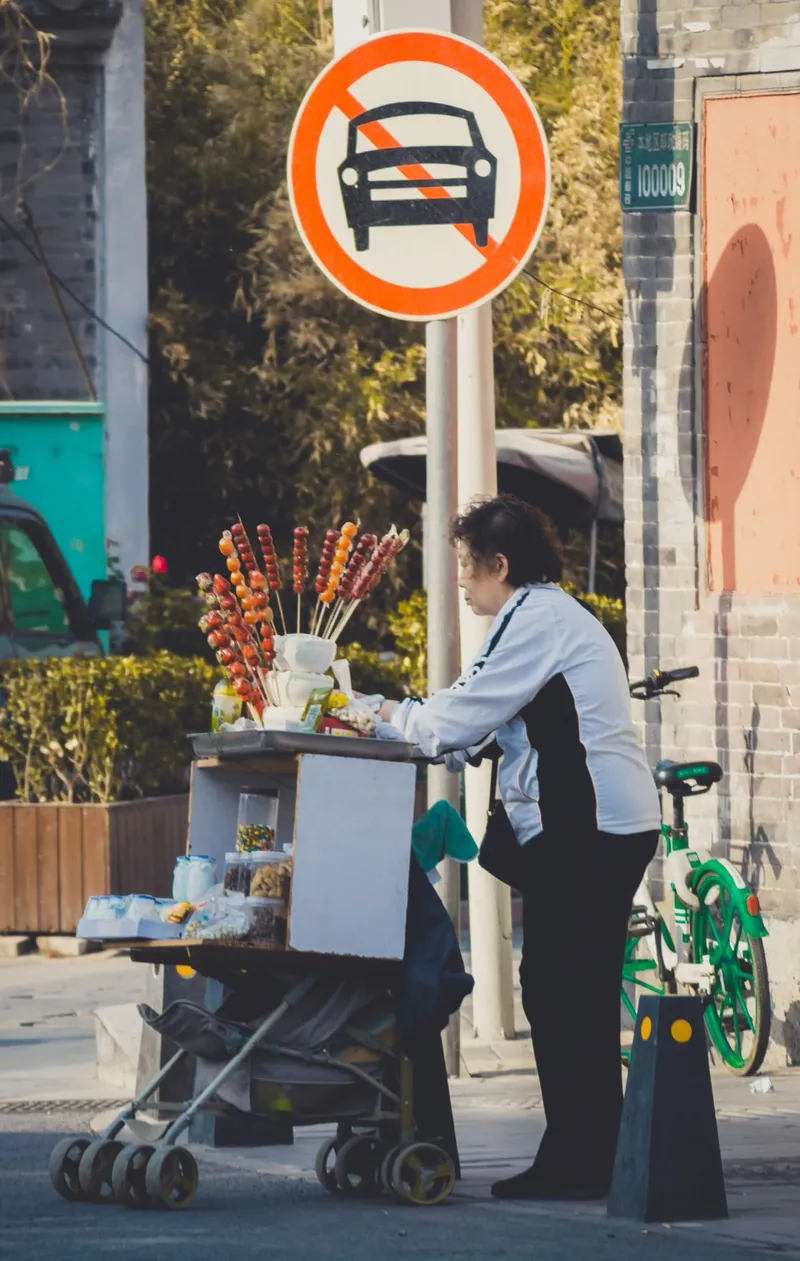
A Beijing classic with imperial roots
The earliest written record dates to the Qing dynasty:
- A palace legend — one popular story credits a physician's hawthorn-and-sugar remedy for a Song-dynasty royal consort's illness.
- Documented by the 1800s — the Qing-era book Yanjing Suishiji describes candied hawthorn skewers sold much as they are today.
- A Beijing signature — it's most associated with the capital, though sold across northern China.
Frequently asked questions
- What is tanghulu?
- A Chinese street snack of fruit — classically tart hawthorn berries — skewered on a bamboo stick and coated in a hard, glassy sugar shell. It's sweet, sour, and crunchy all at once.
- What does tanghulu taste like?
- The sugar shell is purely sweet and brittle, cracking like candy glass; the hawthorn fruit inside is tart, closer to a sour apple or cranberry than anything sugary. The contrast is the whole appeal.
- Is tanghulu always made with hawthorn?
- Traditionally yes, but modern stalls skewer almost anything — strawberries, grapes, mandarin segments, cherry tomatoes, even mochi or oreo cookies at novelty stands. Hawthorn remains the classic, most authentic version.
- Is tanghulu a winter-only snack?
- It originated as a cold-weather treat — the hard sugar shell holds up best in cool air — but today it's sold year-round in most tourist areas and night markets, not just winter.
- How much does tanghulu cost?
- Cheap: typically ¥5-15 per skewer depending on the fruit and how touristy the location is. Novelty versions with pricier fruit or extra toppings can run higher.
Verified 2026-07-07. Photos: licensed travel photography.