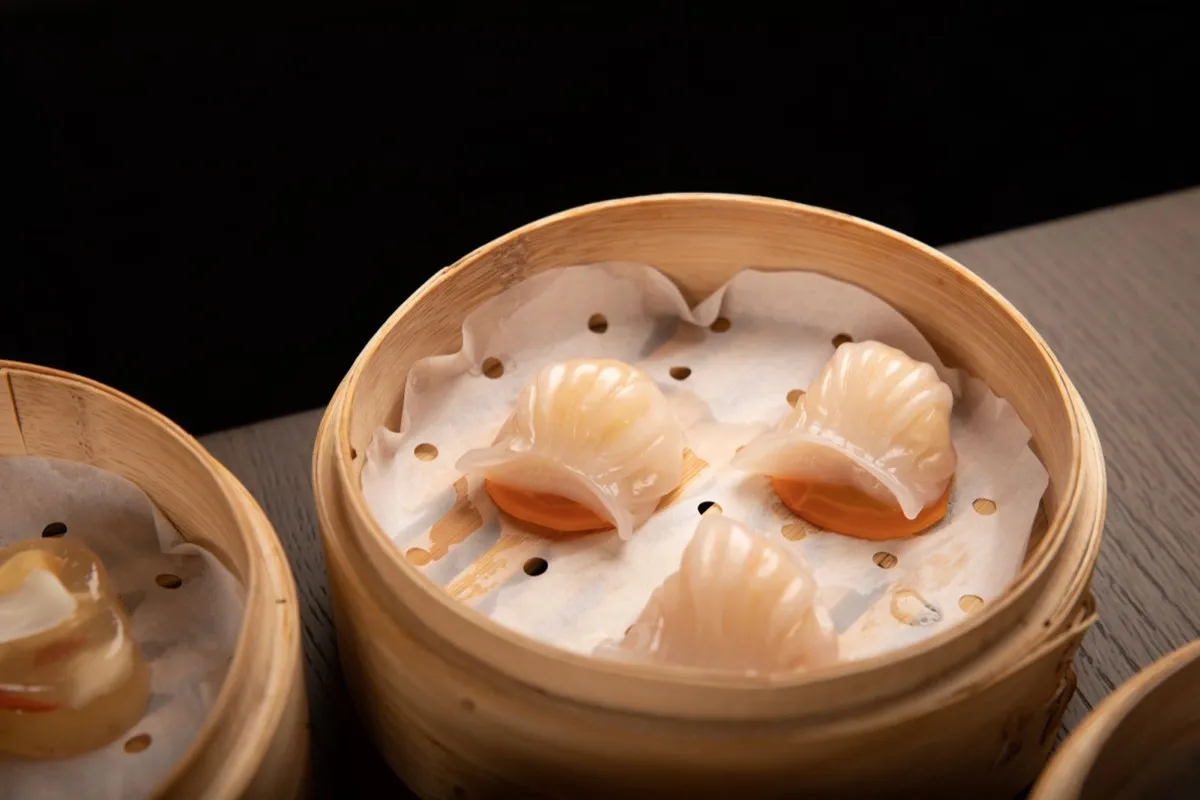
Diǎnxīn (点心) — dim sum in Cantonese — is the small, shareable dishes: shrimp dumplings, buns, rice rolls, dozens of others. "Yum cha" (饮茶) is what locals actually call going out to eat it: sitting down for tea and letting the dishes keep coming. Guangzhou invented the ritual, and weekend mornings there still fill teahouses with three generations of the same family working through round after round. If you want a table in one of those rooms, how restaurant booking works in China covers your options.
How yum cha works
Get seated and pick tea
Staff will ask which tea you want first — pu'er (普洱), jasmine (茉莉花), or chrysanthemum (菊花) are safe defaults. The tea itself is the 'yum cha' (饮茶, literally 'drink tea') the meal is named for.
Order from trolleys or a sheet
Older-style teahouses wheel steamer-basket trolleys past your table — point at what looks good. Most modern places now use an order sheet or QR code with photos instead; check a box, hand it to staff.
Judge the house by har gow
Pleated, translucent shrimp dumplings (虾饺, hāgáau in Cantonese) are the benchmark dish — thin, springy wrapper, plump shrimp filling. A teahouse that gets har gow right usually gets everything else right too.
Keep ordering
Dishes arrive in small 2-4 piece portions meant for sharing and continuous ordering, not one big meal at once — a table of two or three typically works through 5-8 rounds over an hour or more.
Frequently asked questions
- What is dim sum?
- Small, shareable steamed or fried dishes — dumplings, buns, rice rolls, and more — eaten over a long brunch alongside endless tea. It's a Cantonese tradition invented in Guangzhou, where teahouses still serve it the traditional trolley-cart way.
- What's the difference between dim sum and yum cha?
- They're the same meal described two ways: 'yum cha' (饮茶, 'drink tea') is the name for the whole ritual — sitting down, ordering tea, and eating continuously — while 'dim sum' (点心) refers to the small dishes themselves. Locals in Guangzhou more often say they're 'going for yum cha.'
- What dim sum dishes should a first-timer order?
- Har gow (shrimp dumplings), siu mai (pork and shrimp dumplings, open-topped), char siu bao (barbecue pork buns, steamed or baked), and cheung fun (rice noodle rolls) cover the essentials. Egg tarts make a good sweet finish.
- Is dim sum only a Guangzhou thing?
- It originated in Guangzhou and Cantonese-speaking regions (including Hong Kong), but teahouses serving it are common across major Chinese cities now. Guangzhou is still where the tradition runs deepest — weekend mornings, tables of local families, and trolleys still doing the rounds at some old-school spots.
- How much does dim sum cost?
- Inexpensive at a neighborhood teahouse: individual dishes typically run ¥15-40 each, and a filling meal for two with several rounds and tea usually lands around ¥80-150 total.
Verified 2026-07-22.