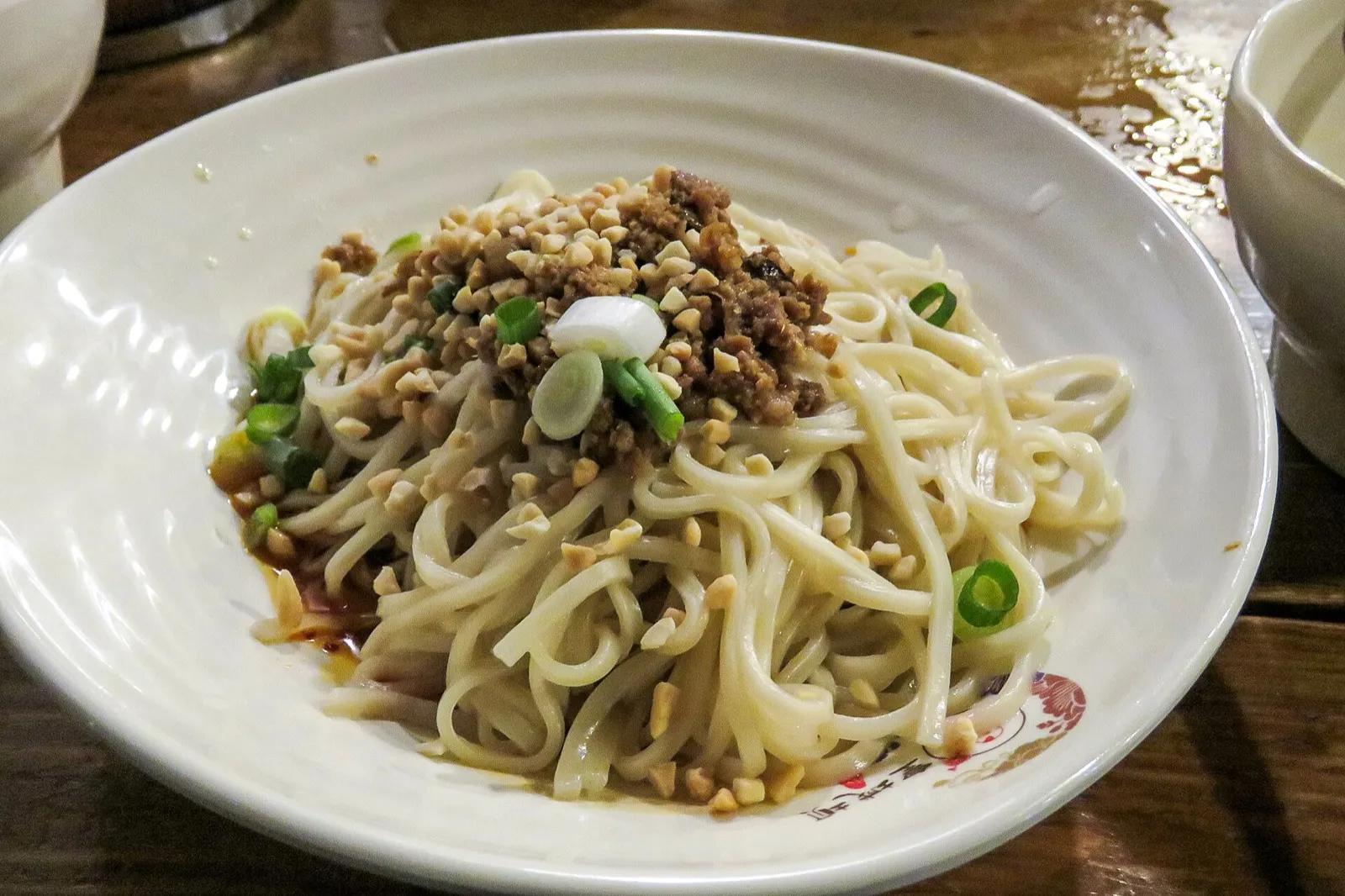
Dàndàn miàn (担担面) is Sichuan street food in its purest form: a small bowl of thin noodles tossed in chili oil and numbing Sichuan peppercorn, topped with crisp minced pork and crushed peanuts. It packs more flavor per bite than dishes twice its size — which is exactly the point.
How it's built
Mix the sauce first
The bowl starts empty except for a puddle of chili oil, soy sauce, and Sichuan peppercorn — the noodles and toppings go on top, unmixed, until they arrive at your table.
The topping
A spoonful of minced pork, stir-fried with preserved vegetable (yacai, 芽菜) until crisp, is scattered over thin wheat noodles, along with crushed peanuts and scallion.
Toss thoroughly
Stir everything from the bottom up before eating — the sauce is concentrated at the base of the bowl, and the dish is meant to be mixed, not eaten layer by layer.
Small bowl, big flavor
A traditional serving is deliberately small — a snack-sized portion, not a full meal. Order two if you're hungry, or pair it with a second dish.
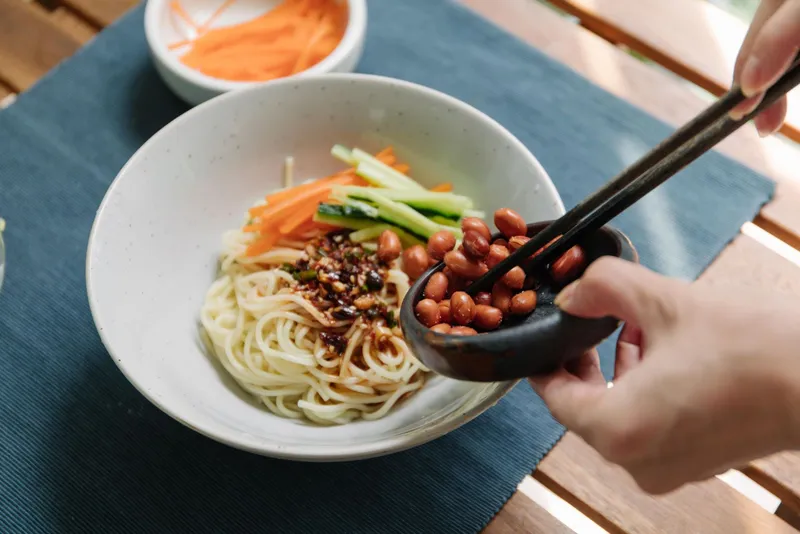
From a shoulder pole to a menu staple
The name tells the dish's origin story:
- "Dan dan" (担担) means "carrying pole" — the two baskets a vendor balanced across their shoulders.
- One side cooked — a small stove and noodle supplies rode in one basket.
- The other held condiments — chili oil, peanuts, and preserved vegetable rode in the second, assembled to order.
Frequently asked questions
- What is dan dan noodles?
- A Sichuan street food of thin wheat noodles tossed in chili oil, Sichuan peppercorn, and soy sauce, topped with minced pork and preserved vegetable, and finished with crushed peanuts. It's small, intensely flavored, and eaten as a snack.
- Where does the name come from?
- 'Dan dan' (担担) refers to the shoulder pole street vendors once used to carry two baskets — one with a stove and noodles, the other with condiments — selling bowls straight off the pole as they walked. The dish is named for that carrying method, not an ingredient.
- Is dan dan noodles very spicy?
- Yes, typically — it carries the same málà (numbing-spicy) profile as other Sichuan dishes, from chili oil and Sichuan peppercorn. Ask for less chili if you want a milder bowl; most stalls will adjust.
- Is dan dan noodles a full meal?
- Traditionally no — the classic serving is snack-sized, meant to be one of several small dishes or a between-meal bite. Restaurants outside Sichuan (and abroad) often serve larger, meal-sized portions.
- Where should I try dan dan noodles?
- Small, old-school noodle shops in Chengdu rather than large restaurants — the dish began as street food, and the simplest stalls are often still the best. Expect to pay ¥8-15 for a traditional-sized bowl.
Verified 2026-07-07. Photo credits: Dan dan noodles photo: N509FZ, CC BY-SA 4.0, via Wikimedia Commons.