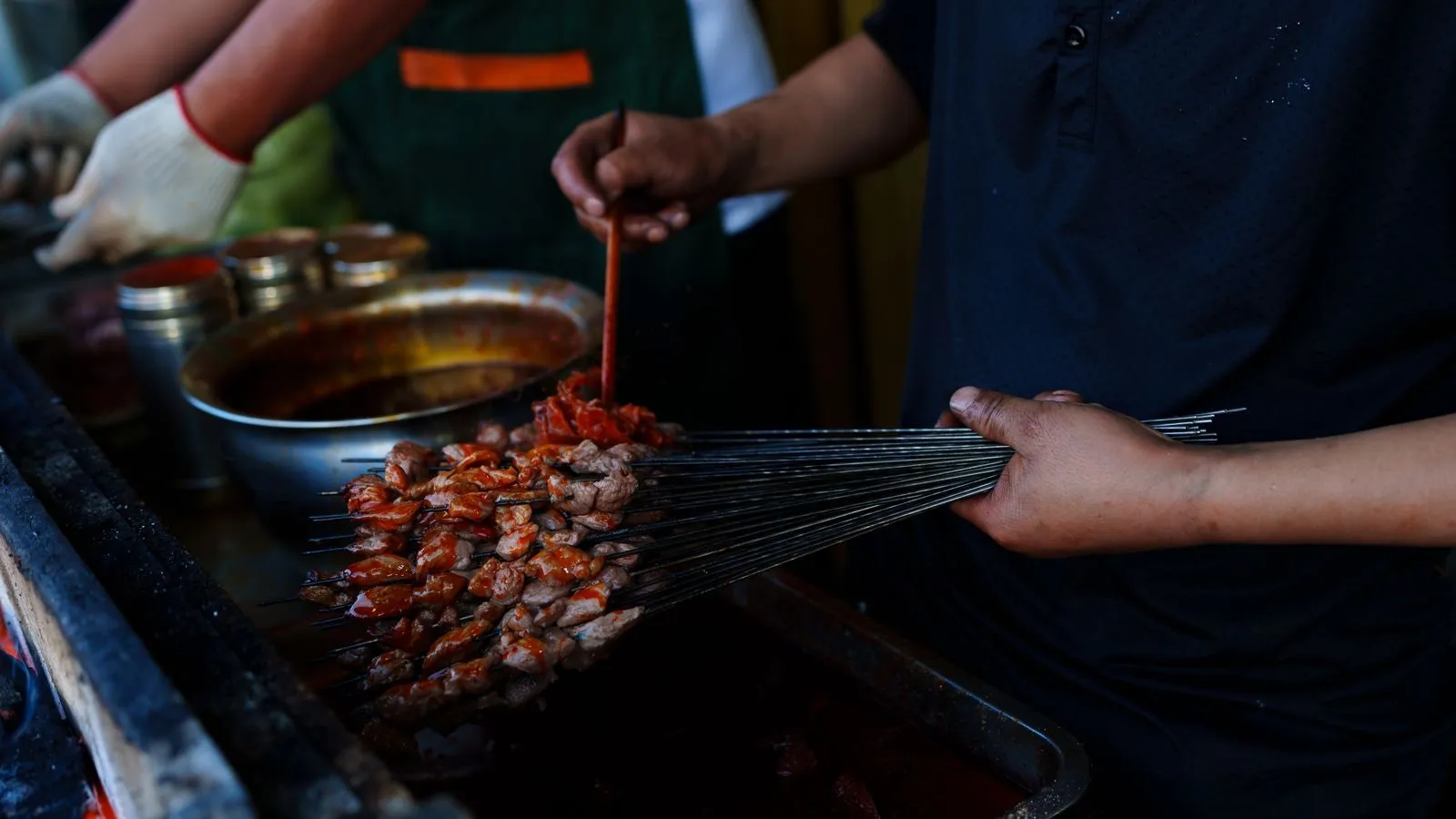
Chuànr (串儿) — grilled meat on skewers — is China's street barbecue at its most universal, found from Xinjiang's night markets to Beijing hutong alleys. The classic version is lamb, dusted with cumin and chili flake as it grills over open charcoal, but any given stall grills far more than just that.
How it's grilled
Thread the skewers
Chunks of lamb (traditionally with a little fat for flavor) are threaded onto thin metal or bamboo skewers, several pieces per stick.
Onto the coals
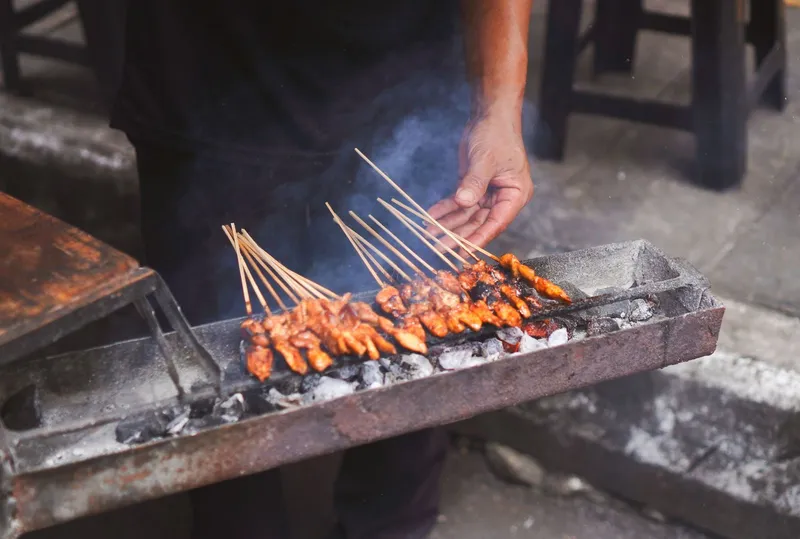
Skewers go over an open charcoal grill — often a long, narrow trough-style grill you'll recognize from Xinjiang-style barbecue stalls across northern China.
Dust with spice
As they cook, the vendor dusts the meat with cumin and chili flake, sometimes fanning the coals to keep the heat even and the smoke rolling.
Served hot off the grill
Skewers are handed over straight from the fire, meant to be eaten immediately — order in batches of 10-20 rather than one at a time.
From Xinjiang to nationwide
The dish's spread across China is a fairly recent story:
- Uyghur roots — the cumin-and-chili style comes from Xinjiang's Uyghur "kawap" barbecue tradition.
- 1980s spread — migrant vendors carried the style to cities nationwide, especially Beijing.
- A late-night institution — it's now inseparable from Chinese nightlife, paired with beer at outdoor tables.
Frequently asked questions
- What is chuan'r?
- Chinese-style grilled meat skewers (串, chuàn means 'skewer'), most iconically lamb dusted with cumin and chili flake and grilled over open charcoal. It's the country's dominant style of street-side barbecue.
- Where did chuan'r come from?
- The cumin-and-chili style traces to Xinjiang's Uyghur barbecue tradition (called kawap), which spread nationwide from the 1980s onward and became especially associated with late-night eating in Beijing.
- Is chuan'r just lamb?
- Lamb is the classic, but stalls typically grill beef, chicken wings, chicken hearts, tofu, vegetables, and grilled bread alongside it — order a mixed batch rather than lamb alone.
- Is chuan'r spicy?
- Mildly, from the chili flake dusted on while grilling — it's more about the cumin's warmth than serious heat. You can ask for extra chili (多辣) or less (少辣) at most stalls.
- When and where should I eat chuan'r?
- Late evening, at an outdoor hutong grill stall with plastic stools and cold beer — that's the full experience, not a restaurant sit-down. Order by the handful; each skewer usually costs ¥2-6.
Verified 2026-07-07. Photos: licensed travel photography.