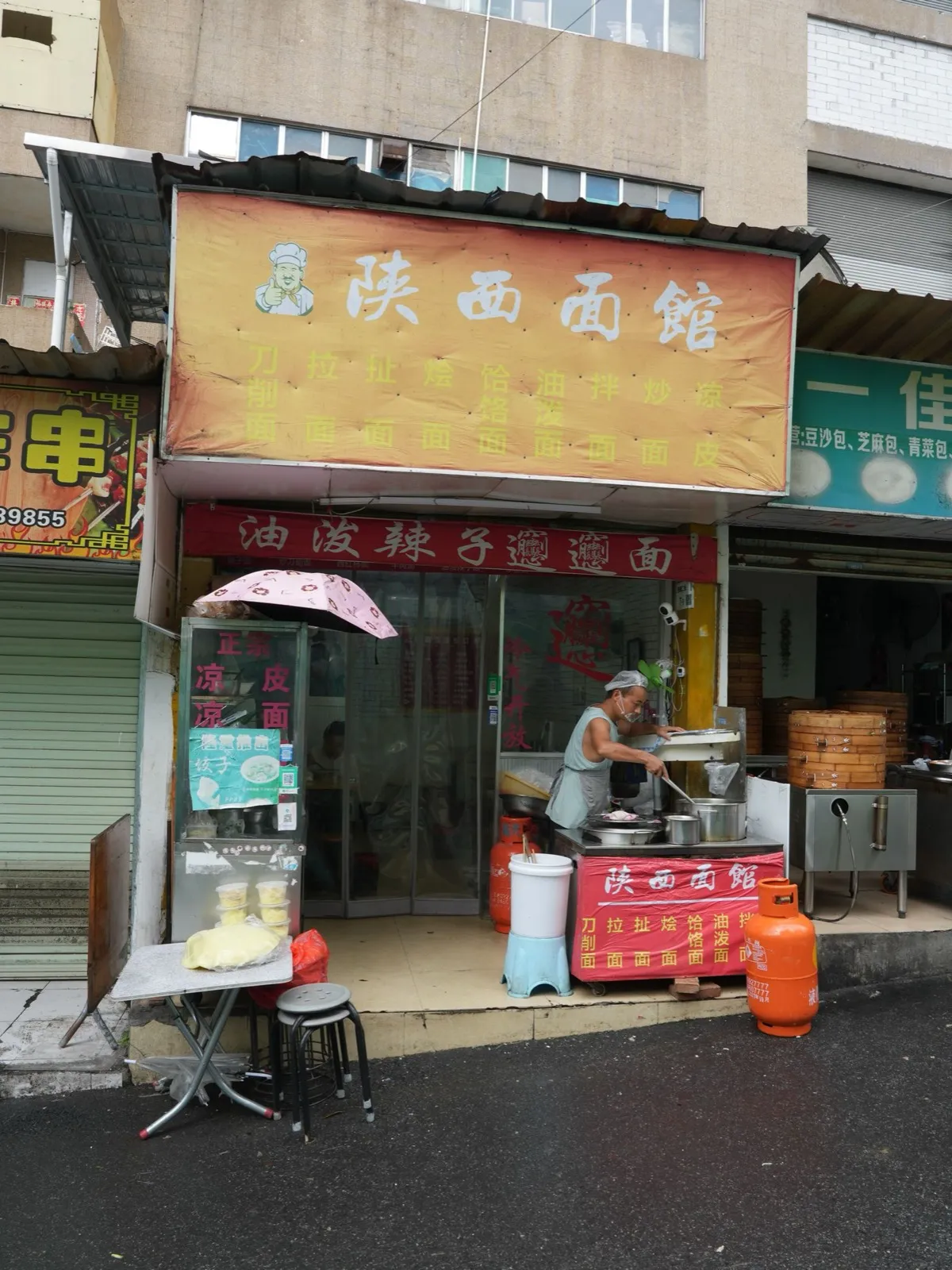
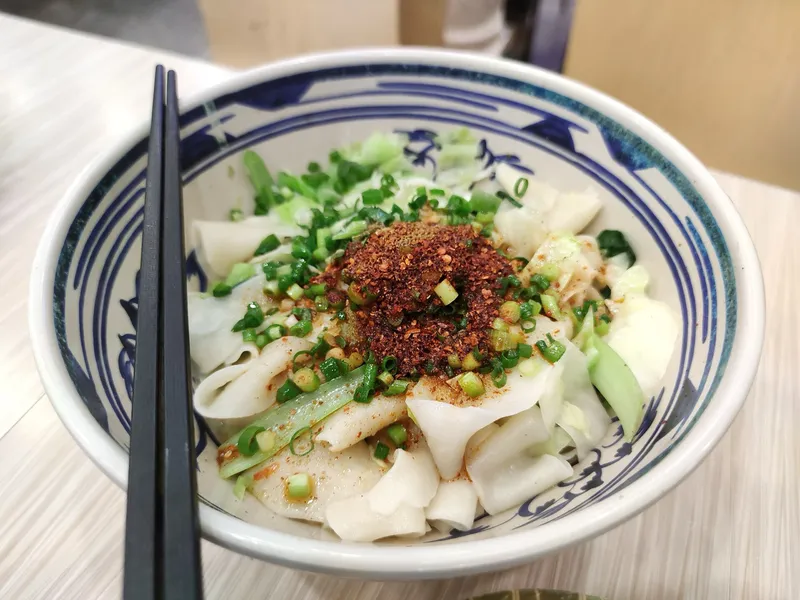
Biángbiáng miàn (biángbiáng面) is Shaanxi's signature noodle: thick, hand-pulled ribbons of wheat dough, slapped against the counter until they're stretched belt-wide, then dressed with chili flakes and a ladle of sizzling hot oil. The name comes from the sound of the dough hitting the table — and the character used to write "biáng" is a folk invention with no standard keyboard input.
How it's made
The dough rests
A simple wheat-and-water dough is kneaded, then rested under a damp cloth — the gluten relaxes so it can stretch without tearing.
The pull
The cook rolls a portion into a thick strip, then slaps and stretches it against the counter — that slapping sound ("biáng, biáng") is where the noodle gets its name.
Into the pot
The belt-wide noodle is torn or cut into arm's-length strips and dropped into boiling water for a couple of minutes, along with a handful of leafy greens.
The sizzle
Drained noodles are topped with chili flakes, garlic, and scallion, then hot oil is poured straight over the top — it sizzles audibly and blooms the chili into a red, fragrant sauce you toss through.
The unwritable character
"Biáng" isn't in standard Chinese dictionaries — it's a folk character invented for this dish alone. A few things worth knowing:
- ~56 strokes — one of the most complex characters in everyday use anywhere in China.
- No keyboard input — you'll see it painted or carved on signage, rarely typed.
- A memorization rhyme — locals learn to write it via a sing-song mnemonic describing each stroke.
Frequently asked questions
- What is biangbiang noodles?
- A hand-pulled, belt-wide wheat noodle from Xi'an and the surrounding Shaanxi region, named for the slapping sound the dough makes as it's stretched. It's traditionally served with chili, garlic, and hot oil poured on top.
- Why does the character for 'biáng' look so complicated?
- 'Biáng' isn't a standard Chinese character — it's a folk character invented specifically for this dish, with around 56 strokes in its traditional form and no standard keyboard input. It doesn't appear in dictionaries; you'll mostly see it painted on restaurant signs.
- Is biangbiang noodles spicy?
- Yes, typically — the classic version is tossed with chili flakes bloomed in hot oil. Most restaurants can tone it down if you ask, since the heat comes from a topping added at the end, not cooked into the noodles.
- What's the difference between biangbiang noodles and regular hand-pulled noodles?
- Width and style: biangbiang noodles are pulled unusually wide and thick — closer to a belt or ribbon than a strand — and are specifically associated with Shaanxi's chili-and-hot-oil preparation, rather than the thinner noodles used in soups elsewhere in China.
- Where should I eat biangbiang noodles?
- Xi'an's Muslim Quarter and any noodle shop with a cook visibly slapping dough on the counter — watching it made is half the appeal. It's inexpensive, typically ¥15-25 a bowl.
Verified 2026-07-07. Photo credits: Wide noodle bowl photo: Liuxingy, CC BY-SA 4.0, via Wikimedia Commons.