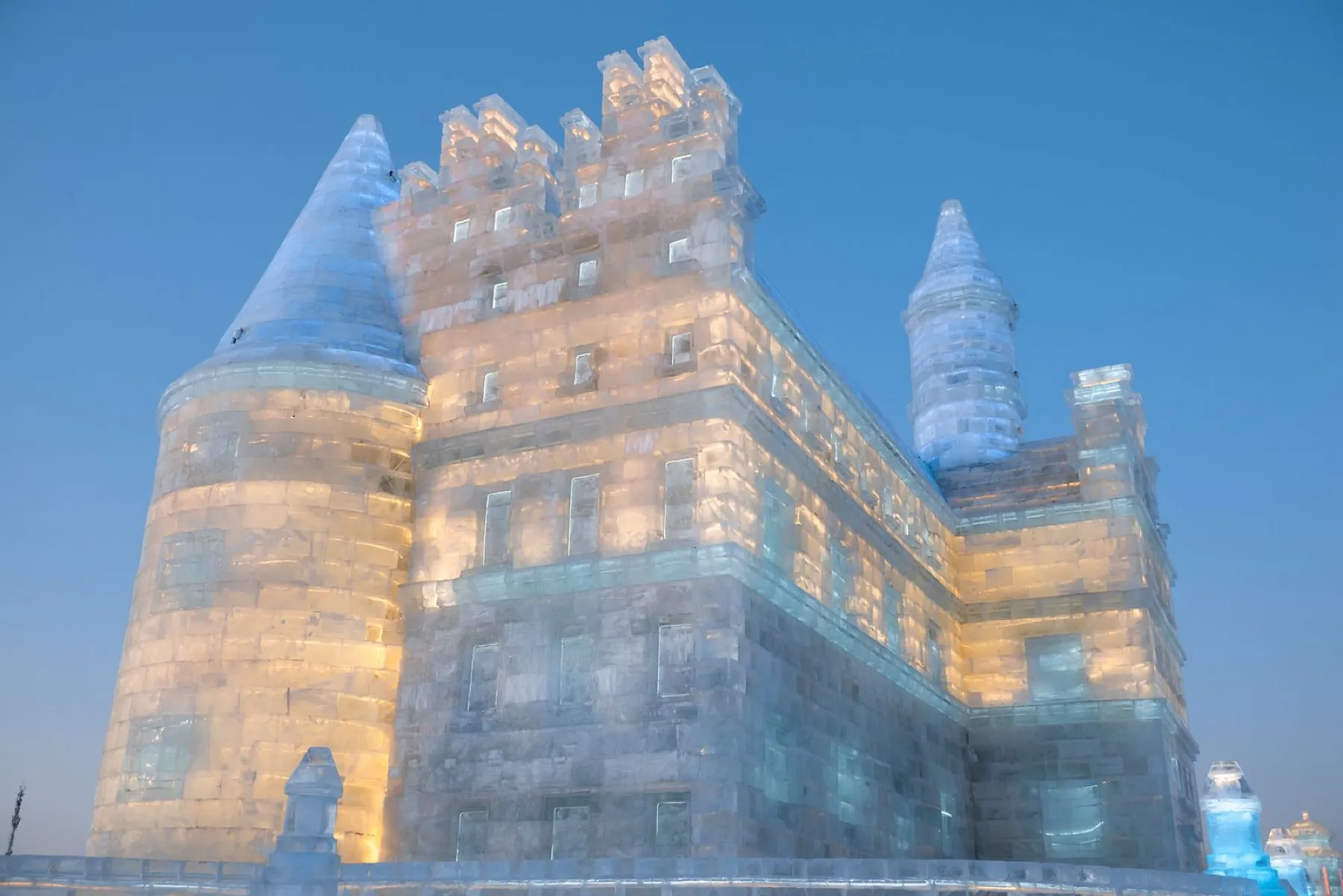
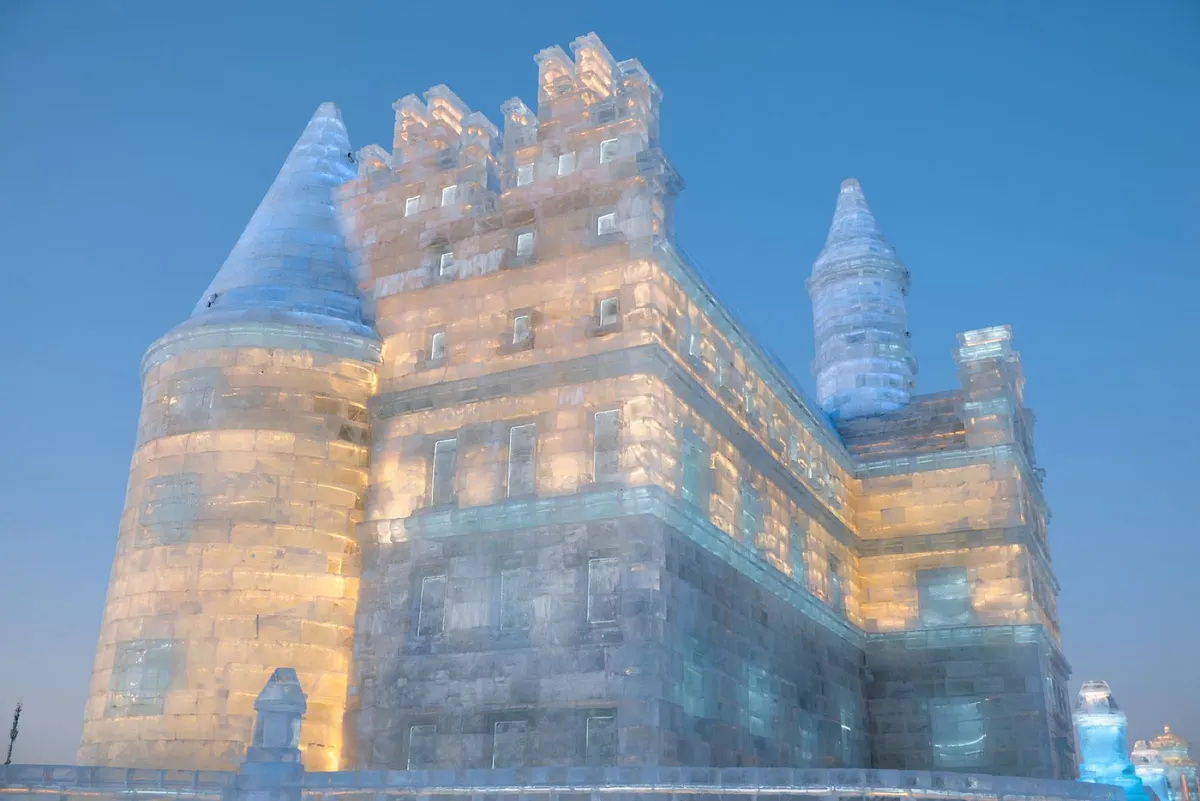
An illuminated ice castle with turrets glowing gold and blue at Harbin Ice and Snow World at dusk

City guide · Verified 2026-07-22

Harbin

Ice castles the size of city blocks, a century of Russian architecture, and China's coldest, most distinctive winter destination.

Getting there
~2.5–3 hr high-speed rail from Changchun/Shenyang, or fly into Harbin Taiping Airport
Best seasons
Late December–February for the Ice and Snow Festival; June–August for a mild, festival-free visit
Days needed
2–3 days; add a day in winter for Sun Island alongside Ice and Snow World
Famous for
The Ice and Snow World festival, Russian-influenced architecture, and guobaorou
Base yourself
Daoli District, near Central Street and Saint Sophia Cathedral — walkable to most sights

Harbin Travel Guide: What to Know Before You Go

The short version: Harbin is China's coldest, most distinctive winter destination — the Ice and Snow World festival (late December through February) turns the city into illuminated ice architecture, against a backdrop of Russian-influenced colonial architecture. Two to three days covers it; outside winter, June-August offers a milder, festival-free visit.

The essentials

What to see — and what to know before you go

Half of Harbin's biggest draws are strictly seasonal — check dates before you book flights. Verified 2026-07-22.

An illuminated ice castle with turrets glowing gold and blue at Harbin Ice and Snow World at dusk

Harbin Ice and Snow World 哈尔滨冰雪大世界

~4 hours¥240–330 standard entry (varies by day); ¥800 VIP fast-track

City-block-sized castles, slides, and towers built entirely from Songhua River ice blocks, lit from within by colored LEDs after dark. The signature image of Harbin's winter and the reason most visitors plan a trip around this season at all.

TicketsOpen roughly late December to late February only. Book online a few days ahead for weekends and Chinese New Year — walk-up tickets sell out on the busiest nights.

Local tipRent the heavy-duty rental coveralls and boot covers sold at the gate — regular winter clothing isn't enough for hours outdoors at -20°C.
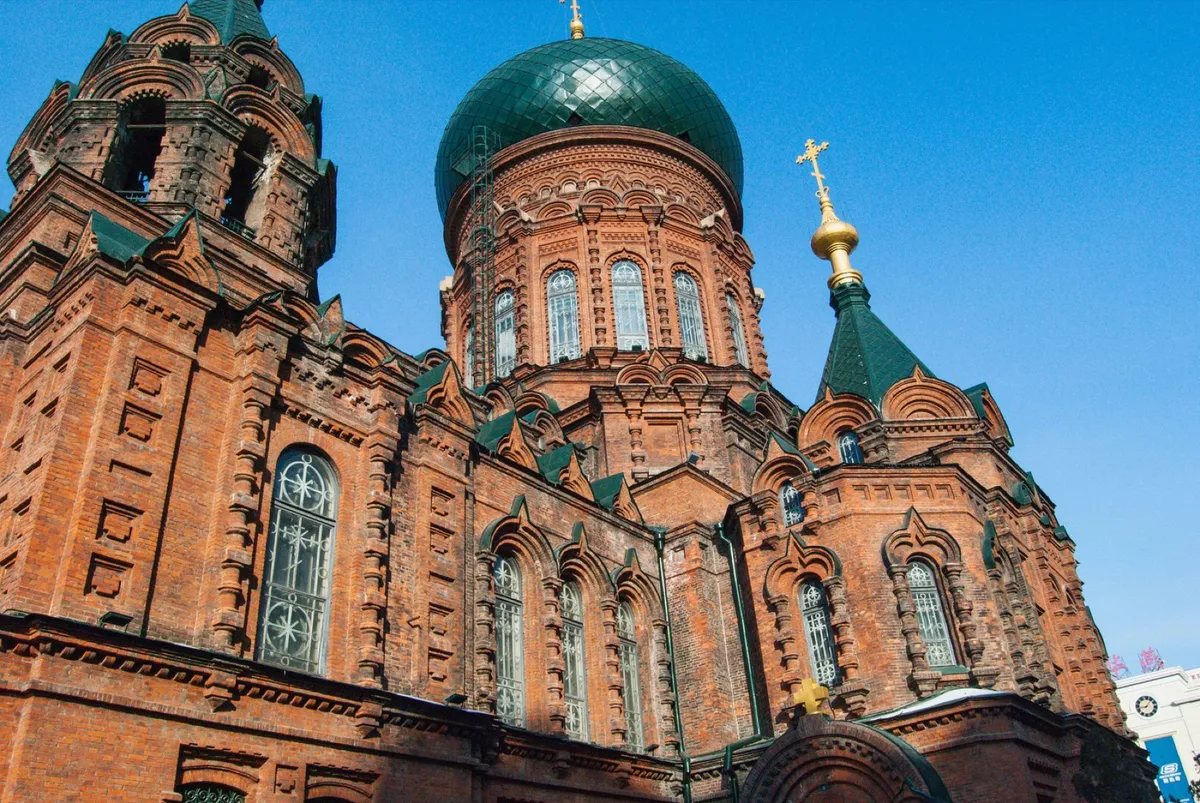
The red-brick Saint Sophia Cathedral with its green onion dome and golden cross against a blue sky

Saint Sophia Cathedral 圣索菲亚大教堂

~1 hours¥20 (free to view the exterior from the square)Closed Mondays

A Russian Orthodox cathedral of red brick and green onion domes, built in 1907 when Harbin was a railway boomtown full of Russian émigrés. Now a photography museum inside, but the exterior — especially against snow — is the real draw.

Local tipThe building reads best from across the square, not pressed up against it — back up for the full domed silhouette.

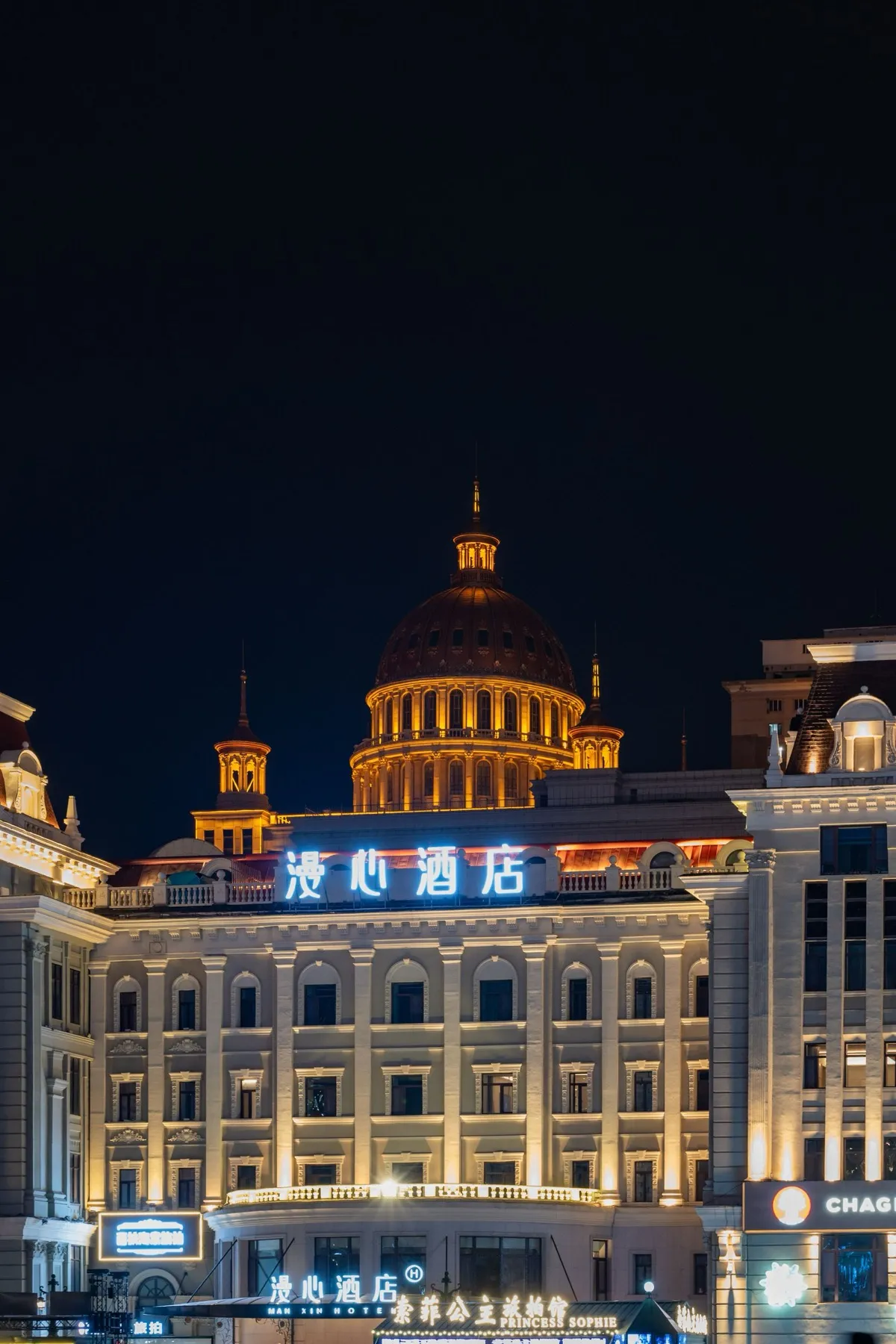
An ornate domed building glowing with warm lights above street-level shops on Harbin's Central Street at night

Central Street 中央大街

~2 hoursFree

A kilometer of stone-paved pedestrian street lined with Baroque, Renaissance, and Byzantine-style buildings from Harbin's Russian-influenced early 20th century — Modern Hotel's Art Nouveau dome anchors the strip. Lively year-round, but especially atmospheric under snow or festival lighting.

Local tipBuy a Modeler (马迭尔) ice cream bar from the street-level window at Modern Hotel — eating ice cream outdoors in winter is a genuine local tradition, not just a tourist gimmick.

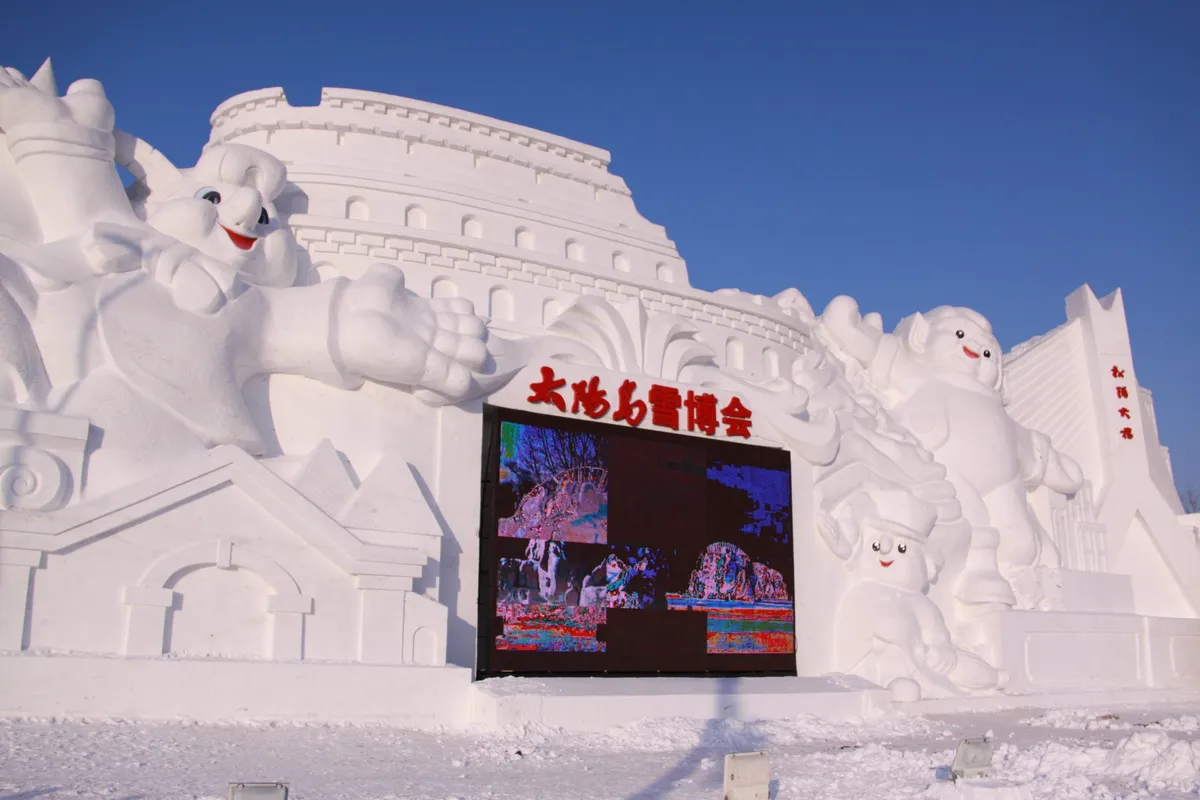
A large snow sculpture archway with carved figures and Chinese characters reading Sun Island Snow Expo

Sun Island Snow Sculpture Art Expo 太阳岛国际雪雕艺术博览会

~3 hours¥128–198

Massive white snow sculptures — some multi-story — carved by international teams across a park-sized site, a daytime counterpart to the after-dark Ice and Snow World across the river. Less crowded and considerably calmer than the ice park.

TicketsOpen late December through late February only, roughly 09:00–17:00 (last entry 16:30).

Local tipPair with Ice and Snow World on the same trip: snow sculptures by day on Sun Island, ice castles by night across the Songhua River.

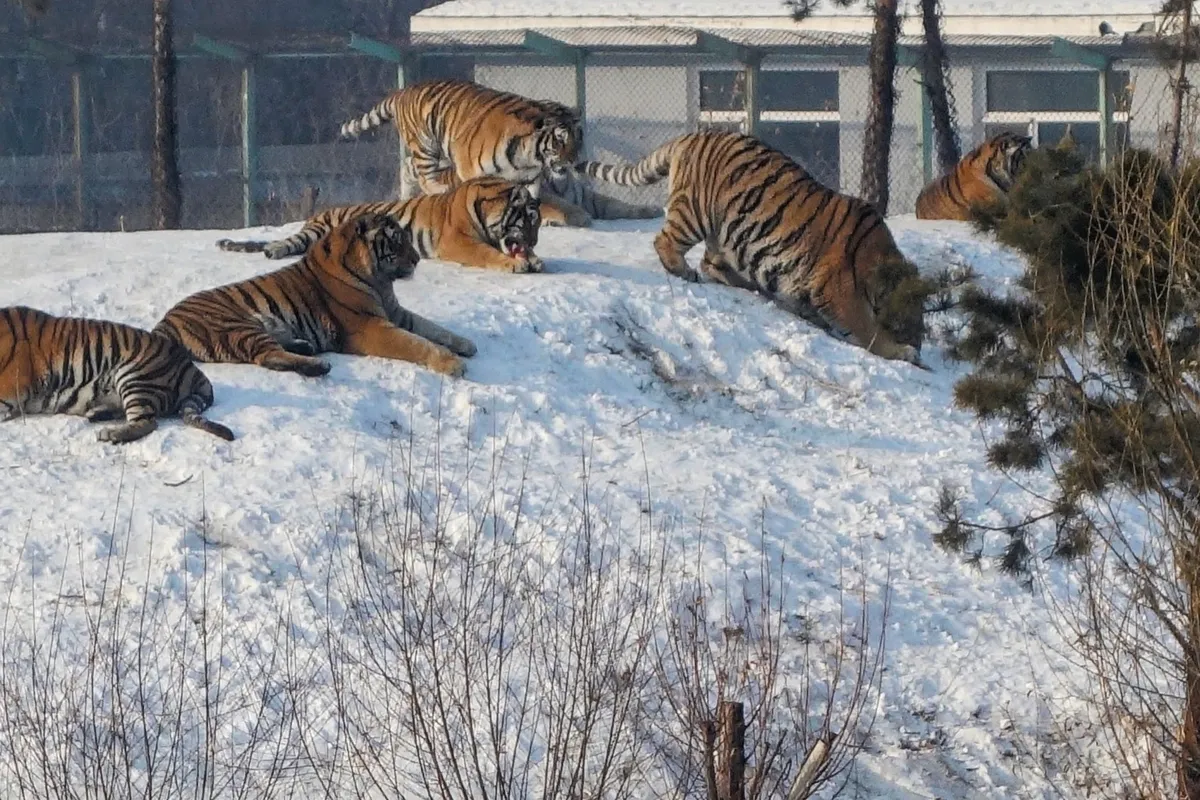
Several Siberian tigers resting and playing on a snowy hillside within a fenced park enclosure

Siberian Tiger Park 东北虎林园

~2.5 hours¥130 (includes the standard sightseeing bus through the enclosures)

One of the world's largest Siberian tiger breeding centers, with dozens of tigers roaming large snow-covered enclosures viewed from a bus or elevated walkway. More convincing than a zoo — genuinely large territories rather than cages.

TicketsFeeding the tigers costs extra (¥20 per portion) and is optional.

Local tipSit on the side of the bus facing away from the sun for better photos through the windows.

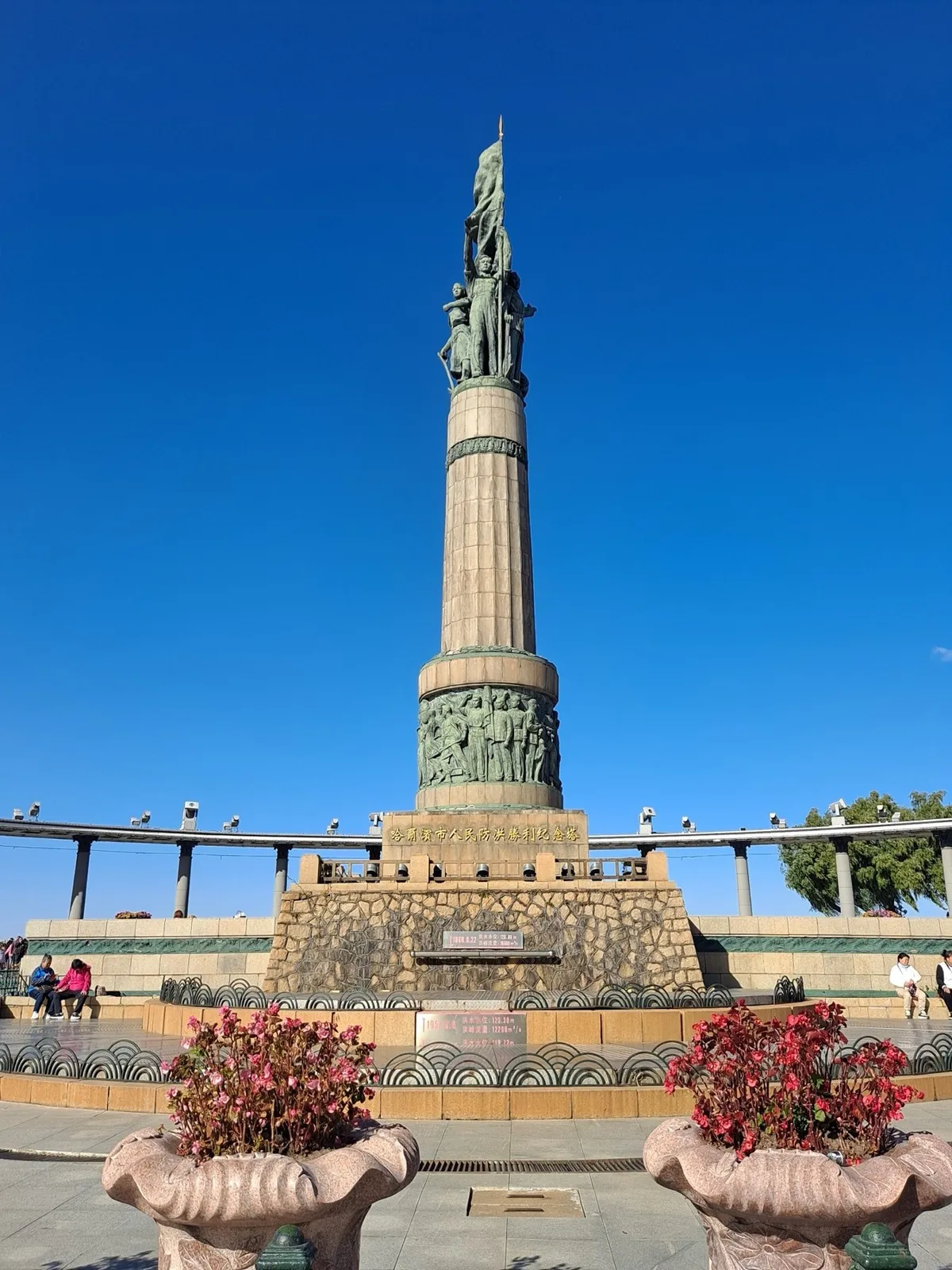
A tall stone column topped with bronze statues of workers holding a flag, the Harbin Flood Control Monument

Flood Control Monument 防洪纪念塔

~0.5 hoursFree

A Soviet-style column topped with bronze worker statues, built in 1958 to commemorate Harbin's survival of catastrophic Songhua River floods. Sits at the foot of Central Street on the riverfront — an easy, free stop rather than a destination in its own right.

Local tipThe riverfront park behind the monument turns into a public ice-skating and sledding area in winter — worth a look even if you're not skating.

What to eat

Harbin's must-eat list

Northeast Chinese cooking with a genuine Russian streak — heartier and less spicy than the south. Deep dives live in our food guides; vegetarians, start here.

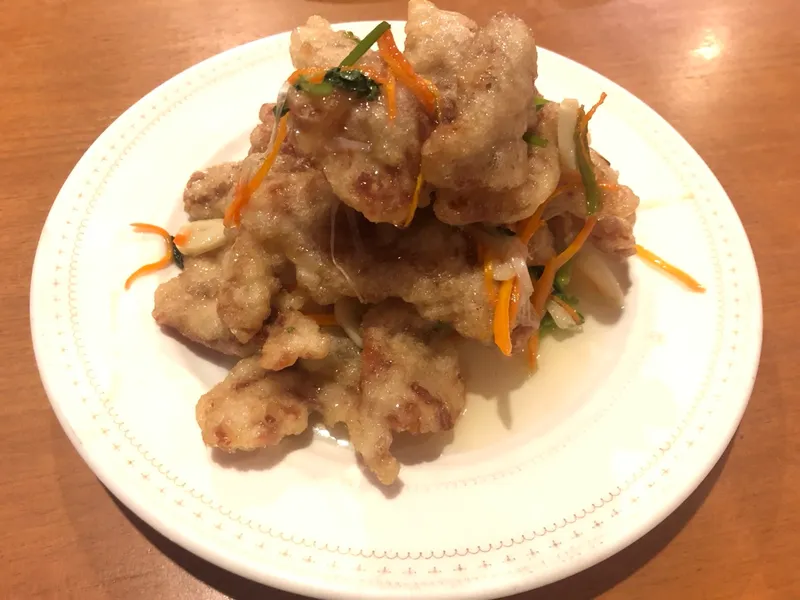
A plate of crispy sweet-and-sour guobaorou pork strips garnished with carrot and scallion

Guobaorou 锅包肉

Crispy battered pork strips tossed in a glossy sweet-and-sour sauce, invented in early-1900s Harbin to suit Russian diplomats' taste for sour flavors. Northeast China's most-ordered restaurant dish, and Harbin's original contribution to Chinese cuisine.

WhereAny Northeastern (东北菜) restaurant city-wide — a menu staple, not a specialty shop dish

  • 🌾 contains gluten
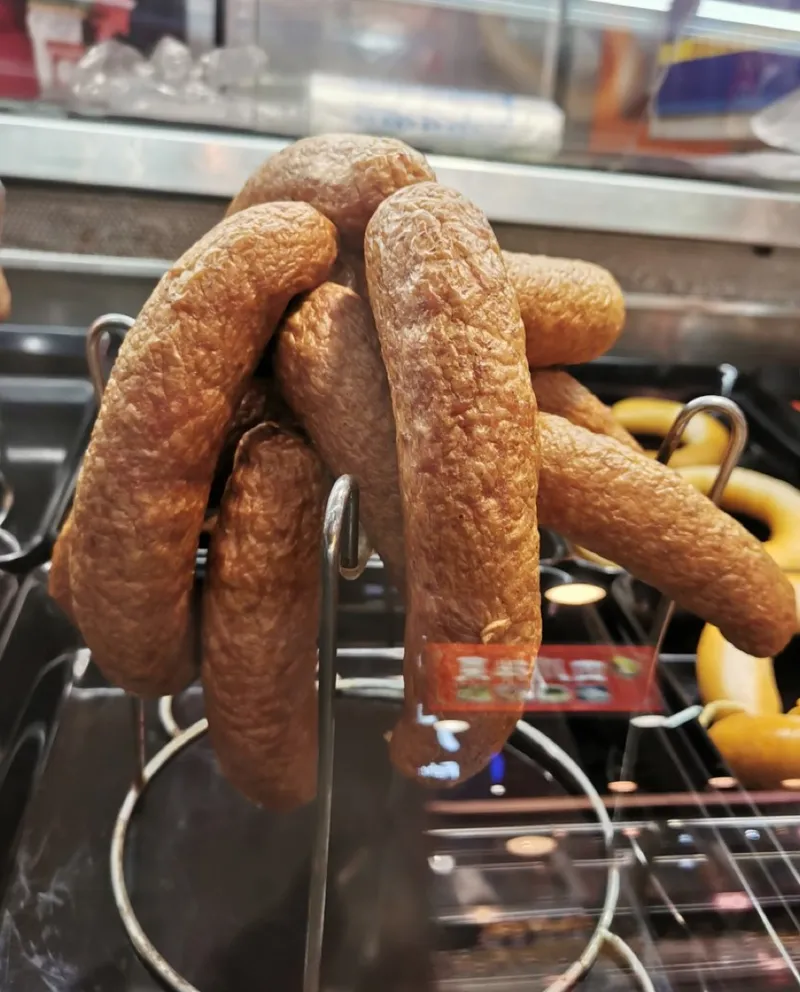
Reddish-brown smoked sausages hanging on display hooks at a Harbin deli counter

Harbin Red Sausage 哈尔滨红肠

A smoked garlic pork sausage introduced by Russian and Lithuanian railway workers over a century ago, since adapted with a sweeter, more smoke-forward Chinese profile. Eaten cold, sliced, as a snack or beer companion rather than a cooked main.

WhereQiulin (秋林) or Liangyou (良友) delis — Harbin's two oldest sausage makers, both with storefronts downtown

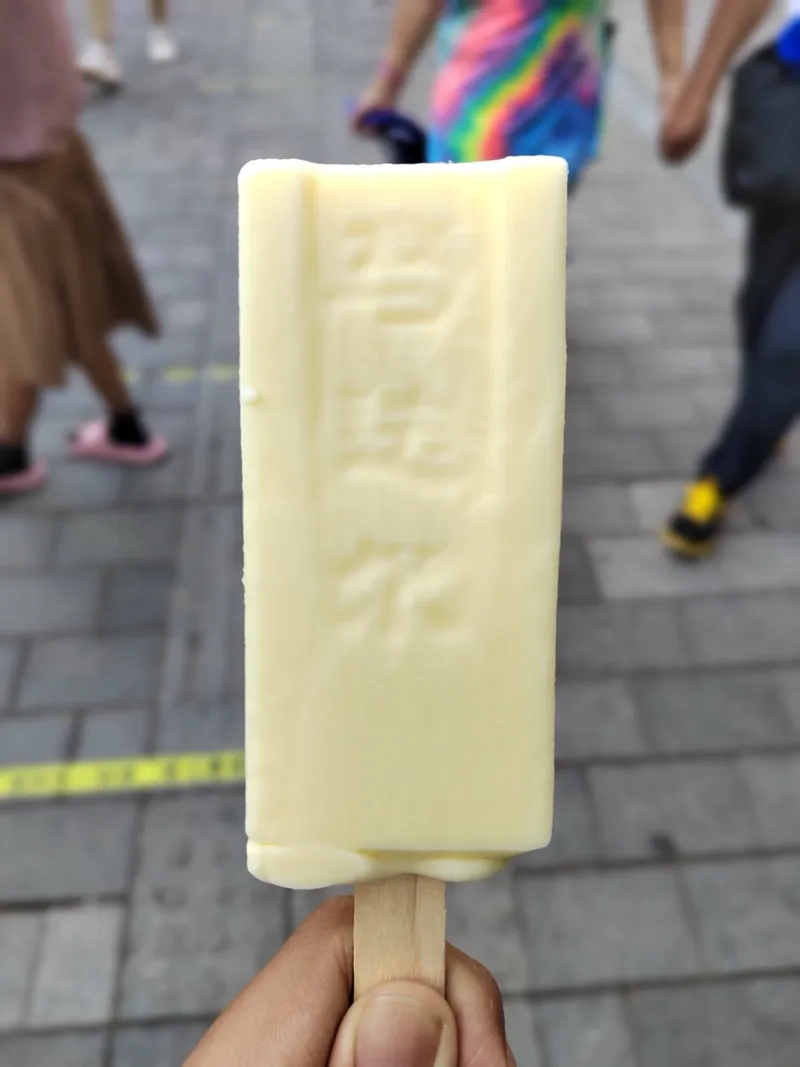
    A hand holding a pale yellow Modeler ice cream bar with embossed lettering, Central Street in the background

    Modeler Ice Cream Bar 马迭尔冰棍

    A dense, eggy vanilla ice cream bar sold from a street-level window at the century-old Modern Hotel on Central Street — unwrapped and eaten outdoors even in deep winter, which is precisely the point. More tradition than dessert.

    WhereThe Modern Hotel (马迭尔宾馆) window on Central Street — the original, and still the busiest

    • 🌱 vegetarian option

    Beyond sightseeing

    Experiences you can book here

    Ready to plan the days?

    Harbin is the one city on this site where the calendar decides your itinerary — the festival season and the rest of the year are almost different destinations. Estimate your budget and check the season before you lock in dates.

    Placing this on the map: see where Harbin sits relative to everywhere else on our interactive map of China, and check when it's busiest on the crowd calendar before you fix dates.

    Frequently asked questions

    When is the Harbin Ice and Snow Festival?
    Harbin Ice and Snow World and the Sun Island Snow Sculpture Art Expo both typically run from late December to late February. Outside that window, the ice castles don't exist — plan winter dates deliberately if that's the draw.
    Is Harbin worth visiting outside winter?
    Yes, though it's a different trip: Central Street, Saint Sophia Cathedral, the Siberian Tiger Park, and the Songhua riverfront are all open year-round, and summer brings a mild climate and riverside parks rather than -20°C ice sculptures.
    How cold does it actually get?
    Winter nights regularly drop to -20°C to -30°C. Rental coveralls and boots at Ice and Snow World help, but pack real thermal layers, hand warmers, and boots rated for serious cold — this isn't 'bring a warm coat' cold.
    Do I need to speak Russian or have any special preparation for the Russian architecture sites?
    No — Saint Sophia Cathedral and Central Street are fully set up for general tourism with Chinese and English signage. The Russian influence is historical and architectural, not a language requirement.

    Facts verified 2026-07-22. Opening rules and prices change — re-check official channels for anything booking-critical, especially festival dates. Photos: licensed travel photography; app screenshots elsewhere on this site are our own. Photo credits: Sun Island Snow Expo photo: Caliva, CC BY-SA 4.0, via Wikimedia Commons · Siberian Tiger Park photo: KQuhen, CC BY-SA 4.0, via Wikimedia Commons · Flood Control Monument photo: EditQ, CC BY-SA 4.0, via Wikimedia Commons · Guobaorou photo: UjuiUjuMandan, CC BY-SA 4.0, via Wikimedia Commons · Modeler ice cream photo: Hehua, CC BY 4.0, via Wikimedia Commons · Yabuli Ski Resort photo: Cameraton Cleric, CC BY-SA 3.0, via Wikimedia Commons.