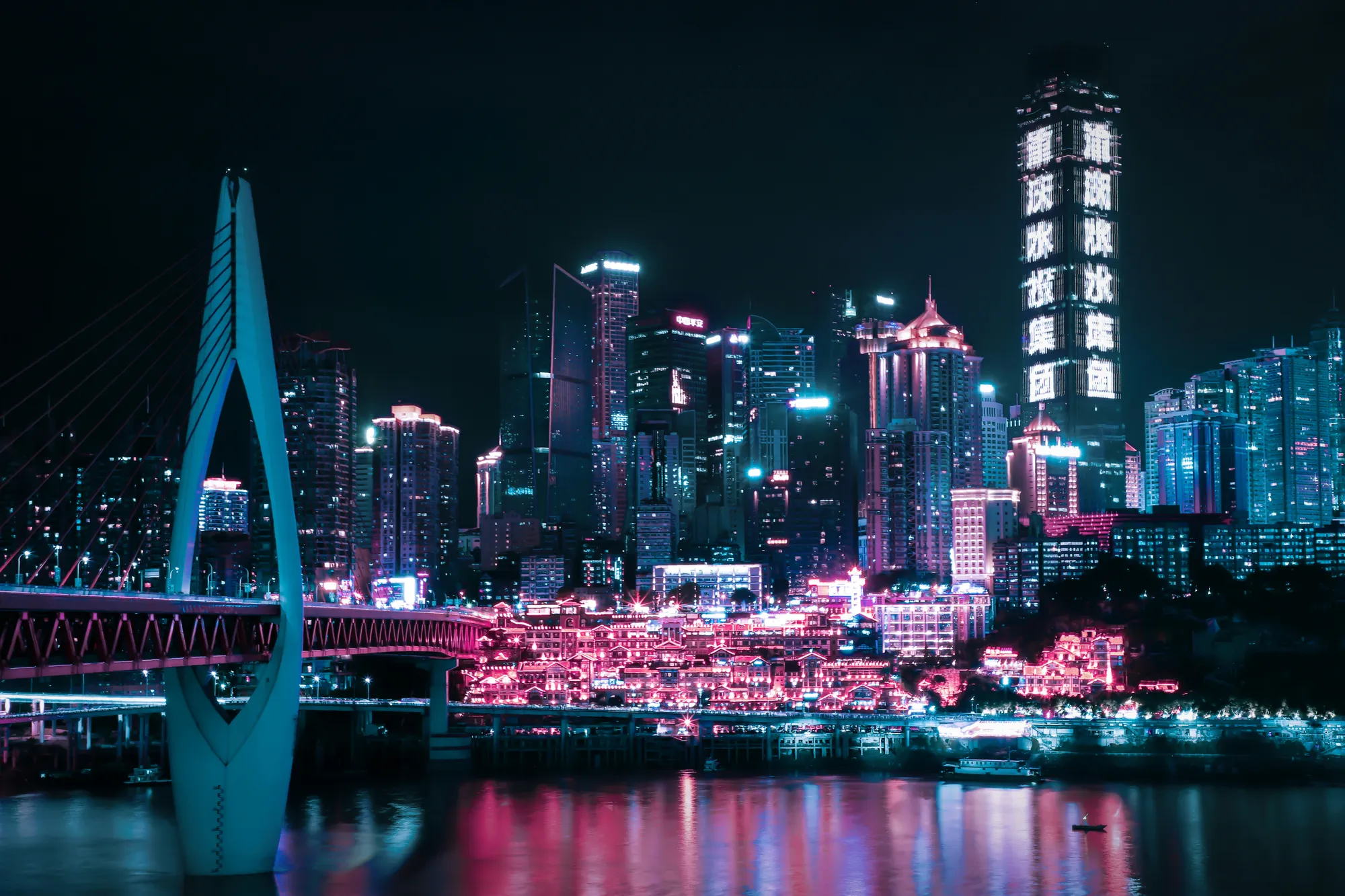
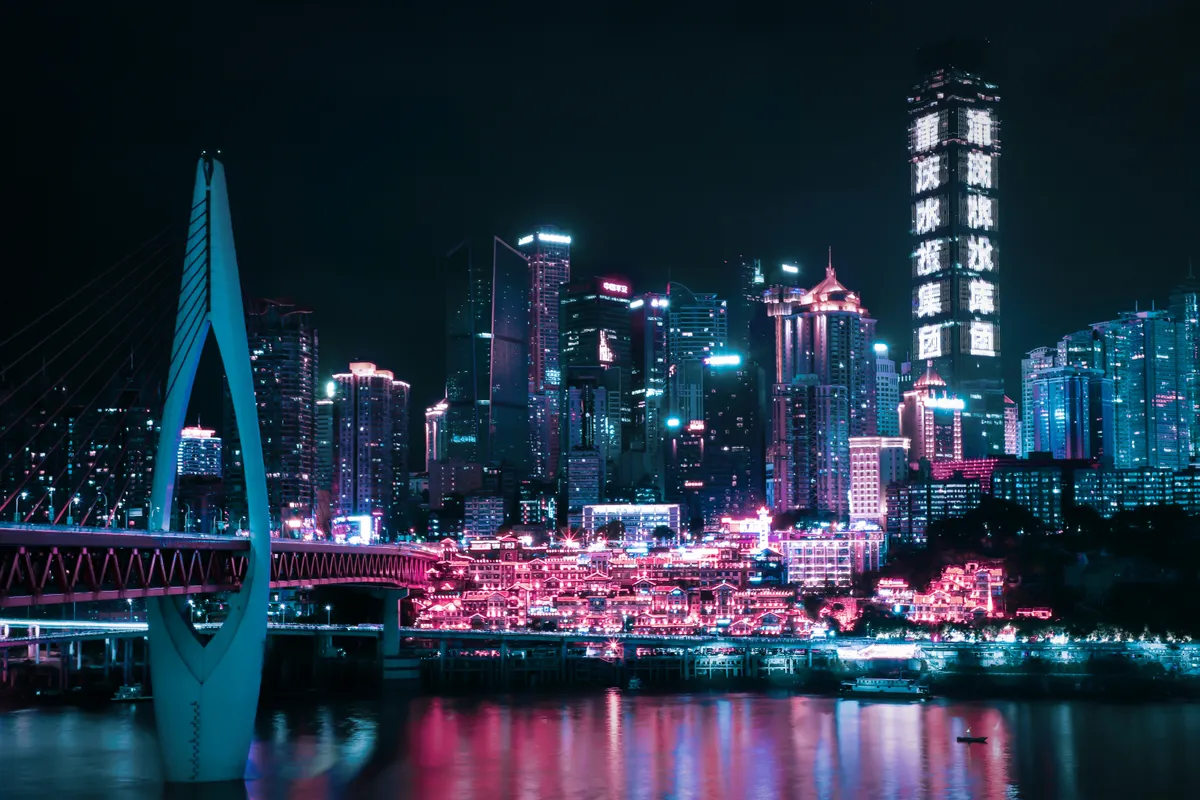
Hongya Cave glowing gold at night above the river in Chongqing

City guide · Verified 2026-07-22

Chongqing

A vertical megacity of stacked streets and glowing riverside towers, where a monorail runs through an apartment block and the hotpot is the fiercest in China.

Airport
CKG (Jiangbei) — metro links into the city center
Best seasons
Spring and autumn; summers are famously hot and humid
Days needed
2 days for the city; 3 with Dazu Rock Carvings
Famous for
Hongya Cave, mountain-city 3D streets, and fiery hotpot
Getting there
Major high-speed rail hub; ~2h from Chengdu

Things to do in Chongqing

The short version: Chongqing is a vertical "mountain city" built in stacked layers, best known for Hongya Cave's glowing stilt-house architecture, a monorail that runs straight through a residential building (Liziba station), the Yangtze cableway crossing above the river, and China's spiciest hotpot. Two days covers the city center; add a third for the Dazu Rock Carvings day trip.

The essentials

What to see — and what to know before you go

Almost everything here is walk-up and free or near-free — the one planning-worthy trip is the Dazu Rock Carvings day out. Verified 2026-07-22.

Hongya Cave stilted buildings glowing gold at night above the river in Chongqing

Hongya Cave at Night 洪崖洞

~2 hoursFree to explore

Chongqing's viral icon: a cliffside warren of traditional stilted buildings (diaojiaolou) stacked eleven storeys up the riverbank, lit gold after dark like a scene from Spirited Away. Wander the levels of shops and food, then cross the river or bridge for the postcard view back.

Local tipArrive before the lights switch on around dusk to beat the crowds, then stay for the golden glow — weekends are packed.
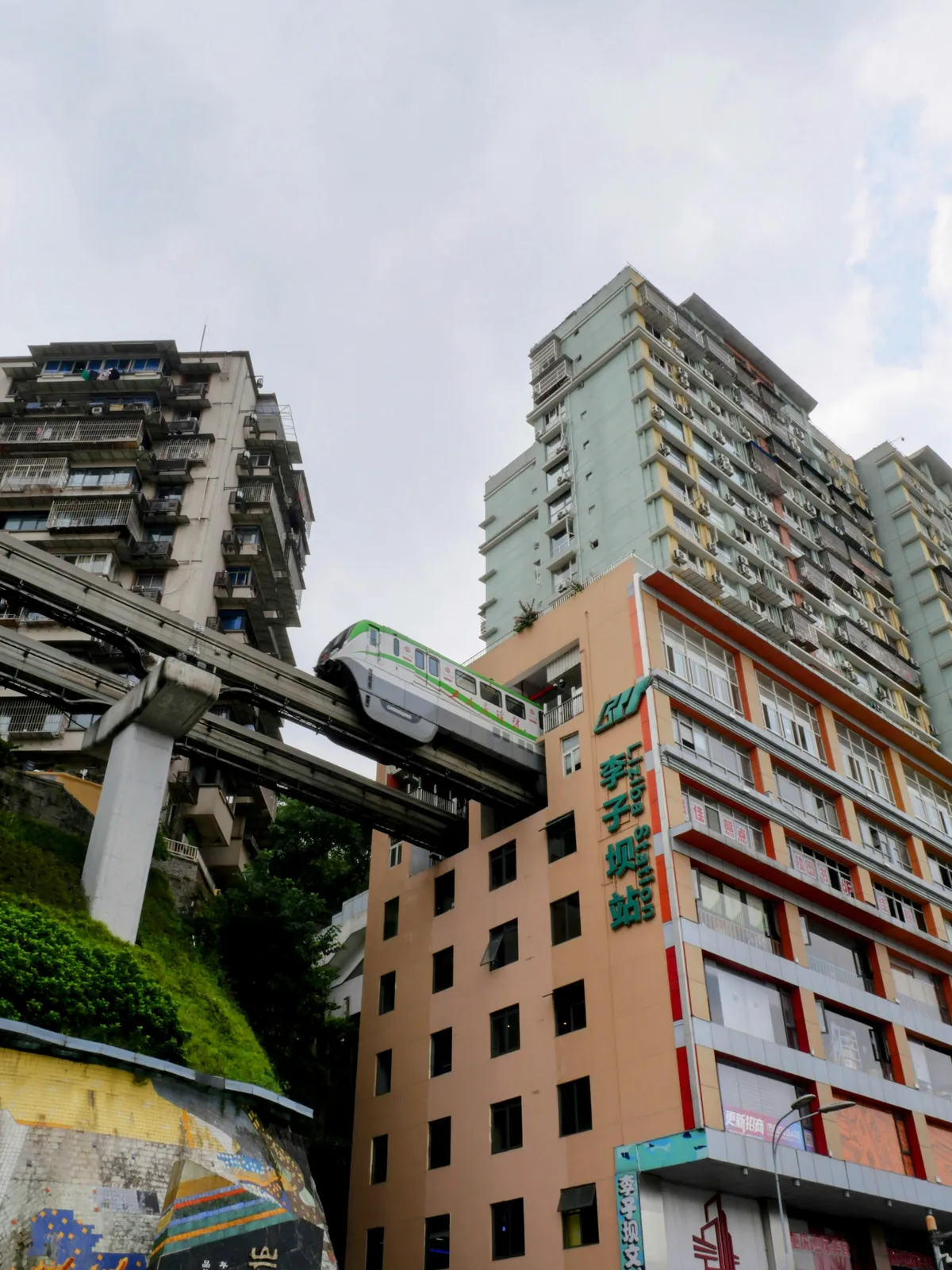
Chongqing's light-rail monorail passing through a residential apartment building

The Monorail Through a Building 李子坝轻轨穿楼

~1 hoursStandard metro fare (~¥2-5)

Chongqing is the 'mountain city' (shān chéng) — built vertically across hills and rivers, with roads stacked over roads. The famous Liziba station has the light-rail monorail running clean through a 19-storey apartment block, the clearest symbol of the city's gravity-defying 3D layout.

Local tipRide the monorail rather than just photographing it from the viewing deck — the elevated stretches are a sightseeing tour in themselves.

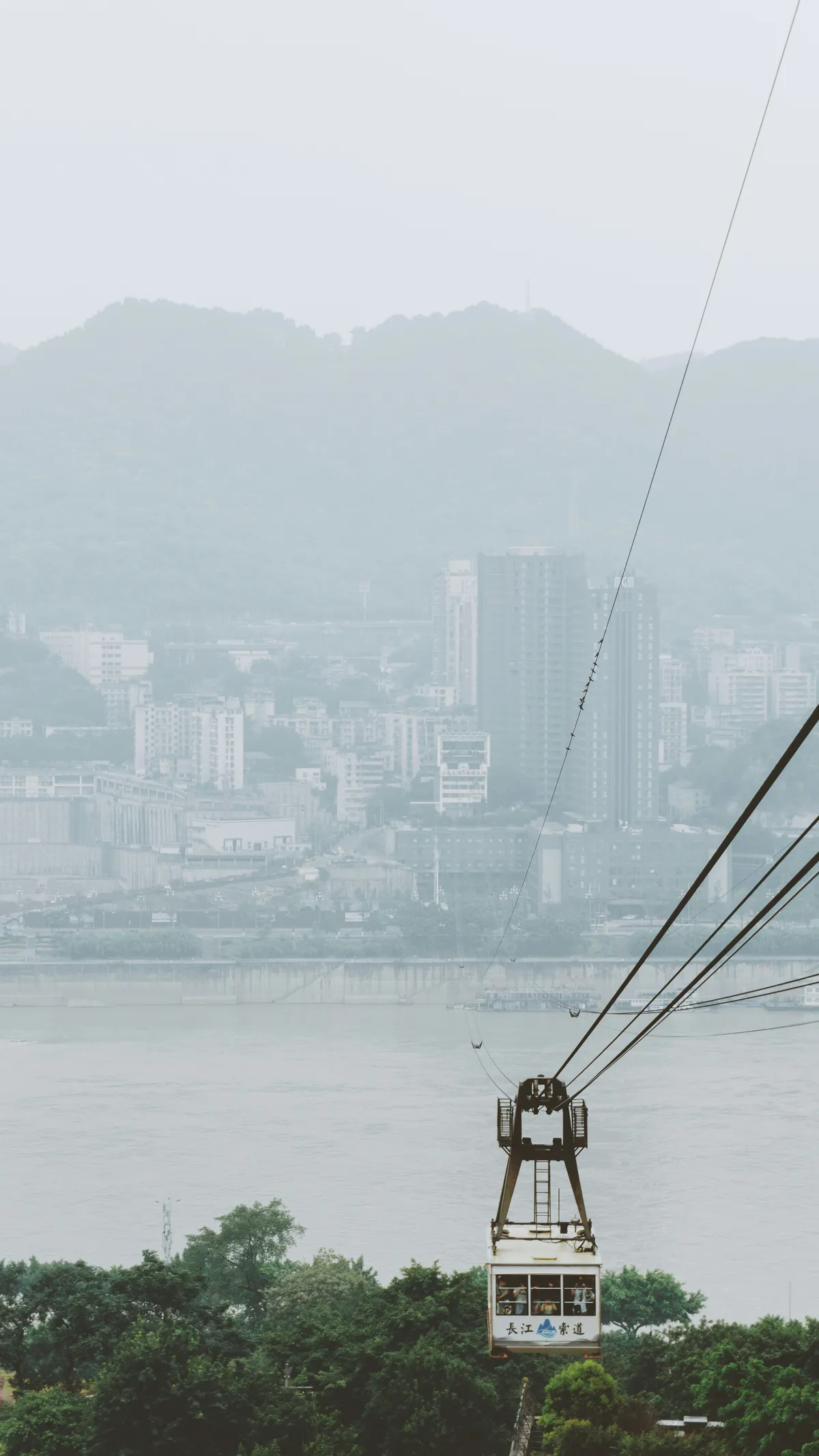
The Yangtze River cableway car crossing high above the water in Chongqing

Yangtze River Cableway 长江索道

~1 hours¥30 one-way / ¥50 round-trip

Chongqing sits where the Yangtze and Jialing rivers meet. This cable car glides commuters (and now mostly tourists) high across the water — a nostalgic ride with big views. Down at Chaotianmen, the two rivers visibly converge.

TicketsBuy same-day tickets via the official WeChat account; queues form fast on weekend evenings.

Local tipThe ride is short (about 4 minutes) but scenic — go right as the lights start coming on for the best of both daylight and neon.

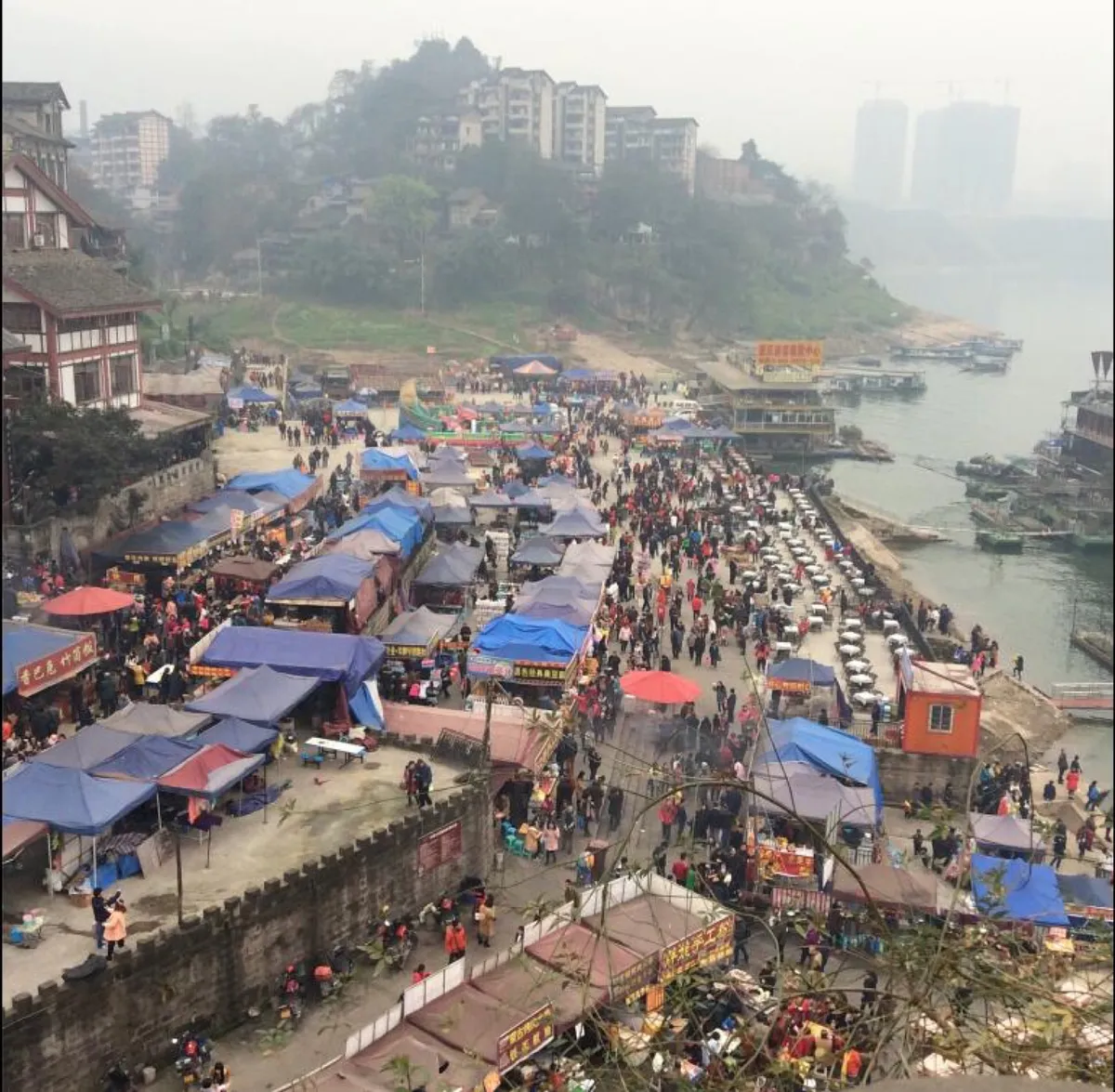
Crowds browsing riverside food stalls at Ciqikou Ancient Town in Chongqing

Ciqikou Ancient Town 磁器口古镇

~2.5 hoursFree entry

A Ming-and-Qing-era river port turned snack-crawl street, packed with porcelain shops (its name means 'porcelain port'), tea houses, and vendors frying, roasting, and skewering everything in sight. Busy and touristy, but genuinely old under the stalls.

Local tipSkip the main drag's crowds by ducking into the smaller side lanes toward the river — same old buildings, a fraction of the people.

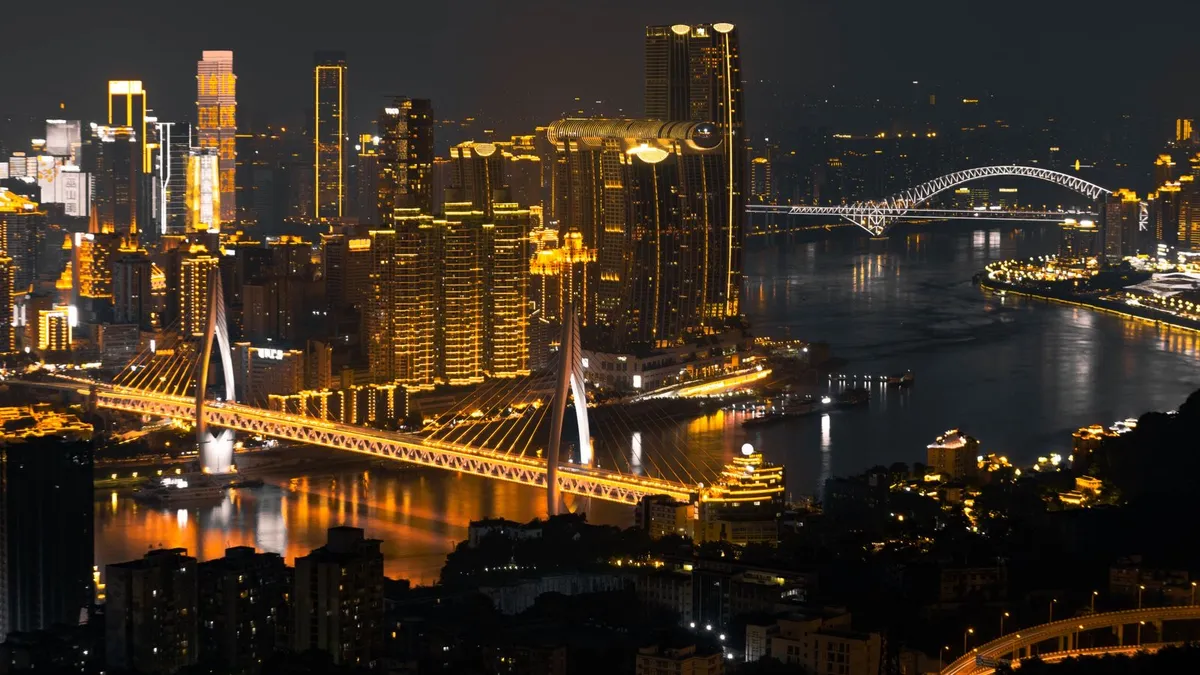
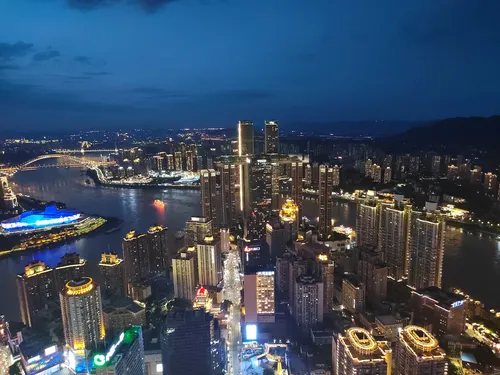
Chongqing's illuminated skyscraper skyline and bridge reflecting on the river at night

Eling Park & the Night Skyline 鹅岭公园 · 夜景观景台

~1.5 hours¥30 peak season / ¥15 off-season

Chongqing's hillside viewpoints (Eling Park and the South Bank's Nanshan Yikeshu platform are the two classics) are how you actually see the 'mountain city' — towers stacked on towers, bridges lit gold, the rivers glinting below. A must for anyone who wants the skyline photo everyone posts.

Local tipGo on a clear night — Chongqing's river-basin haze can flatten the view, so check the forecast before making the trip up.

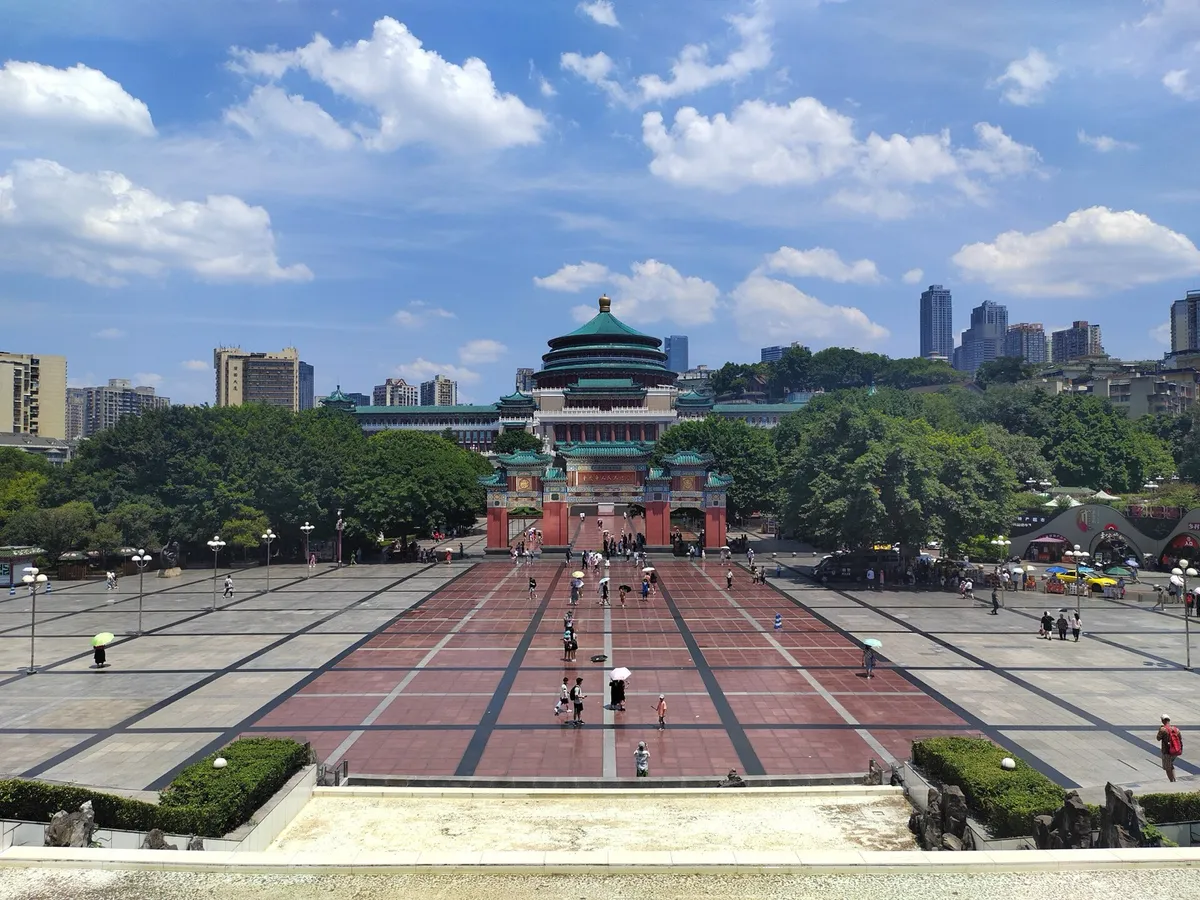
The Great Hall of the People's tiered teal roofs rising above People's Square in Chongqing

Great Hall of the People 人民大礼堂

~1 hours¥8 (interior); exterior/plaza free

A monumental 1950s auditorium modeled on Beijing's Temple of Heaven, its teal-and-crimson drum tower rising over People's Square. One of Chongqing's most photographed buildings, especially from the square at dusk.

Booking — reserve aheadBook same-day interior tickets via the venue's WeChat mini-program; the exterior and People's Square plaza need no ticket at all.

Local tipYou don't need a ticket to appreciate it — the view from across People's Square is the classic shot, and it's free.

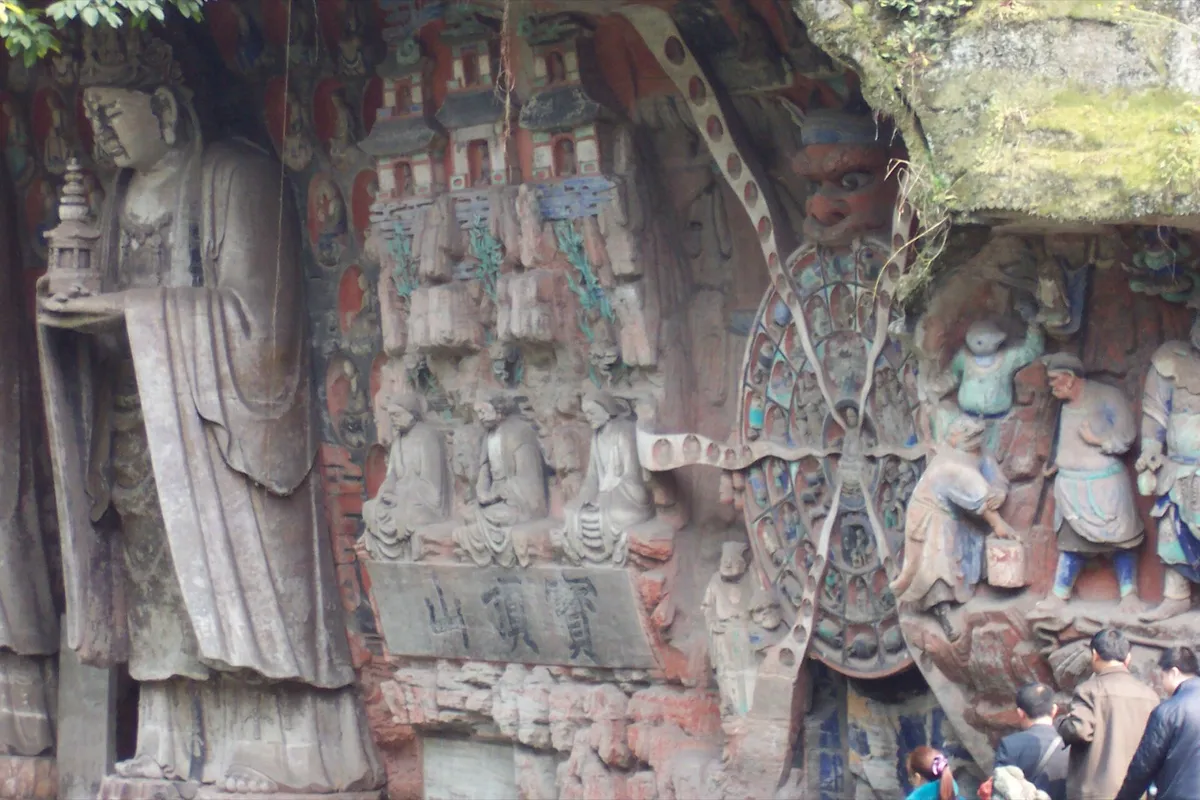
Buddhist rock carvings and statues cut into the cliff face at Dazu

Dazu Rock Carvings 大足石刻

~6 hours¥115 peak / ¥100 off-season (Baoding Mountain)

A UNESCO World Heritage cliff of Buddhist, Taoist, and Confucian rock carvings dating to the 9th-13th centuries — thousands of statues cut directly into the rock face at Baoding Mountain, rivaling Dunhuang in scale and detail.

TicketsBuy via the official '大足石刻' WeChat account or at the gate; about 1.5-2 hours from central Chongqing by car or bus — plan a full day round-trip.

Local tipBaoding Mountain is the essential site if you only see one; Beishan's carvings are a worthwhile add-on only if you have extra time.

What to eat

Chongqing's must-eat list

Four things worth planning a meal around — with dietary flags so nobody at the table gets a surprise. Deep dives live in our food guides; vegetarians, start here.

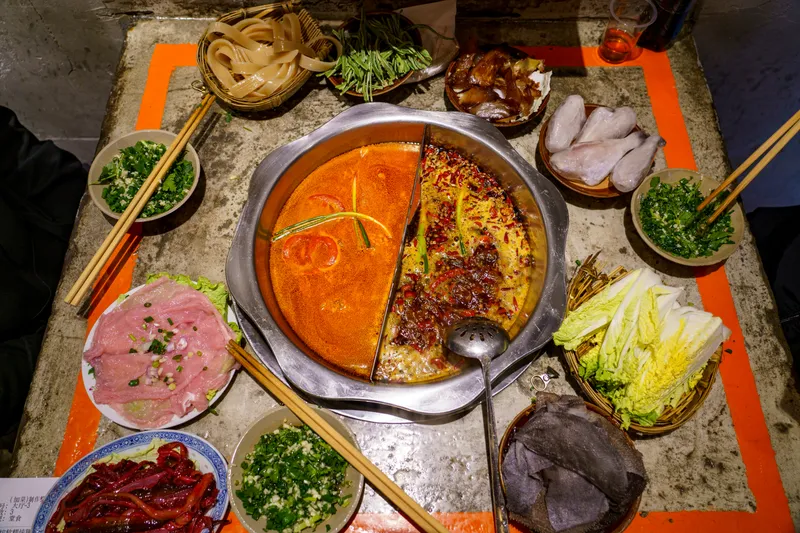
A split Chongqing hotpot with spicy tallow broth surrounded by raw ingredients on ice

Chongqing Hotpot 重庆火锅

The original málà hotpot — even fierier and more numbing than Chengdu's version, built on beef tallow, dried chilies, and Sichuan peppercorn. Order a yuanyang (split) pot with a mild broth on one side if you want to pace yourself.

WhereAny riverside hotpot hall in Jiefangbei or the South Bank, ideally with a queue of locals outside

  • 🌱 vegetarian option
  • 🌶️🌶️🌶️ hot
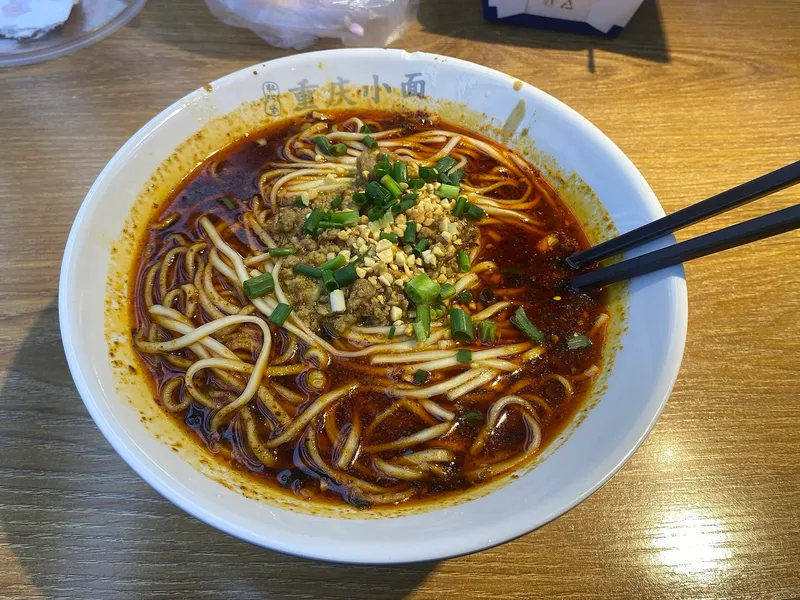
A bowl labeled Chongqing xiaomian with noodles in dark chili oil broth and peanuts

Chongqing Xiaomian 重庆小面

The city's breakfast staple: thin wheat noodles in a fiery, sesame-and-chili-oil broth, topped with peanuts, pickled vegetable, and scallion. Cheap, fast, and everywhere — Chongqing's true everyday dish.

WhereAny street-corner noodle stall with a line at 7am — that's the tell of a good one

  • 🌾 contains gluten
  • 🌶️🌶️ medium
  • 🥜 contains nuts
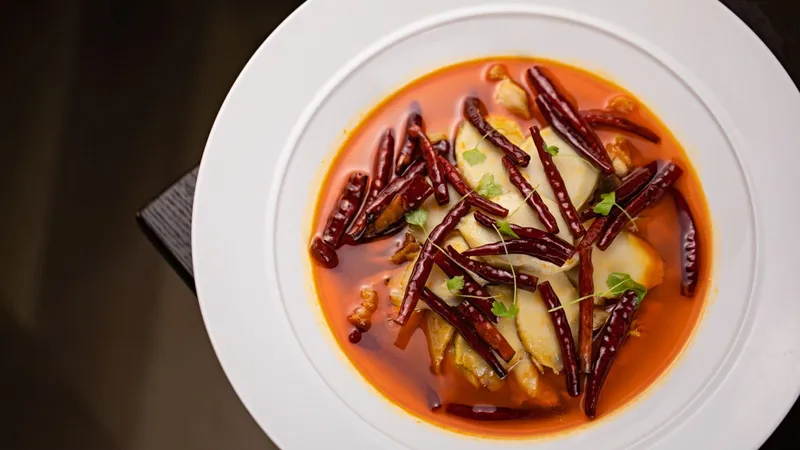
Fried chicken chunks buried in dried red chilies, a Chongqing laziji dish

Laziji (Dry-Fried Chili Chicken) 辣子鸡

Bite-sized chunks of fried chicken nearly buried under a mountain of dried chilies and Sichuan peppercorn — the trick is hunting for the actual chicken amid the chilies, not eating the chilies themselves.

WhereSichuan/Chongqing-style restaurants that list it under 干煸 (dry-fried) dishes

  • 🌶️🌶️🌶️ hot
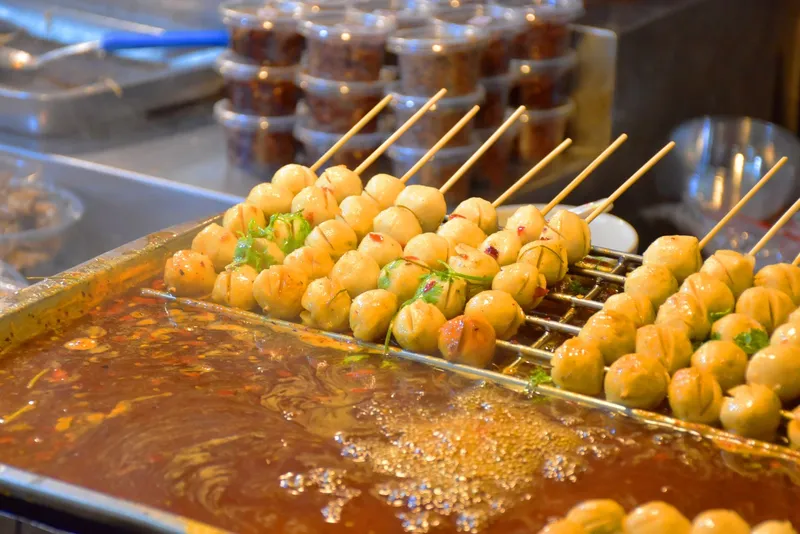
Skewers of food cooking in a spicy chili broth at a Chongqing street stall

Chuan Chuan Xiang (Skewer Hotpot) 串串香

Hotpot's street-food cousin: skewers of meat, tofu, and vegetables cooked in the same fiery málà broth, then priced by counting the empty sticks at the end. Casual, cheap, and endlessly snackable.

WhereSmall skewer stalls and street-side chuan chuan shops, especially in the evening

  • 🌱 vegetarian option
  • 🌶️🌶️🌶️ hot

Beyond sightseeing

Experiences you can book here

Ready to plan the days?

We've laid out 2-day, 3-day, and 4-day Chongqing itineraries — with the night-view timing and the Dazu day trip built in. Chongqing also pairs with Chengdu, two hours away by high-speed rail.

Placing this on the map: see where Chongqing sits relative to everywhere else on our interactive map of China, and check when it's busiest on the crowd calendar before you fix dates.

Frequently asked questions

Is Chongqing worth visiting?
Increasingly, yes — it's become one of China's most photographed cities thanks to its surreal vertical layout, the glowing Hongya Cave, and a monorail that runs through a building. Add its ferocious hotpot and river setting, and it's a genuinely unique stop.
What is Chongqing famous for?
Three things: the 'mountain city' 3D cityscape of stacked roads and buildings, the fairy-tale night view of Hongya Cave, and being the birthplace of Chongqing hotpot — even spicier and more numbing than Chengdu's.
How many days do I need?
Two days covers Hongya Cave, the Liziba monorail, the Yangtze cableway, Ciqikou, and a hotpot dinner. Add a third day if you want to make the round trip to the Dazu Rock Carvings. It also pairs naturally with Chengdu, about two hours away by high-speed rail.
How spicy is Chongqing hotpot?
Very — it's arguably the spiciest, most numbing hotpot in China, heavy on chilies and Sichuan peppercorns. Order a split pot with a clear broth on one side if you want to pace yourself.

Facts verified 2026-07-22. Opening rules and prices change — re-check official channels for anything booking-critical. Photos: licensed travel photography; app screenshots elsewhere on this site are our own. Photo credits: Ciqikou photo: W457137120, CC BY-SA 4.0, via Wikimedia Commons · Great Hall of the People photo: HoweyYuan, CC BY-SA 4.0, via Wikimedia Commons · Dazu Rock Carvings photo: Truthven, CC BY-SA 3.0, via Wikimedia Commons · Chongqing xiaomian photo: 瑞丽江的河水, CC BY-SA 4.0, via Wikimedia Commons · Chaotianmen night view photo: HoweyYuan, CC BY-SA 4.0, via Wikimedia Commons.