Guide · Verified 2026-07-10
How Much Cash Should You Bring to China?
¥300–500 for the whole trip — that's the answer, and it surprises everyone. China is the world's most cashless large economy: your corner noodle shop, the temple ticket office, and the grandmother selling tanghulu all prefer a QR scan. Cash isn't your budget here; it's your parachute. Here's how to size it, get it, and carry it.

The plan: phone first, cash as parachute
Your actual wallet in China is Alipay with your foreign card linked, backed up by WeChat Pay. Those two cover restaurants, metros, taxis, attractions, vending machines — genuinely 95%+ of everything. The ¥300–500 of cash handles the remainder:
- Your phone dies — the big one. Cash plus a paper hotel address gets you home.
- The one stall that can't scan you — some tiny vendors' QR codes reject foreign-card wallets.
- Rural buses and village markets — off the classic route, cash quietly matters more.
- Small kindnesses — temple incense, luggage storage at a mom-and-pop shop.
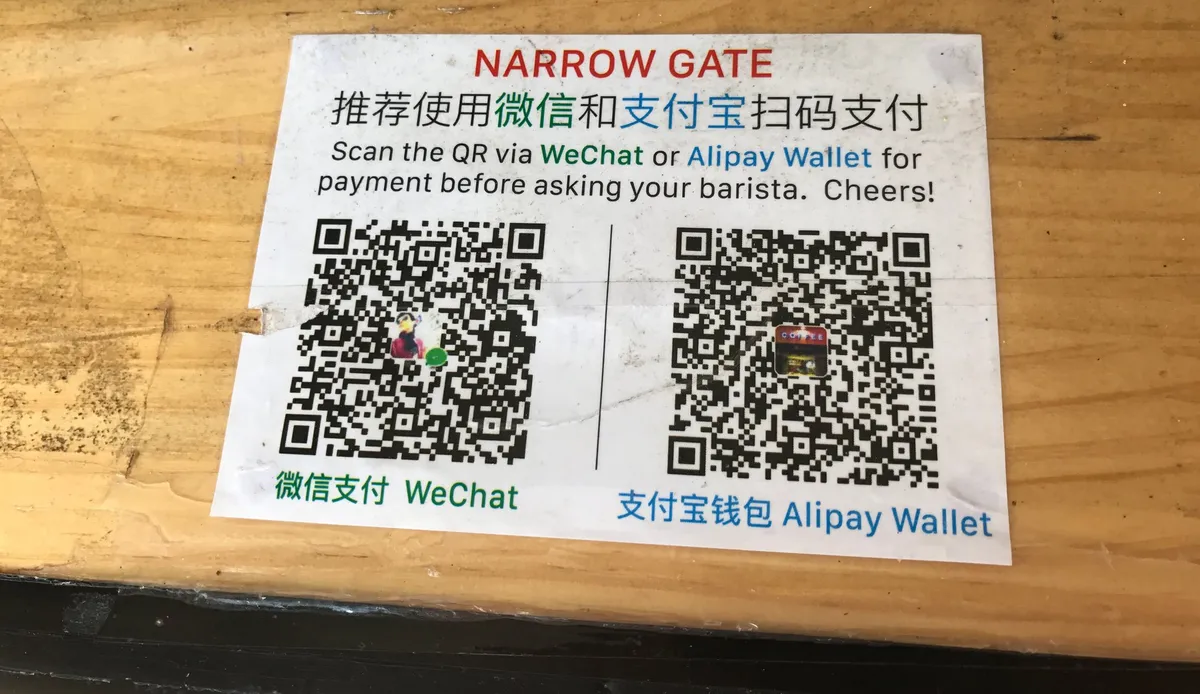
Getting yuan: the ATM-on-arrival strategy
Skip the airport exchange counter at home — the rates are the worst in the chain. Land, then use a Bank of China or ICBC ATM in the arrivals hall: foreign cards work, the machine has English, and you get the real interbank rate minus your home bank's fee. One ¥500 withdrawal, done for the trip. Ask for it in ¥20s and ¥50s if the machine offers a choice — a ¥100 note at a breakfast cart is a small social crisis.
Formalities, for the record: customs declaration only kicks in above US$5,000 equivalent in foreign currency or ¥20,000 in RMB. Tourist backup money doesn't come close.
Carrying it
Split it: most in the hotel safe or your main bag, ¥100–200 in the day bag. No money belt required — see our safety guide for why China isn't a pickpocketing destination. The bigger risk to your cash is forgetting which pocket you put it in three weeks ago.
The bigger risk to your cash is forgetting which pocket you put it in three weeks ago.
Frequently asked questions
- How much cash should I bring to China for two weeks?
- ¥300–500 (about US$40–70) covers a two-week trip as a pure backup, assuming Alipay is set up and working. It exists for the edge cases — a dead phone, a stall that can't scan foreign QR codes, a rural bus. Many travelers fly home without breaking the second ¥100 note.
- Do I need to declare cash when entering China?
- Only above the thresholds: more than US$5,000 (or equivalent) in foreign currency, or more than ¥20,000 in RMB, must be declared at customs. A tourist carrying a few hundred yuan of backup is nowhere near the line.
- Should I exchange money before arriving or use ATMs in China?
- ATMs on arrival usually win: Bank of China and ICBC machines take foreign cards, give the interbank rate, and sit in every airport arrivals hall. One ¥500 withdrawal covers the whole backup fund. Airport exchange counters at home give notably worse rates for the convenience.
- Do shops in China accept US dollars or euros?
- No — foreign currency isn't accepted anywhere ordinary. It's yuan (via Alipay/WeChat) or nothing. RMB cash is legal tender everywhere, though small vendors may struggle to change a ¥100 note, so ask the bank or ATM for smaller denominations when you can.
- What do I do with leftover yuan when leaving?
- Small amounts: spend them at the airport or keep as souvenirs. Larger amounts can be converted back at bank branches (bring your passport). Better strategy: withdraw conservatively so there's nothing meaningful left over.
Verified 2026-07-10. Declaration thresholds are long-standing customs rules; ATM fees vary by your home bank. Tell us if your experience differed. QR payment photo: Harald Groven, CC BY-SA 2.0, via Wikimedia Commons.